Taroudant and the Souss valley: the walled town, the argan country and the saffron road
An hour inland from the Atlantic, in a plain of argan trees and orchards between two mountain ranges, a town still lives inside its ochre walls. Taroudant has the souks and squares of Marrakech at a fraction of the bustle, and two roads that lead out of it: west to the ocean, east to the saffron fields and the south.
Reviewed 12 November 2026 · Sources at the end
Taroudant is a walled market town in the Souss valley of south-west Morocco, about 80 km inland from Agadir and some 265 km from Marrakech by the motorway. It is worth two nights: one day for the ramparts and the souks, one for the argan country, an oasis or the mountain villages around it. It suits travellers who have seen Marrakech and want its atmosphere at a gentler pace, and those who want a pause between the coast and the road to Ouarzazate.
This guide covers the walls and how to see them with every generation, the souks that earned the town its nickname, the argan forest that UNESCO protects, the outings around Taroudant, the roads to Agadir and to Ouarzazate by the saffron town of Taliouine, how many nights to give it, the seasons and the meals. Sehra Morocco plans tailor-made journeys across Morocco for families and groups from India and beyond. The facts come from official and public sources, listed at the end; the advice that follows from them is ours.
Taroudant, at a glance
The essentials, checked on 12 November 2026:
- Where
- In the Souss plain of south-west Morocco, between the High Atlas and the Anti-Atlas, about 80 km inland from Agadir, at 238 metres above the sea
- Known for
- Its ramparts, still pierced by nine gates in use; its souks, which have earned it the name of ‘little Marrakech’; argan oil
- By road
- About 80 km and an hour and twenty minutes from Agadir; about 65 km from Agadir’s airport; about 265 km and three hours and twenty minutes from Marrakech by the motorway
- Eastward
- Taliouine, the saffron town, about 105 km away; Ouarzazate about 260 km, nearly five hours without stops
- Nights
- Two, as Morocco’s tourist office suggests; one if you are passing through
- Best months
- March to May and September to November; summer is very hot inland
- At the table
- Vegetarian when asked for in advance; Jain on request
Driving times are without stops; road conditions change, so check them before you set off.
A town inside its walls
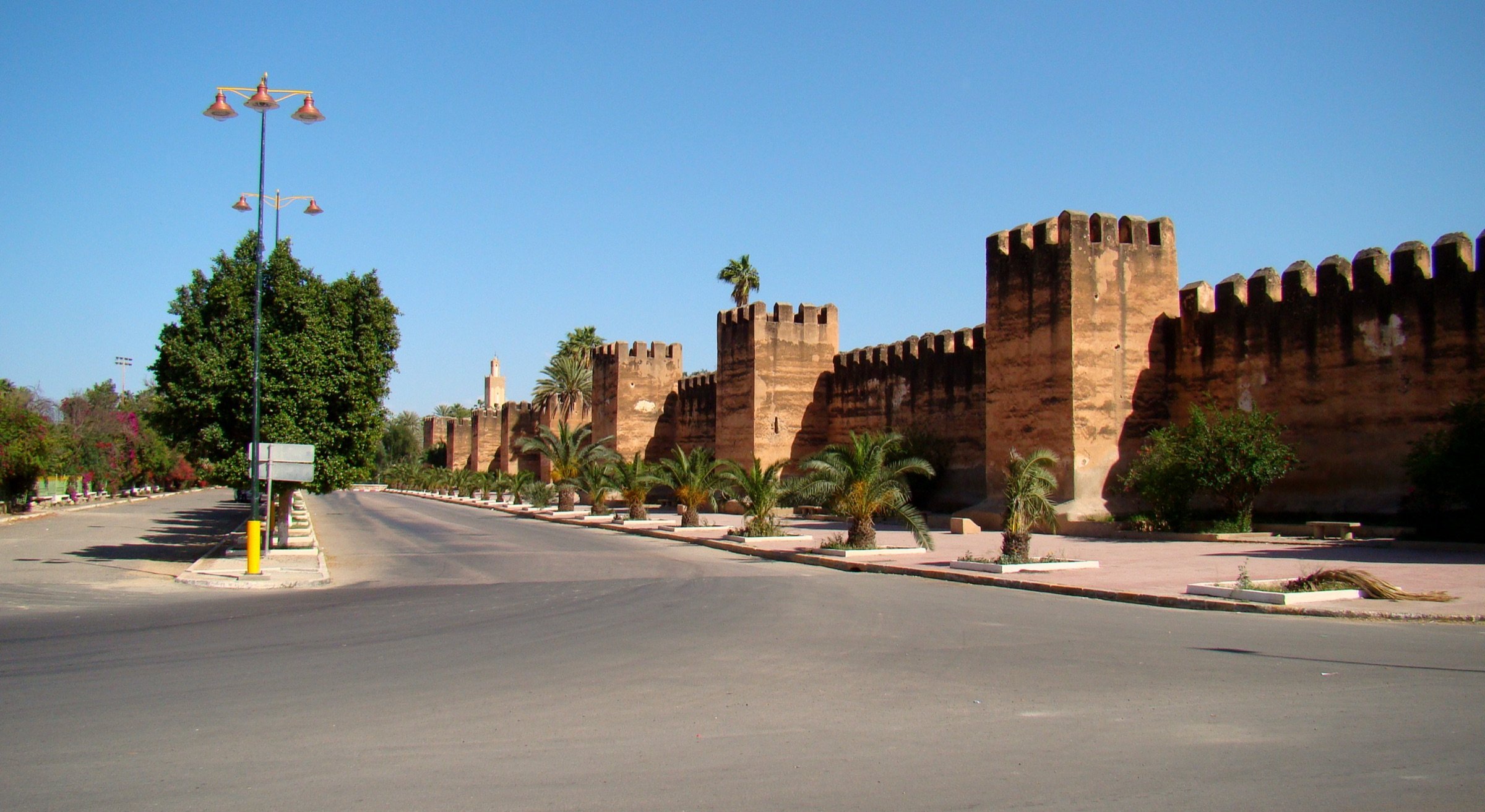
Taroudant still lives inside its ramparts. The walls run for six to eight kilometres around the old town, depending on who measures them, set with bastions and towers and pierced by nine gates that are still in daily use; one count gives some 130 towers. The present layout is generally dated to the sixteenth century, when the Saadian dynasty, before it ruled from Marrakech, made Taroudant one of its first seats. Morocco’s tourist office speaks of towers that have stood for more than five centuries, and of the ochre of the walls in the low light. The old town as a whole is listed as part of Morocco’s national cultural heritage.
Seeing the ramparts with grandparents and children
The walls are best taken in from outside, at an unhurried pace, and the town has kept the way to do it: the horse-drawn carriage. A carriage tour carries up to five passengers, so a family of three generations fits in one or two. Those who prefer to walk can join a guided tour on foot of about two hours, or combine the two: the carriage for the circuit of the walls, then a walk through the lanes inside. For teenagers, there is a two-hour guided ride by bicycle, with electric bikes for those who would rather not pedal hard. Guides for these outings are often French-speaking: ask for English when you book.
‘Little Marrakech’: the souks and the two squares
Travellers and Morocco’s tourist office alike call Taroudant ‘the little Marrakech’, and the comparison holds: a walled town of souks, squares and craftsmen at the foot of the Atlas. What differs is the scale. Taroudant is a market town first, with a souk near each of its two main squares, Assarag and Talmoklate, and a weekly market outside the walls. The pace is that of a town that sells to its own region before it sells to visitors.
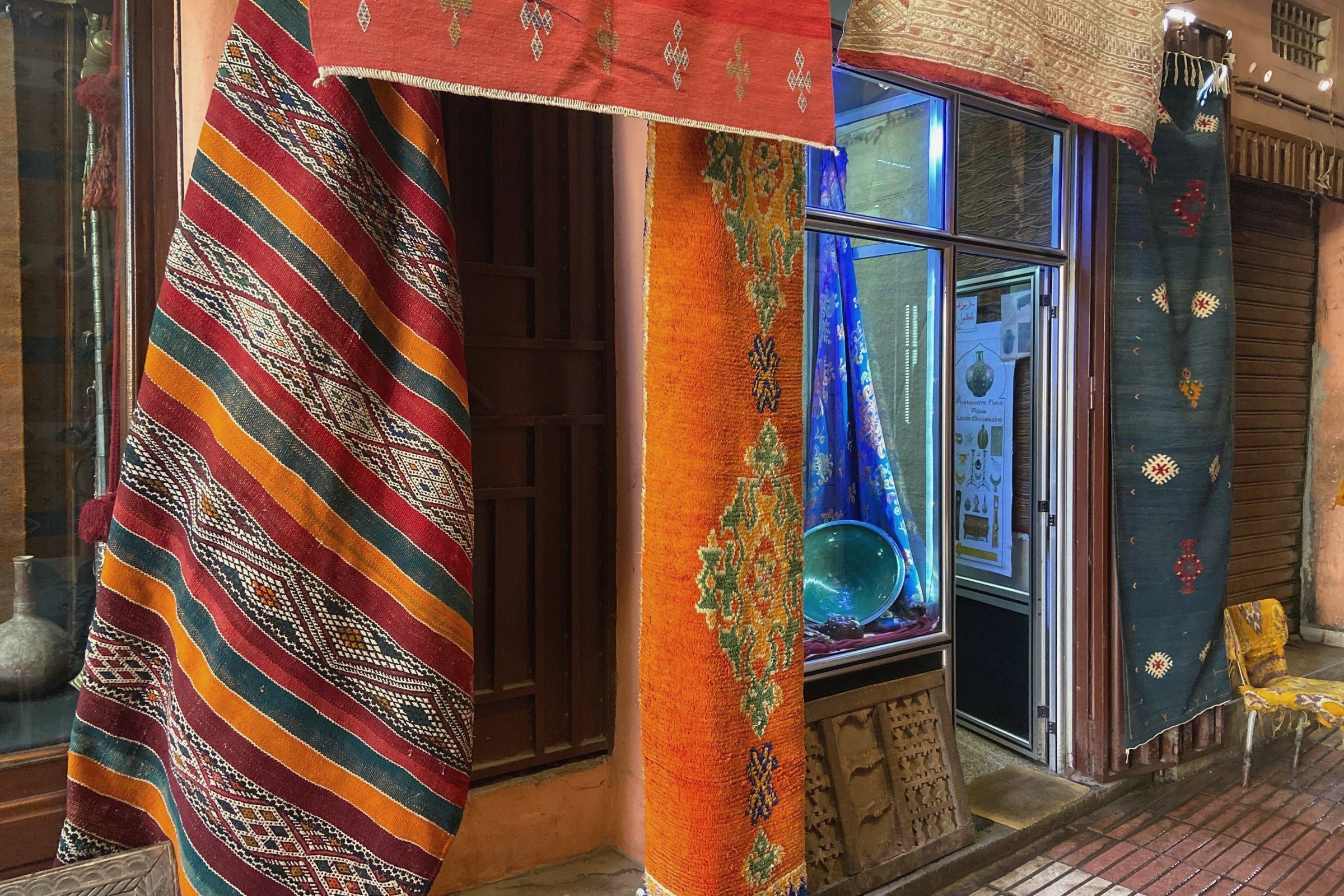
Leather is the craft the town is best known for, with its tanneries, followed by terracotta and Amazigh silver jewellery; the tourist office lists the tanneries and the Amazigh souk among the sights not to miss. For a family, the two squares make easy meeting points, and the lanes between them are short enough for grandparents to walk at their own pace. Bargaining is expected, as in Marrakech.
The argan country: the Arganeraie Biosphere Reserve
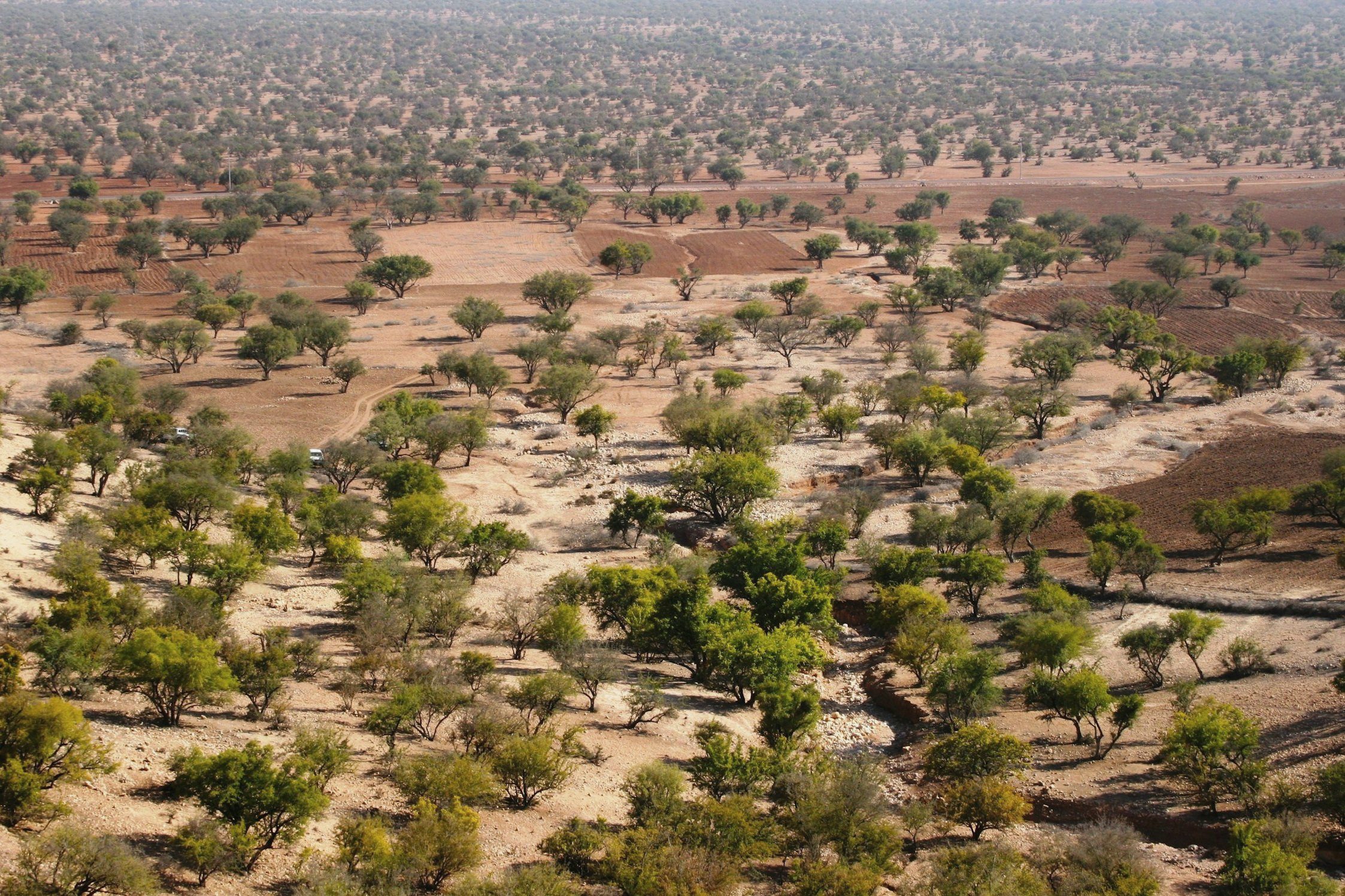
Taroudant stands in the middle of a forest the world has nowhere else. The argan tree is native to the arid south-west of Morocco, and in 1998 UNESCO designated its domain as the Arganeraie Biosphere Reserve: some 2.5 million hectares of plain and mountain between the High Atlas and the Anti-Atlas, opening west to the Atlantic, home to more than three million people and taking in Agadir and Essaouira as well as Taroudant. The tree withstands drought, poor soils and, according to the United Nations, temperatures of up to 50 °C; the forest shelters rare plants and animals, the caracal and the Barbary sheep among them.
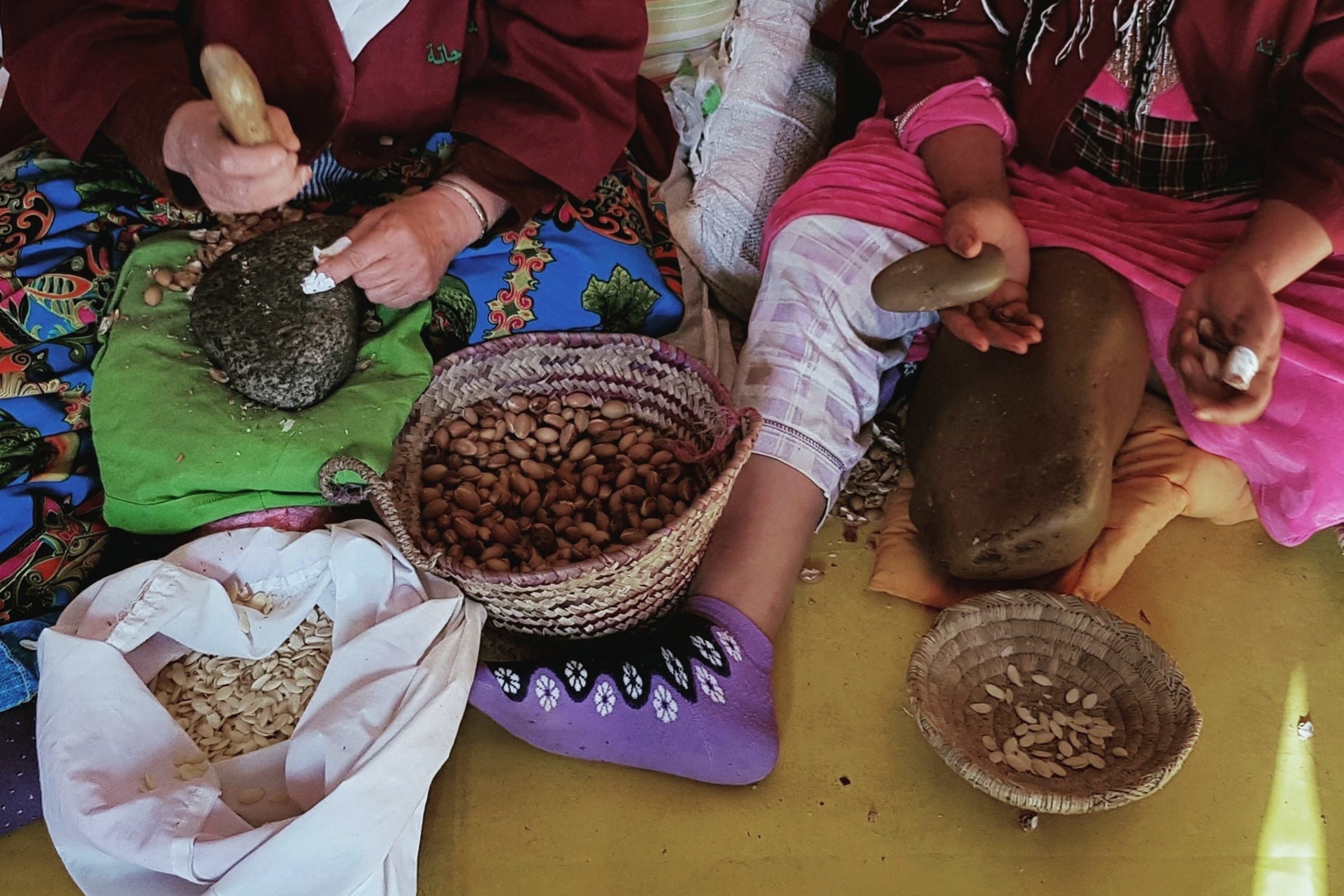
Argan oil is still made here by hand, and, as the United Nations notes, rural women lead the whole extraction process. Outside the ramparts of Taroudant, cooperatives and families shell, press and bottle it, and a visit to one shows children how slow the work is. The United Nations marks an International Day of Argania each year on 10 May. The reserve reaches the Atlantic at Essaouira: see our guide to Essaouira from Marrakech for the argan country by the sea.
What to do around Taroudant
The second day belongs to the valley and the hills. Taroudant sits between the two Atlas ranges, and the tourist office calls it a starting point for many walks. These are the outings local providers run from the town; durations are indicative.
The oasis of Tiout
About half an hour from Taroudant, the oasis of Tiout makes the classic half-day: some four hours with a guide, including a traditional lunch. It is gentle enough for every age.
The citron valley and the granaries
A valley of citron orchards makes a half-day of about five hours, with lunch in a family home. A full day of about seven hours adds the agadirs, the fortified collective granaries of the villages of the south.
Afensou and Mentaga
The villages of Afensou and Mentaga make another half-day of about five hours, again with lunch in a family home: a glimpse of village life without a long drive.
A Moroccan cooking class
Back inside the walls, a cooking class turns the market into a meal. Say when you book that the class must be vegetarian, or Jain, so that the shopping list is right from the start.
The two roads: west to Agadir, east by the saffron town of Taliouine
Taroudant is a crossroads more than a dead end, and the way you arrive shapes the stay.
From Agadir and its airport
Calculated on OpenStreetMap, Agadir lies about 80 km and an hour and twenty minutes to the west; the tourist office gives 83 km. Agadir’s airport stands on the Taroudant side of the city, about 65 km and an hour and a quarter from the town, so Taroudant can be the first night of a journey that lands in the south, or a quiet last night before a flight. For the beaches and the bay, see things to do in Agadir; for the flights from India, see travelling to Morocco from India.
From Marrakech
The easy way is the motorway by Agadir: about 265 km and three hours and twenty minutes without stops, close to the tourist office’s own figures. The direct road over the High Atlas, by the Tizi n’Test pass at 2,093 metres, is shorter on the map, about 225 km, but longer at the wheel, more than four hours, and its descent of some 1,600 metres towards the Souss is known as a demanding drive. The UK government notes that mountain roads can be especially hazardous in poor weather and that driving at night is dangerous: take the pass by day, and ask your driver about its condition before choosing it.
East to Taliouine and Ouarzazate: the saffron road
Eastward, the N10 climbs out of the plain towards Taliouine, about 105 km and an hour and a half away, at some 1,586 metres. Saffron has been grown around Taliouine for centuries, in villages between about 1,500 and more than 2,000 metres, and the area is Morocco’s saffron country: its spice carries the protected designation of origin ‘Safran de Taliouine’, put in place from 2010, and a saffron house was built in the town to test, pack and sell the certified harvest. It takes some 150,000 flowers to make one kilogram of dried saffron, and the flowers are picked in October and November: travel in those months and the fields should be in flower.
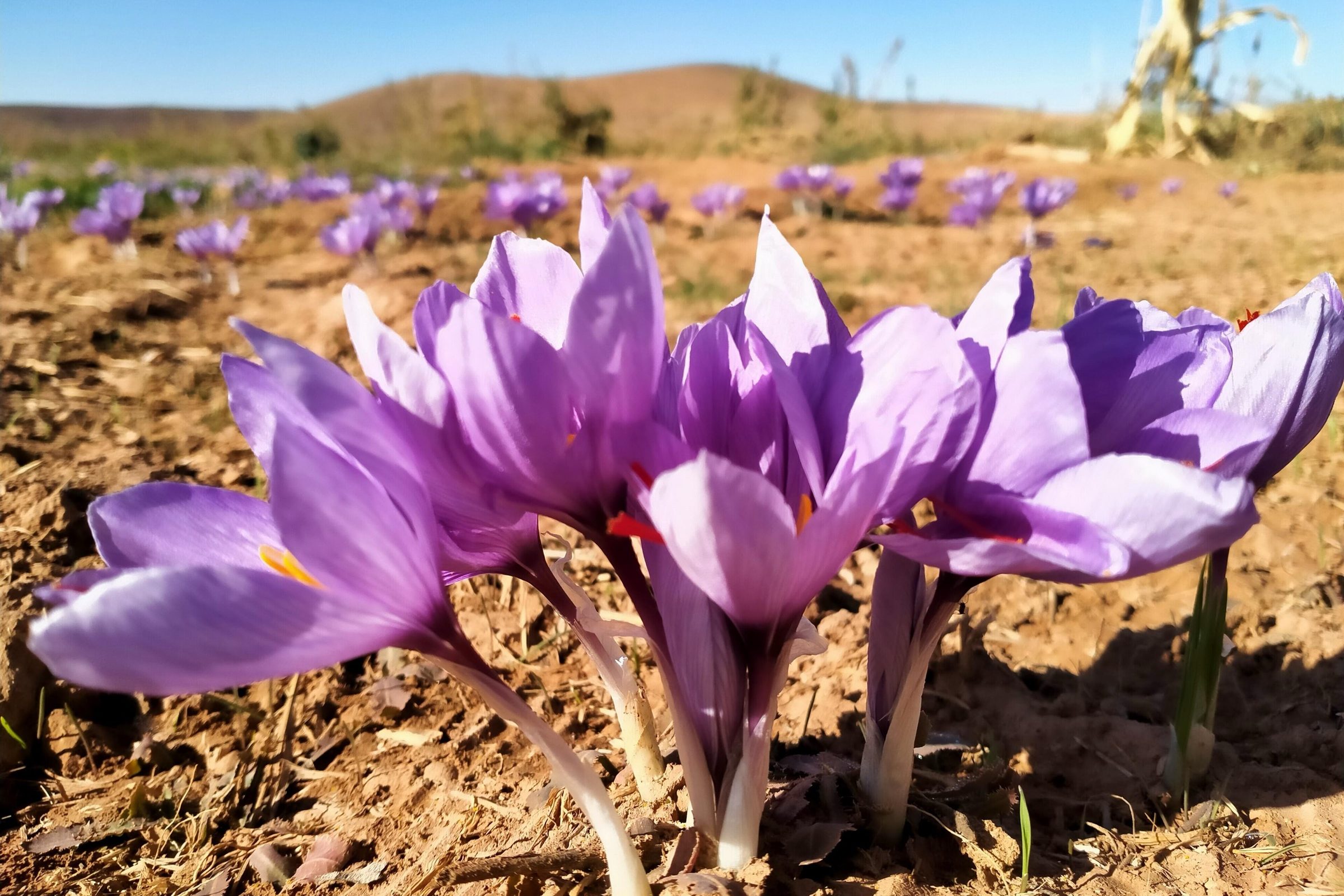
From Taliouine, the road runs on another 156 km, a little over three hours, to Ouarzazate: about 260 km and nearly five hours from Taroudant without stops, which makes Taliouine the natural place to break the journey. Ouarzazate, the ksar of Aït Ben Haddou and the roads to the desert are set out in our guide to Ouarzazate and Aït Ben Haddou.
How many nights in Taroudant?
Morocco’s tourist office suggests two days, and we agree. There are three sensible ways to fit the town into a journey:
- Two nights, as a pause. Between Marrakech and the coast, or after a flight into Agadir: one day for the walls and the souks, one for Tiout, the citron valley or the mountain villages.
- One night, on the road east. From Agadir towards Ouarzazate, a night in Taroudant shortens the long road and leaves the morning for the saffron country.
- Three nights, slowly. For a family with grandparents, a third night lets each outing take half a day, with the afternoons in the shade.
When to go: Taroudant’s seasons
The World Meteorological Organization publishes no long-term averages for Taroudant itself. The nearest station it publishes is Agadir Inezgane, on the coast some 65 km to the west, and the town does not share its climate. The ocean keeps Agadir mild all year, with July days of about 27 °C; Marrakech, inland like Taroudant, averages close to 38 °C in July. Taroudant’s summer days are, in our reading, much closer to Marrakech’s than to Agadir’s: a temperature of 48 °C was recorded in the town in August 2023. The tourist office names March to May and September to November as the best times to visit, with very hot summers and winters of mild days and cool evenings.
The Souss through the year
- December to February
- Agadir, on the coast: 21–22 °C by day, 8–10 °C at night; 4 to 6 rainy days a month
- Taroudant, inland: Mild, sunny days; cool evenings, a warm layer after dark
- March to May
- Agadir, on the coast: 23–24 °C by day, 12–16 °C at night; the rain fades through spring
- Taroudant, inland: Warm days and cool nights: one of the two best seasons
- June to September
- Agadir, on the coast: 26–27 °C by day, 18–20 °C at night; almost no rain
- Taroudant, inland: Very hot, far hotter than on the coast: the town at the edges of the day only
- October and November
- Agadir, on the coast: 24–26 °C by day, 13–17 °C at night; the first rains return
- Taroudant, inland: The second best season, and the saffron harvest around Taliouine
| Season | Agadir, on the coast | Taroudant, inland |
|---|---|---|
| December to February | 21–22 °C by day, 8–10 °C at night; 4 to 6 rainy days a month | Mild, sunny days; cool evenings, a warm layer after dark |
| March to May | 23–24 °C by day, 12–16 °C at night; the rain fades through spring | Warm days and cool nights: one of the two best seasons |
| June to September | 26–27 °C by day, 18–20 °C at night; almost no rain | Very hot, far hotter than on the coast: the town at the edges of the day only |
| October and November | 24–26 °C by day, 13–17 °C at night; the first rains return | The second best season, and the saffron harvest around Taliouine |
Long-term averages for 1991–2020 at Agadir Inezgane, from Morocco’s Direction de la Météorologie Nationale, published by the World Meteorological Organization and rounded to the nearest degree. The Taroudant column is our reading of those figures and of the tourist office’s advice, not a measurement.
For the rest of Morocco, region by region, and the dates of Ramadan, see the best months to visit Morocco from India.
Vegetarian and Jain meals in the Souss
Guesthouses in Taroudant offer vegetarian dishes or menus on request, and lunches in family homes around the town are prepared ahead: the kitchen needs to know before you arrive. Vegetarian is easy when asked for in advance, and Jain food is on request. Say what you need when you book, and read how to ask for a Jain meal as a traveller in Morocco. Saffron, the pride of the region, needs no translation at any table.
So, is Taroudant worth the detour?
Yes, if you give it two nights. Taroudant has no single great monument to tick off; its reward is a whole town still inside its walls, souks that serve the region before they serve visitors, and a valley of argan trees, palms and orchards at its gates. It is the gentle version of Marrakech, and the natural hinge between the Atlantic at Agadir and the road east, by the saffron fields of Taliouine, to Ouarzazate and the south.
For the days in the red city before you set off, see things to do in Marrakech with grandparents and children. Planning the south of Morocco for your family or your group? Write to us with your dates, the ages in your party and the nights you can give the Souss, and we will answer by e-mail or video call.
Questions travellers ask about Taroudant
Why is Taroudant called ‘the little Marrakech’?
How far is Taroudant from Agadir?
How many days do you need in Taroudant?
When is the saffron harvest at Taliouine?
What is the Arganeraie Biosphere Reserve?
Is Taroudant too hot in summer?
Editorial note
This guide draws on Morocco’s national tourist office, for Taroudant (its ‘little Marrakech’, its ramparts, souks, crafts, argan oil, the Tiout oasis, the suggested two days and the best seasons); UNESCO, for the Arganeraie Biosphere Reserve; the United Nations, for the argan tree and the International Day of Argania; the World Meteorological Organization, for the long-term averages of Morocco’s Direction de la Météorologie Nationale at Agadir Inezgane and Marrakech (1991–2020); the UK government’s travel advice for Morocco; a study of saffron in the Taliouine and Taznakht area published in the Revue Marocaine des Sciences Agronomiques et Vétérinaires in 2014, for the saffron, its altitudes, its harvest and its designation of origin; and Wikipedia, for the history and walls of Taroudant (including the heat record of August 2023), Taliouine and the Tizi n’Test. Road distances and driving times were calculated with the OSRM route planner on OpenStreetMap data. All were read on 12 November 2026.
Activity durations and ages come from information provided by local activity providers in 2026; check them when you book.
Road conditions, opening arrangements and harvest dates change: check them before you book. Apart from public bodies, no business is named, and none is recommended. Sehra Morocco plans tailor-made journeys in Morocco; this guide describes no journey of its own.
- Moroccan National Tourist Office: Taroudant, the little Marrakech
- UNESCO, Man and the Biosphere Programme: Arganeraie Biosphere Reserve, designated in 1998
- United Nations: International Day of Argania, 10 May
- World Meteorological Organization, World Weather Information Service: Agadir Inezgane and Marrakech
- GOV.UK, Morocco travel advice: safety and security
- A. Aboudrare, A. Aw-Hassan and T. J. Lybbert, Importance socio-économique du safran pour les ménages des zones de montagne de la région de Taliouine-Taznakht au Maroc, Revue Marocaine des Sciences Agronomiques et Vétérinaires, 2014
- Wikipedia: Taroudant, Taroudant (French), Taliouine (French) and Tizi-n-Test pass
- Road distances and driving times: OSRM on OpenStreetMap data, calculated on 12 November 2026, without stops
Written by Sehra Morocco. Last reviewed: .
Tell us about your trip.
By e-mail or video call. We reply within two working days.