Visiting Morocco during Ramadan: dates, days and evenings in 2027
For one month a year, Morocco moves to another rhythm: unhurried days, then evenings that begin at sunset, when the fast is broken. Here is what Ramadan in 2027 changes for travellers from India, and how to plan a journey around it.
Reviewed 23 November 2026 · Sources at the end
Visiting Morocco during Ramadan is entirely possible, and its evenings can be among the finest hours of a journey. The days run slower, opening hours change and, at sunset, the country pauses to break the fast. In 2027, Ramadan is expected to begin around Monday 8 February, with Eid al-Fitr around Wednesday 10 March; Morocco confirms each date only on the eve.
This guide is written for travellers from India of every faith, Hindu, Jain, Muslim, Sikh, Christian or none, and for every kind of party, from a couple to three generations of one family: what changes from dawn to dusk, what stays open, how the evenings unfold, and whom the month suits. Sehra Morocco plans tailor-made journeys and Indian weddings across Morocco for travellers from India. The dates come from astronomers’ forecasts and from the way Morocco announces each month, and the advice for visitors from the UK government and Morocco’s own institutions; the sources are listed at the end. The practical advice that follows from them is ours.
Ramadan 2027 at a glance
- Expected start
- Around Monday 8 February 2027, confirmed in Morocco on the eve
- Expected end
- Around Tuesday 9 March, the last day of the fast
- Eid al-Fitr
- Around Wednesday 10 March, with two public holidays in Morocco, when public offices close
- The fast in Marrakech
- From about 5.50 am to 6.20 pm at the start of the month; from about 5.30 am to 6.40 pm by its end (our estimates)
- Morocco’s clocks
- Greenwich Mean Time throughout, with no change for Ramadan; India is 5 hours 30 minutes ahead
- The weather
- Mild days, about 21 °C in Marrakech in February and 24 °C in March; nights of about 5 °C at Errachidia, near the dunes, in February
| Expected start | Around Monday 8 February 2027, confirmed in Morocco on the eve |
|---|---|
| Expected end | Around Tuesday 9 March, the last day of the fast |
| Eid al-Fitr | Around Wednesday 10 March, with two public holidays in Morocco, when public offices close |
| The fast in Marrakech | From about 5.50 am to 6.20 pm at the start of the month; from about 5.30 am to 6.40 pm by its end (our estimates) |
| Morocco’s clocks | Greenwich Mean Time throughout, with no change for Ramadan; India is 5 hours 30 minutes ahead |
| The weather | Mild days, about 21 °C in Marrakech in February and 24 °C in March; nights of about 5 °C at Errachidia, near the dunes, in February |
Religious dates remain estimates until Morocco announces them, and each may fall a day later. The hours of the fast are our own estimate for Marrakech, rounded to ten minutes, and the temperatures long-term averages.
When is Ramadan in 2027, and how is it announced?
Ramadan, the ninth month of the Islamic calendar, is a holy month for Muslims, who fast from dawn to sunset; in Morocco, most people keep the fast. Because the Islamic calendar follows the moon, each month begins with the sighting of the new crescent and lasts 29 or 30 days, and Ramadan arrives some ten to twelve days earlier each year.
For 2027, the Astronomy Centre of the United Arab Emirates expects Ramadan to begin on Monday 8 February and to last until 8 or 9 March, with Eid al-Fitr on Tuesday 9 or Wednesday 10 March. Those are forecasts for the Emirates, and the crescent is not seen everywhere on the same evening. In Morocco, the Ministry of Endowments and Islamic Affairs watches for it after sunset on the 29th day of the month before, gathers the reports of its delegates across the kingdom, and announces the first day of Ramadan that same evening. In 2026, it did so on 18 February, and the month began in Morocco on Thursday 19 February, a day after the Emirates. For Morocco itself, the crescent visibility maps of the International Astronomical Center in Abu Dhabi show that the new crescent cannot be seen on the evening of Saturday 6 February, that it is visible to the naked eye from most of the country on the evening of Sunday 7 February, and that it cannot be seen, even with a telescope, on the evening of Monday 8 March. On those calculations, Ramadan is expected to begin in Morocco on Monday 8 February and to end on Tuesday 9 March, with Eid al-Fitr on Wednesday 10 March. Plan around those dates, and remember that each may fall a day later.
India’s calendar keeps its own marker: the Government of India’s list of holidays for 2027 places Id-ul-Fitr on Wednesday 10 March, a date that, like every Eid, may move with the sighting of the moon. A year later, by our own calculation from NASA’s table of new moons, Ramadan 2028 is expected to begin around 28 January, with Eid al-Fitr around 27 February.
What changes for a visitor, from dawn to dusk
For a traveller who is not fasting, Ramadan changes the rhythm of the day far more than the journey itself. Rough Guides puts it simply: visitors who are not Muslim are not expected to keep the fast, but should be sensitive about breaking it in public. The UK government’s travel advice asks for the same courtesy, and draws a few practical consequences from it.
The hours of the fast
The fast runs from dawn to sunset, and its hours shift a little each day. In Marrakech, on the expected dates, it should run from about 5.50 am to about 6.20 pm at the start of the month, and from about 5.30 am to about 6.40 pm by its end: some twelve and a half hours at first, a little over thirteen at the close. Around Merzouga, the sun sets about a quarter of an hour earlier than in Marrakech; in Essaouira, a few minutes later. These are our own estimates, rounded to ten minutes: we calculated them from the course of the sun and set them against the timetable that the Ministry of Endowments and Islamic Affairs published for October 2026, the only one available when we wrote this. Its timetables for 2027 were not yet available, so once the month begins, its figures for your city are the ones to follow.
The clock itself does not move. A decree of 25 June 2026 returned Morocco to Greenwich Mean Time and makes no provision for any change during Ramadan, and the Ministry’s timetable is given in GMT. Older pages may still describe clocks turned back for the month: they describe the former arrangement. The detail, and the five and a half hours that separate Morocco from India, are set out in the time difference between India and Morocco.
Eating and drinking in the daytime
During the hours of the fast, eating, drinking, smoking or chewing gum in public may cause offence, the UK government notes, and it adds swearing to the list. None of this asks a visitor to go hungry. Breakfast and lunch are easiest at your hotel, where restaurants that serve during the fast may seat you apart from Muslim guests, sometimes behind screens. On the road, keep water and a light lunch in the car rather than eating in the street. Rough Guides notes that local cafés and restaurants often close during the month, many of them for its whole length, so a long day out needs a plan for lunch before it begins.
A slower day, and changing hours
The days grow quieter. The UK government advises checking the opening hours of shops and restaurants, and notes that fasting can cause tiredness, particularly in the later afternoon and early evening; its advice is to be patient and to show tolerance. Morocco’s ministry in charge of administrative reform adds that public offices may change their working hours during Ramadan. For a visitor, the morning is a natural time for the monuments, the gardens and the medina: check the hours of each place a few days ahead, and leave the late afternoon for a long rest.
Dress and conduct
Morocco is an Islamic country, and the UK government asks visitors to make sure their actions do not offend, especially during Ramadan. It asks everyone to follow local dress codes, since clothing that does not meet them may cause more offence at this time; its general advice to women travellers is loose-fitting clothing that covers the arms, legs and chest. It also advises avoiding public displays of affection, particularly near religious sites. Beyond that, the courtesies are simple: a little discretion in public by day, and patience with those who are fasting.
On the road at dusk
The hour before sunset is the one to keep free. The UK government notes that driving may be erratic, particularly when people are trying to get home at dusk. Plan arrivals for the middle of the afternoon, or for after the evening meal, and keep long drives away from that hour; on the two-day road to the Merzouga desert, set off early each morning. For a family, the simplest rule is to be wherever you will spend the evening before the sun goes down.
The evenings: iftar, and the city after dark
At sunset, the hour of the maghrib prayer, the fast is broken: this is iftar. Rough Guides describes the fast as traditionally broken with harira and dates; Morocco’s tourist office describes harira as a bean soup with pasta and lentils, and counts dates and honey sweets among the delicacies traditionally prepared for Ramadan. Many people rise again before dawn for a last meal, suhoor, before the next day’s fast.
Then the cities change. Once the fast is broken, Rough Guides notes, they come alive: in Marrakech, the Jemaa el-Fna fills with musicians, dancers and acrobats, and in Rabat and Fès the evening promenade runs on, with cafés and stalls open into the small hours. It calls the nights of Ramadan good times to hear music and to share in hospitality. For a traveller, this is the reward of the month: a walk through the medina after dark, a late dinner, and an evening shared with the city.
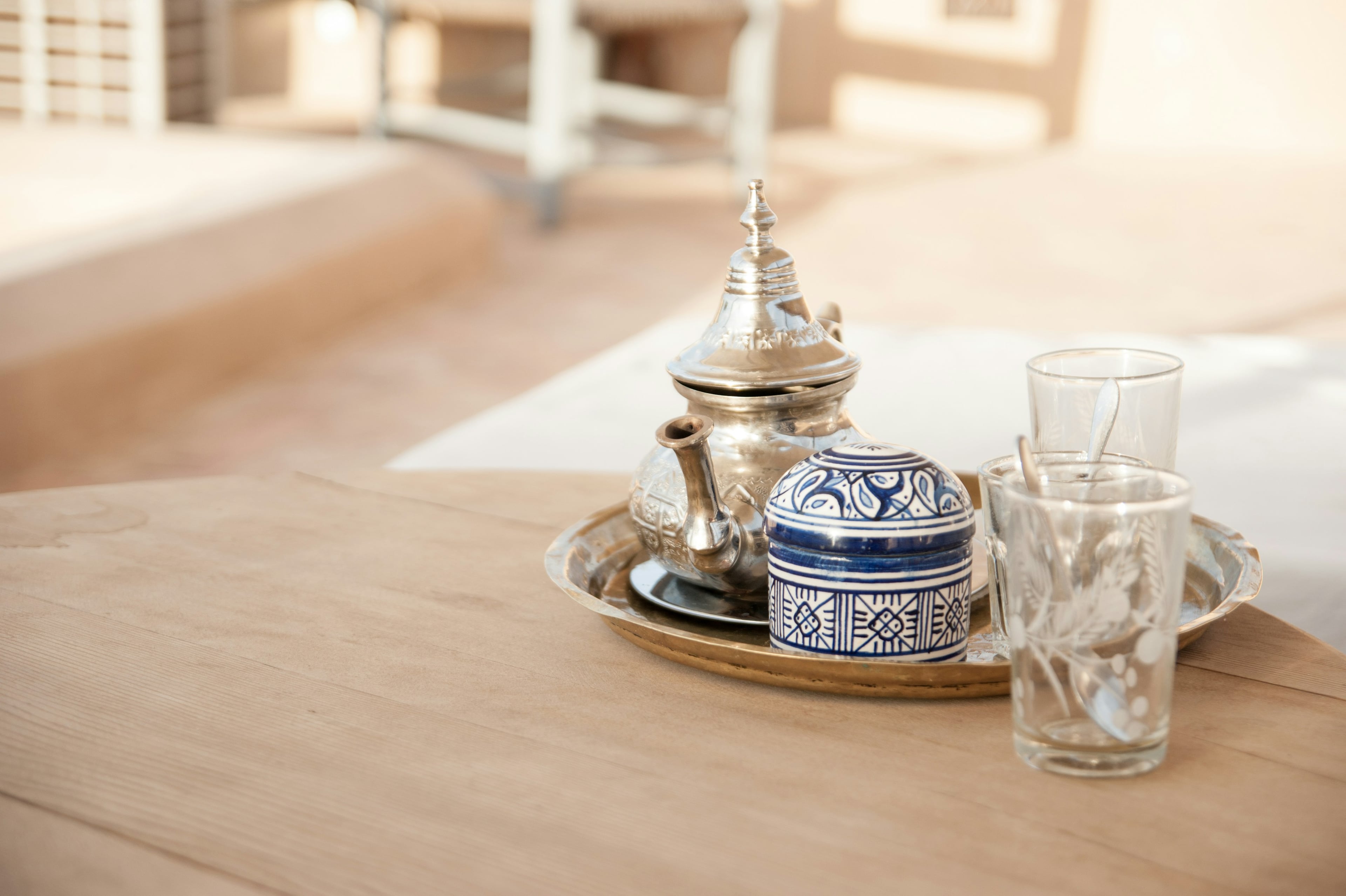
The hour of iftar itself asks for a little planning, since at sunset, Rough Guides warns, everyone stops to eat, which can make things harder for travellers who rely on restaurants. Ask your hotel what it serves at sunset and later in the evening, and book any dinner outside it in advance. Vegetarian travellers should ask how each dish is made, harira included, since recipes vary from one kitchen to the next. Jain food is on request, agreed dish by dish with each kitchen, as explained in asking for vegetarian and Jain meals as a traveller in Morocco. Anyone who prefers to dine before sunset should arrange it with the hotel before arriving.
What stays open, and what may close
Hours change from one place, and one year, to the next, so we name none here. What the official advice and the guidebooks do say fits in a few lines:
- Hotels and restaurants that serve during the fast may seat guests who are eating apart from Muslim guests, sometimes behind screens (UK government).
- Local cafés and restaurants: they often close, many of them for the whole month (Rough Guides).
- Shops and restaurants: check their opening hours before you go (UK government).
- Public offices may keep different working hours for the month (Morocco’s ministry in charge of administrative reform).
- Mountain treks: guides and muleteers are usually reluctant to lead them during the fast (Rough Guides).
- Eid al-Fitr brings two days of public holiday, when public offices close (the same ministry).
For everything else, from a museum to a hammam or a cooking class, check the hours on the official website or with your hotel a few days ahead, and again on arrival: the UK government suggests asking your guide or your hotel for advice once you are there.
Where to go in February and March
Ramadan 2027 falls in the mild weeks of late winter and early spring. Marrakech averages about 21 °C by day in February and 24 °C in March, while nights at Errachidia, the station nearest the dunes, average about 5 °C in February; the full picture is in Morocco’s weather in February and March, region by region. What the month changes is less the destination than the shape of each day.
Marrakech
The city suits the rhythm of the month: mornings for the gardens and monuments, a long pause in the afternoon, and evenings in the medina, when the Jemaa el-Fna, Rough Guides says, is bustling with musicians, dancers and acrobats. How to pace a stay for grandparents and children is set out in things to do in Marrakech for three generations.
The desert
The Agafay, a stone desert about 35 km from Marrakech, makes an easy evening, provided the drive back is planned around sunset. The dunes of Merzouga ask for two days on the road: start each day early, arrive well before dusk, and ask the camp in advance how it serves meals during Ramadan.
The High Atlas
Walking is where the month weighs most, since guides and muleteers are usually reluctant to lead treks during the fast. A drive into the valleys for the day, back before sunset, suits Ramadan better than a trek, which is best kept for another month.
The Atlantic coast
Essaouira, some two hours and forty minutes from Marrakech by road without stops, makes a day out if you are back before dusk, and a calmer one still as a stay of a night or two.
What the month gives, and what it asks
What it gives
- Evenings of music, hospitality and late walks through the medina.
- Mild days in Marrakech, at the turn of winter and spring.
- A view of Morocco’s year from within, from the breaking of the fast to Eid al-Fitr.
What it asks
- Meals by day planned ahead, at the hotel or in the car.
- Patience with slower afternoons and changing opening hours.
- The hour before sunset kept off the road.
- Treks kept for another month.
- Room around Eid al-Fitr, when public offices close for two days.
Is Ramadan right for your party?
Families with children will find the evenings the treat of the journey, with the music and the late walks. The days need gentler planning: meals at the hotel or in the car, outings in the morning, and a long rest in the afternoon.
Grandparents and older parents have mild weather on their side in February and March: about 21 to 24 °C by day in Marrakech. What matters is the rhythm of meals and journeys: settle the meals with each hotel before you leave, keep drives to the mornings, and be back before dusk.
Couples have the evenings: a late dinner, a walk through the medina after dark. In public, keep affection discreet at any time of year, as the UK government advises, and especially near religious sites.
Groups of friends and extended families should book dinners well ahead, gather after the fast is broken rather than at its hour, and choose hotels that serve guests through the day.
Muslim travellers who are fasting will find the times of dawn and sunset for each city in the timetable that the Ministry of Endowments and Islamic Affairs publishes, and the month ends with Eid al-Fitr, which Rough Guides calls a climax to its night-time festivities.
Visitors who are not Muslim, whatever their faith, Hindu, Jain, Sikh, Christian or none, are not expected to fast. What is asked of them is discretion in public by day, in eating, drinking and smoking.
Five questions before you choose your dates
- Do your dates cross Ramadan, or Eid? In 2027, Ramadan is expected from about 8 February to 9 March, followed by the two days of Eid al-Fitr; each date may fall a day later.
- Is a trek, or a long drive, the heart of the journey? Then plan every day around dusk, or choose the weeks either side.
- Who in your party needs meals at fixed hours? Settle them with each hotel before you book.
- Would you like to share the evenings of Ramadan? Then leave them free: a late walk, a long dinner, nothing to rush back for.
- Which dates matter in India’s own calendar? Basant Panchami on Thursday 11 February and Maha Shivratri on Saturday 6 March, both among the optional holidays on the Government of India’s list for 2027, fall within the month; Holi, on Tuesday 23 March, comes after it.
So, is Ramadan a good time to visit Morocco?
For travellers who are happy to slow down, yes. February and March are mild, travel goes on, and the evenings of Ramadan, with the breaking of the fast, the music in the squares and the late walks through the medina, give a journey something no other month does. The month asks for a little planning in return: meals by day at the hotel or in the car, mornings for visits, the road left alone at dusk, and treks kept for another season.
If your journey rests on long days in the mountains, or on eating out at every hour, choose the weeks either side instead: late January, or late March, when Holi and the spring follow. Planning a journey for your family or your friends during Ramadan, or just outside it? Write to us with your dates, the ages in your party and the regions you have in mind, and we will answer by e-mail or video call.
Questions travellers ask about Ramadan in Morocco
Can tourists eat in public in Morocco during Ramadan?
Are restaurants open in Morocco during Ramadan?
What time is iftar in Marrakech in 2027?
Does Morocco change its clocks for Ramadan?
When is Eid al-Fitr in Morocco in 2027?
Do travellers who are not Muslim have to fast?
Editorial note
This guide draws on the UK government’s travel advice for Morocco; the announcement of Ramadan 2026 by Morocco’s Ministry of Endowments and Islamic Affairs, as reported by Hespress, and the prayer timetable the Ministry publishes for each city; the page of Morocco’s ministry in charge of administrative reform on working hours and public holidays; the Kingdom of Morocco’s list of religious and national holidays; the decree of 25 June 2026 on Morocco’s legal time; the forecasts of the Astronomy Centre of the United Arab Emirates for Ramadan and Eid in 2027, as reported by Khaleej Times and The National; the Royal Observatory Greenwich, on the Islamic calendar; NASA’s catalogue of the phases of the moon; the Government of India’s list of holidays for 2027; the World Meteorological Organization, for the long-term averages of Morocco’s Direction de la Météorologie Nationale (1991–2020) at Marrakech and Errachidia; Morocco’s national tourist office; and Rough Guides. All were read on 31 October 2026, except the decree, read on 28 October, and the Government of India’s list and the averages, read on 30 October. Before publication on 23 November 2026 we read GOV.UK (last updated 19 August 2026) and The National’s updated forecast again, and checked that the Ministry has not yet published its timetable for 2027. The expected dates for Morocco were checked on 23 November 2026 against the new moons published by the US Naval Observatory and the crescent visibility maps of the International Astronomical Center.
The hours of the fast are our own estimate for Marrakech, calculated from the course of the sun by two methods and set against the Ministry’s timetable for October 2026, the only one available when we wrote this; the two methods differ by a few minutes in February and March, so the hours are rounded to ten minutes. The distances and driving times follow our guides to the best time to visit Morocco from India, to Marrakech with family and to the Merzouga desert. Religious dates remain estimates until they are announced, and opening hours change: check both before you book. Apart from the news outlets, publishers and public bodies cited as sources, no business is named, and none is recommended. Sehra Morocco plans Indian weddings and journeys in Morocco; it has not yet delivered a wedding, and this guide describes no journey of its own.
- GOV.UK, Morocco travel advice: safety and security (Ramadan, laws and cultural differences, women travellers, driving), updated 19 August 2026
- Kingdom of Morocco, Ministry of Endowments and Islamic Affairs, prayer times for the cities of the kingdom (in Arabic, official time GMT); Hespress, Morocco to begin Ramadan on Thursday, 18 February 2026
- Kingdom of Morocco, ministry in charge of administrative reform, working hours and public holidays (in French); religious and national holidays
- Kingdom of Morocco, Official Bulletin no. 7521 of 29 June 2026, decree no. 2.26.530 of 25 June 2026 on legal time (PDF, in Arabic)
- Forecasts for Ramadan and Eid 2027: Khaleej Times, 22 August 2026; The National, 9 September 2026, updated 6 October 2026
- International Astronomical Center, crescent visibility for Ramadan 1448 and Shawwal 1448; US Naval Observatory, phases of the Moon, read on 23 November 2026
- Royal Observatory Greenwich, How to sight the new crescent Moon; NASA, Six Millennium Catalog of Phases of the Moon, 2001 to 2100
- Government of India, Department of Personnel and Training, Office Memorandum F. No. 12/2/2023-JCA of 16 July 2026, holidays to be observed in Central Government offices during the year 2027 (PDF, as circulated by the Department of Posts on 8 September 2026)
- World Meteorological Organization, World Weather Information Service: Marrakech and Errachidia
- Moroccan National Tourist Office, gastronomy
- Rough Guides, When to go to Morocco (Ramadan in Morocco), updated 15 May 2025
Written by Sehra Morocco. Last reviewed: .
Tell us about your trip.
By e-mail or video call. We reply within two working days.