Things to do in Marrakech for Indian families: from grandparents to grandchildren
The best things to do in Marrakech with family are the ones three generations can share: a garden at opening time, a palace courtyard before the heat, a craft learned side by side, and a desert evening once the sun has gone.
Reviewed 24 October 2026 · Updated 12 November 2026 · Sources at the end
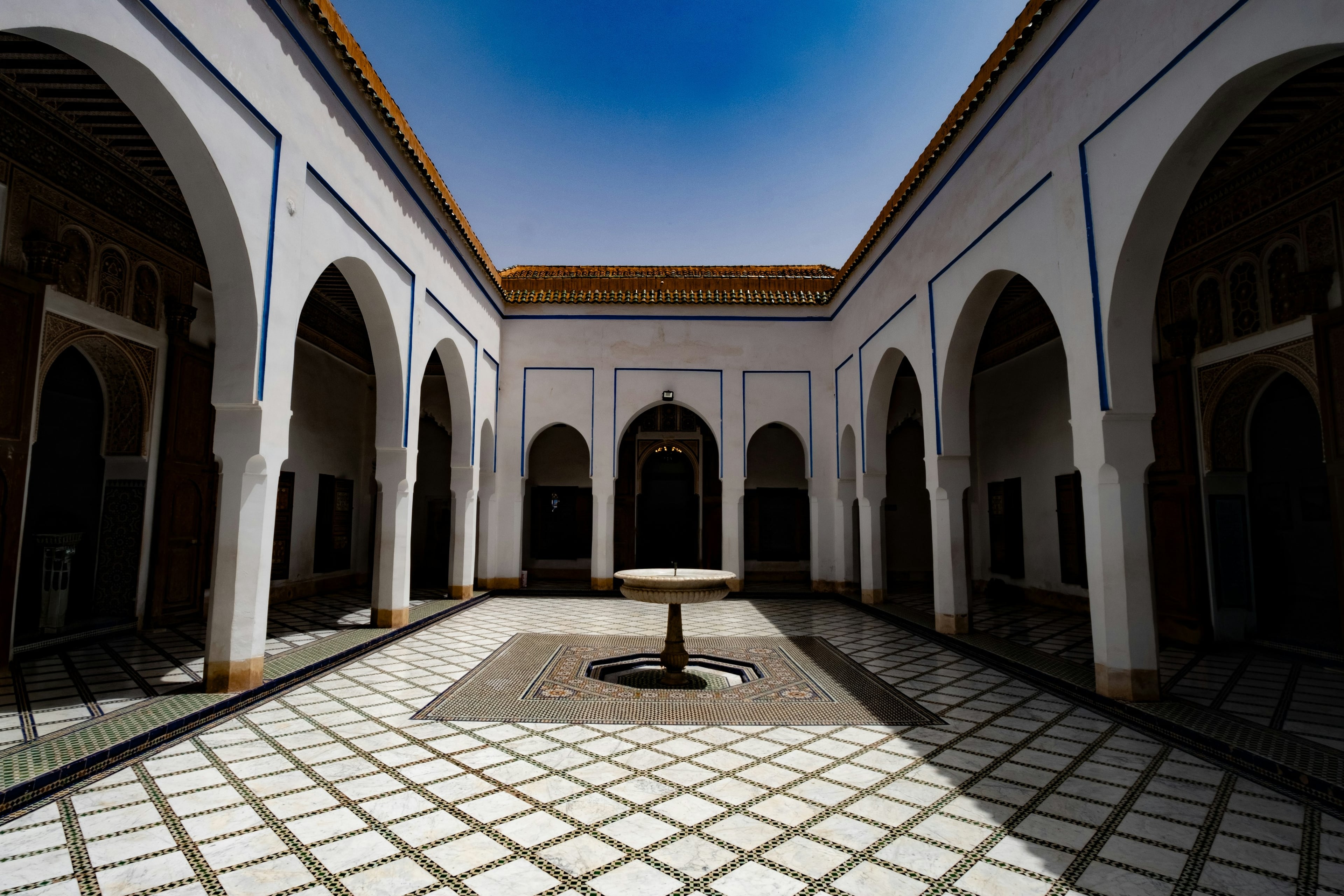
In Marrakech, a family day is shaped less by a list of sights than by three things: the midday heat, the walking in the medina and the chill that follows sunset in winter. Most of the things to do in Marrakech for Indian families are the ones every traveller comes for, from the souks of the medina to the Jardin Majorelle, the Agafay and the High Atlas. What changes is the pace, the vegetarian table and the ages each outing really accepts.
This guide sets out, place by place, what suits a grandmother, a teenager and a four-year-old, the minimum ages that operators and workshops publish or confirm, and the few pitfalls worth knowing before you go. It covers Marrakech, also spelled Marrakesh, and the outings within two hours of the city; food and the seasons have guides of their own, linked where they matter.
Marrakech with family, at a glance
The places to visit in Marrakech are much the same for every family; what changes is who goes where, and at what hour. These ten are worth your time, with the generation each suits best.
- The medina and its souks
- Everyone, in the morning
- Narrow, uneven lanes; go with a guide who carries an official badge
- Jemaa el-Fna at dusk
- Parents and teenagers; grandparents for an hour
- Storytellers, musicians and henna artists, in a square listed by UNESCO as intangible heritage
- The Koutoubia and its gardens
- All ages, from outside
- An active mosque that non-Muslims do not enter; its minaret rises 77 metres
- The Bahia Palace
- Grandparents and lovers of craft
- Fourteen years of work by Moroccan and Andalusian craftsmen
- The Jardin Majorelle and the Yves Saint Laurent Museum
- Grandparents; a short visit for children
- The garden opens at 8 am every day; tickets only on its official website; the museum closes on Wednesdays
- A craft workshop
- From age 3 to grandparents, depending on the craft
- Ceramic painting for the youngest, calligraphy for ages 10 and up; most sessions take six to ten people
- A morning cooking class
- Families who like to cook together
- Often starts around 10 am and ends with lunch
- The Agafay at sunset
- All ages, with a shawl in winter
- A stone desert about 35 km away, less than an hour by road
- A hot-air balloon at dawn
- Agile adults, and children aged 3 or 4 and over, depending on the operator
- Pick-up before dawn, back around 10 am
- A day in the High Atlas villages
- Everyone, on gentle paths
- About 1 to 1½ hours by road; some paths are rocky and steep
| What | Best for | Good to know |
|---|---|---|
| The medina and its souks | Everyone, in the morning | Narrow, uneven lanes; go with a guide who carries an official badge |
| Jemaa el-Fna at dusk | Parents and teenagers; grandparents for an hour | Storytellers, musicians and henna artists, in a square listed by UNESCO as intangible heritage |
| The Koutoubia and its gardens | All ages, from outside | An active mosque that non-Muslims do not enter; its minaret rises 77 metres |
| The Bahia Palace | Grandparents and lovers of craft | Fourteen years of work by Moroccan and Andalusian craftsmen |
| The Jardin Majorelle and the Yves Saint Laurent Museum | Grandparents; a short visit for children | The garden opens at 8 am every day; tickets only on its official website; the museum closes on Wednesdays |
| A craft workshop | From age 3 to grandparents, depending on the craft | Ceramic painting for the youngest, calligraphy for ages 10 and up; most sessions take six to ten people |
| A morning cooking class | Families who like to cook together | Often starts around 10 am and ends with lunch |
| The Agafay at sunset | All ages, with a shawl in winter | A stone desert about 35 km away, less than an hour by road |
| A hot-air balloon at dawn | Agile adults, and children aged 3 or 4 and over, depending on the operator | Pick-up before dawn, back around 10 am |
| A day in the High Atlas villages | Everyone, on gentle paths | About 1 to 1½ hours by road; some paths are rocky and steep |
Opening days, hours and minimum ages change: check them on the official websites, or with the operator, before you go.
Three monuments tell much of the city’s story. The Koutoubia, whose first mosque was inaugurated in 1157, raises its 77-metre minaret over a plaza of gardens. The Bahia Palace, whose name means “the brilliant”, kept the finest Moroccan and Andalusian craftsmen at work for fourteen years. And in the heart of the medina, the Ben Youssef Madrasa, built in the sixteenth century and one of the largest in the Maghreb, arranges 130 student rooms over two floors around a courtyard.
How many days, and at what pace?
Four full days let three generations see Marrakech without hurrying. Count the half-days: a morning in the medina, a morning for the gardens and the Bahia Palace, a craft or a cooking class, an afternoon and evening in the Agafay, a full day in the High Atlas and, for those who fly, a dawn in a balloon. With a long rest in the middle of each day, that fills four days comfortably; three are enough if the Atlas waits for another trip.
The rhythm matters more than the count. Marrakech averages about 37–38 °C by day in July and August, according to the World Meteorological Organization: in those months, keep outdoor plans to the early morning and to the hours after about 5 pm. From December to February, the days are mild but the nights fall to about 6–8 °C, and evening outings need a warm layer. During Ramadan, some museums shorten their hours; what Ramadan changes for a family visit gives the dates and the detail.
Leave room around the journeys too. With grandparents, a sound rule is to keep time on the road to about five hours a day at most, and to spend the last night before the flight home quietly in Marrakech. Beyond the city, Morocco with kids and grandparents sets out the road times, the medicines and the children’s papers for the whole country.
A day that works for three generations
The shape that suits most families is simple: out early, a long pause at midday, a few hours apart in the late afternoon, and everyone together again at dusk.
- Early morning, together. The Jardin Majorelle opens at 8 am every day and states that it is accessible to people with reduced mobility. It has no activity designed for children, so a short visit suits the youngest best.
- Late morning, seated. A craft workshop of two to three hours, chosen so that everyone can sit: ceramic painting welcomes children from the age of 3, calligraphy those of 10 and over, and grandparents are at ease at either table.
- Midday, indoors. Lunch, then a long rest through the hottest hours, all the more from June to September.
- Late afternoon, apart. Grandparents rest in the gardens around the Koutoubia; parents and teenagers go into the souks with an official guide.
- Dusk, together again. An hour at Jemaa el-Fna as the light goes, then an early dinner; in winter, a shawl for the walk back.
A large family moves more easily through the souks in two or three small groups, each with its own official guide, than as one long line in a narrow lane.
With young children
Marrakech is generous with young children when the day leaves room for animals, water and making things, and when the ages are checked first. They vary more than parents expect: balloon flights take children aged 3 or 4 and over, depending on the operator; craft workshops range from ceramic painting at 3 to calligraphy at 10; and at indoor trampoline parks, jumping starts at 5, with an adult for under-10s. Many kids’ clubs start at 4, so the youngest need a nanny; for a wedding party, see kids’ clubs, nannies and care for the youngest guests.
Farms on the edge of the city let children feed the animals, bottle-feed young goats and ride a pony; one of them states plainly that it is not a crèche and that an adult must stay. On Saturday afternoons, MACAAL, a museum of contemporary African art, runs creative workshops for children aged 7 and over.
Water needs a little more thought. The city’s main water park opens for the warm season only: in 2026, it ran from 4 April to 1 November. Do not assume that a private villa pool comes with a lifeguard; for an afternoon of children in the water, ask for a qualified one.
If you hand the children to a nanny for an evening, ask the agency in writing about background checks, first-aid training and the languages spoken: agencies in Marrakech do not publish proof of insurance, and their background checks are self-declared. Henna artists work in Jemaa el-Fna, as UNESCO records; before any paste touches a child’s skin, ask what is in it.
With teenagers
Teenagers tend to want what feels like discovery: the noise of the souks, a craft with real tools, a night sky over the desert. Zellige, the Moroccan mosaic, is cut with a hammer and asks for moderate effort; workshops set its minimum age anywhere between 4 and 10, and calligraphy and basket embroidery start at 10. One weaving workshop in the medina welcomes children from the age of 8. For a rainy hour, escape rooms take players from 7, with an adult for under-14s, and laser games start at 6.
Quad bikes call for the most care. The UK government notes that quad-bike accidents involving British nationals frequently occur in resort areas, and that providers of adventure activities may not meet UK safety standards. Ask the operator its minimum age for drivers and for passengers and what its insurance covers, and check that your own travel insurance includes quad biking.
Two rules for the family photographer: a drone needs permission from Morocco’s civil aviation authority, and it is illegal to take photographs near sensitive political or military sites (UK government).
With grandparents and older parents
For grandparents, Marrakech is a city of gardens and courtyards, and the medina is the part that asks most of them. What matters for seniors is less the distance than the ground underfoot, the steps and the heat.
Where the walking is easy, and where it is not
Medina lanes are narrow, unevenly paved and sloping in places: a wheelchair is not practical there on foot, and a grandparent who tires easily is better served by a short, planned route than by a wander. The Jardin Majorelle, by contrast, states that it is accessible to people with reduced mobility. The Koutoubia stands in a large plaza with gardens, a rose garden among them, from which its minaret can be admired at leisure.
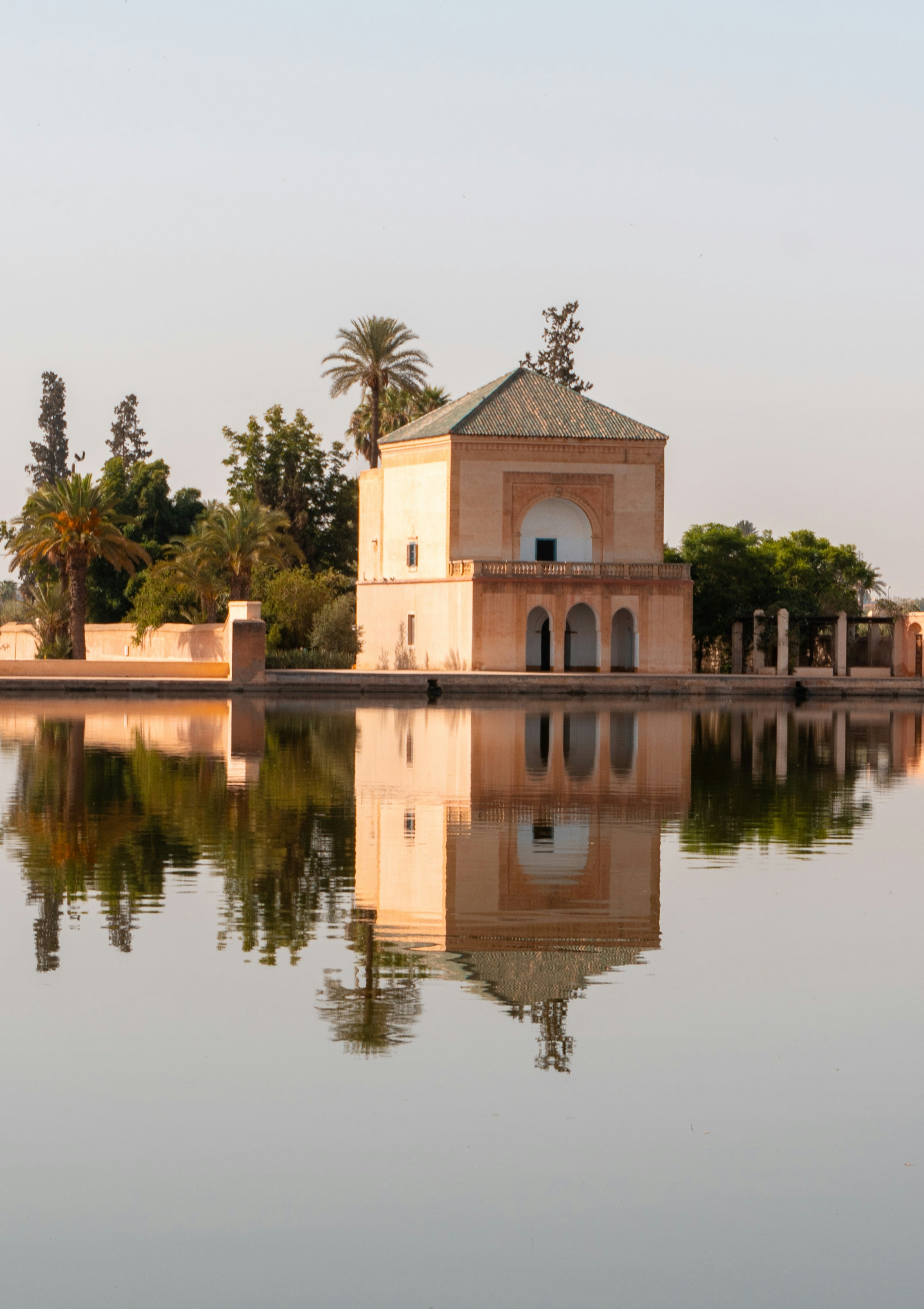
The Menara gardens, among the oldest gardens of the Muslim West according to the region’s official visitor guide, spread around a great basin and its pavilion. The pavilion’s upper floor is reached by a narrow, steep staircase: for most grandparents, the view across the water from the basin’s edge is the one to choose.
Beyond the city, ask how the last stretch is covered. One Agafay camp, for instance, reaches parts of its site on foot even when a buggy or a 4x4 covers some of the way, and works without electricity, by candlelight and braziers: paths need lighting for anyone unsteady after dark. Some Atlas lodges can be reached only by a climb of about fifteen minutes on foot, with the luggage carried up by mule, and the walk to the upper waterfalls at Setti Fatma takes two to three hours there and back, over rocks: not one for grandparents or small children. Before a grandparent flies in a balloon, ask the operator how passengers climb into the basket, whether they stand for the whole flight, and what health or weight limits it sets.
Pauses, heat and the evening chill
Build the day around rests: a bench or a café table every hour or so, lunch indoors, and the hottest hours of summer out of the sun. Winter brings the opposite care. Evenings in the Agafay turn cold once the sun is down, and at Imlil, in the High Atlas, nights fall below zero in the heart of winter: enjoy the mountains over a sunny lunch rather than in the evening.
Keep the emergency numbers to hand: ambulance and fire 150, police 190, gendarmerie 177, according to the UK government’s travel advice for Morocco.
Evenings: Jemaa el-Fna and the desert sky
Evenings in the city belong to Jemaa el-Fna. The region’s official visitor guide recommends the square at dusk, and UNESCO inscribed its cultural space on the list of the intangible heritage of humanity in 2008: storytellers, poets, musicians, Gnaoua dancers and henna artists, in a square that stays busy well into the night. An hour is plenty for most grandparents; teenagers will want longer, with a parent. The UK government notes that petty crime is common in the historic medina quarters: keep phones and bags close, and the youngest within reach. The Koutoubia, too, is floodlit at night.
The other great evening lies outside the city. In the Agafay, desert camps can bring in an astronomer with a telescope for the night; in winter, warm layers matter as much as the menu.
Beyond the sights: crafts, kitchens and the hammam
Craft workshops are where generations meet most easily: everyone sits at the same table, and everyone leaves with something made by hand. They are small, too: most published sessions take six to ten people, and none of those reviewed in October 2026 takes more than twenty. At one medina studio, calligraphy and perfume take about two hours, pottery two and a half and zellige three, and several workshops run side by side, so a large family can split by age and rotate. English is common, with French and Arabic, but none of the workshops reviewed offers sessions in Hindi.
Henna has its Moroccan form too. Moroccan henna, naqsh, has its own patterns and is a different art from Indian mehendi: a pleasure to compare, hand beside hand.
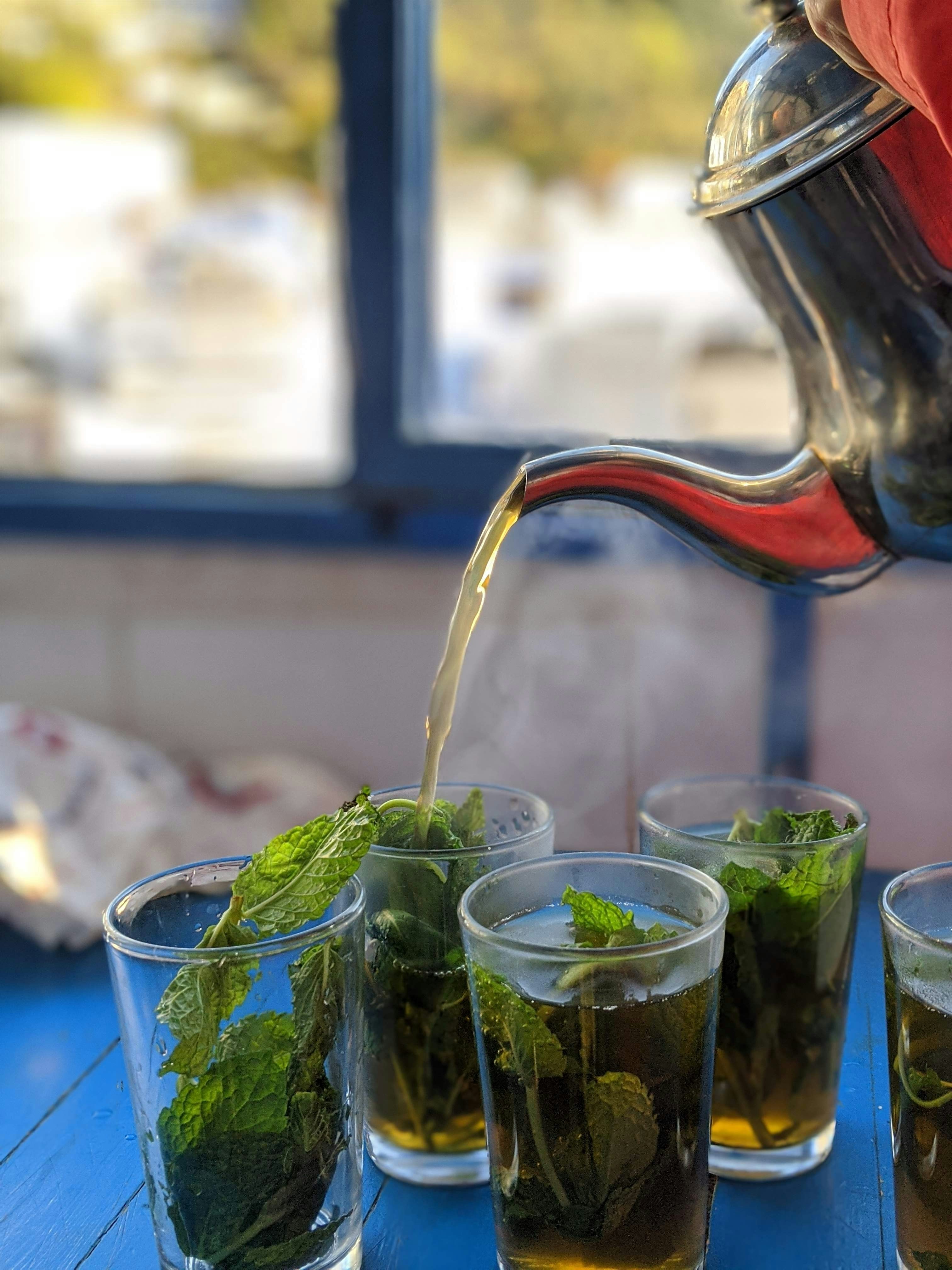
In the kitchen, several cooking classes start around 10 am and end with lunch, which suits those who prefer their main meal early in the day, and few take more than about twenty people at a time. Some medina neighbourhoods still bake their bread in a communal oven, and some classes include a visit.
Vegetarian days out
Ask for vegetarian food wherever you go, and ask about the tea break as well, since workshop pastries are often made with egg. Jain on request: none of the cooking classes reviewed in October 2026 mentions Jain cooking in writing, so a Jain menu is agreed dish by dish, as explained in eating Jain or vegetarian in Morocco as a traveller.
The hammam, together or apart
A hammam can be shared by a family in two ways: separate times for men and women, or a private room for each group. Ask which one is offered before you choose.
What to know before you go
- Guides. People posing as official guides are common in the medina; the UK government advises checking that a guide has an official badge and permission from the local authority. If someone offers to show you a “cooperative”, keep to the guide arranged in advance.
- Sales rooms. Some medina workshops end in a sales room: ask beforehand whether yours does.
- Tickets. Tickets for the Jardin Majorelle and its museums are sold only on the official website; tickets bought anywhere else do not give access.
- Dress and alcohol. The UK government suggests loose-fitting clothing that covers the arms, legs and chest. Drinking alcohol in the street, or anywhere other than a licensed restaurant or bar, is illegal.
- Ramadan. Eating or drinking in public in the daytime may cause offence (UK government), and some museums shorten their hours.
- Sunday 31 January 2027. The 37th Marrakech International Marathon starts at 7.45 am, and the half marathon at 9.15 am: plan that morning’s journeys around it.
Beyond the walls: the Agafay, the Atlas and a balloon at dawn
The Agafay
The Agafay is a stone desert about 35 km from Marrakech, less than an hour by road: close enough for an afternoon and an evening, with no night away unless you want one. A camel carries one adult and one child at most, so a small rider always has company. Quads and buggies are the noisier choice; the advice for teenagers above applies to every age. For an evening or a night in the camps, see our guide to the Agafay desert from Marrakech.
A balloon at dawn
Pick-up comes before dawn, between about 4.30 and 6 am depending on the season; the flight lasts 40 to 60 minutes, and passengers are back around 10 am. Children are accepted from the age of 3 or 4, depending on the operator, and one operator advises against flying during pregnancy. One serves a fully vegetarian breakfast with no alcohol, and most operators move a flight cancelled for weather to another date, or refund it.
Choose the operator with care. The UK government advises flying only with a licensed operator, since unlicensed providers may not meet the required safety standards. In May 2025, the authorities moved against twelve balloon companies around Marrakech for flying without authorisation or above the permitted altitude, and flights resumed in late 2025 under closer supervision (Hespress, Bladi).
The High Atlas and the Ourika valley
The Atlas villages lie about 1 to 1½ hours from Marrakech, and Setti Fatma, in the Ourika valley, 1½ to 2 hours. Gentle walks of 45 minutes to an hour link some villages, though one mountain lodge warns that its paths are rocky and steep in many places.
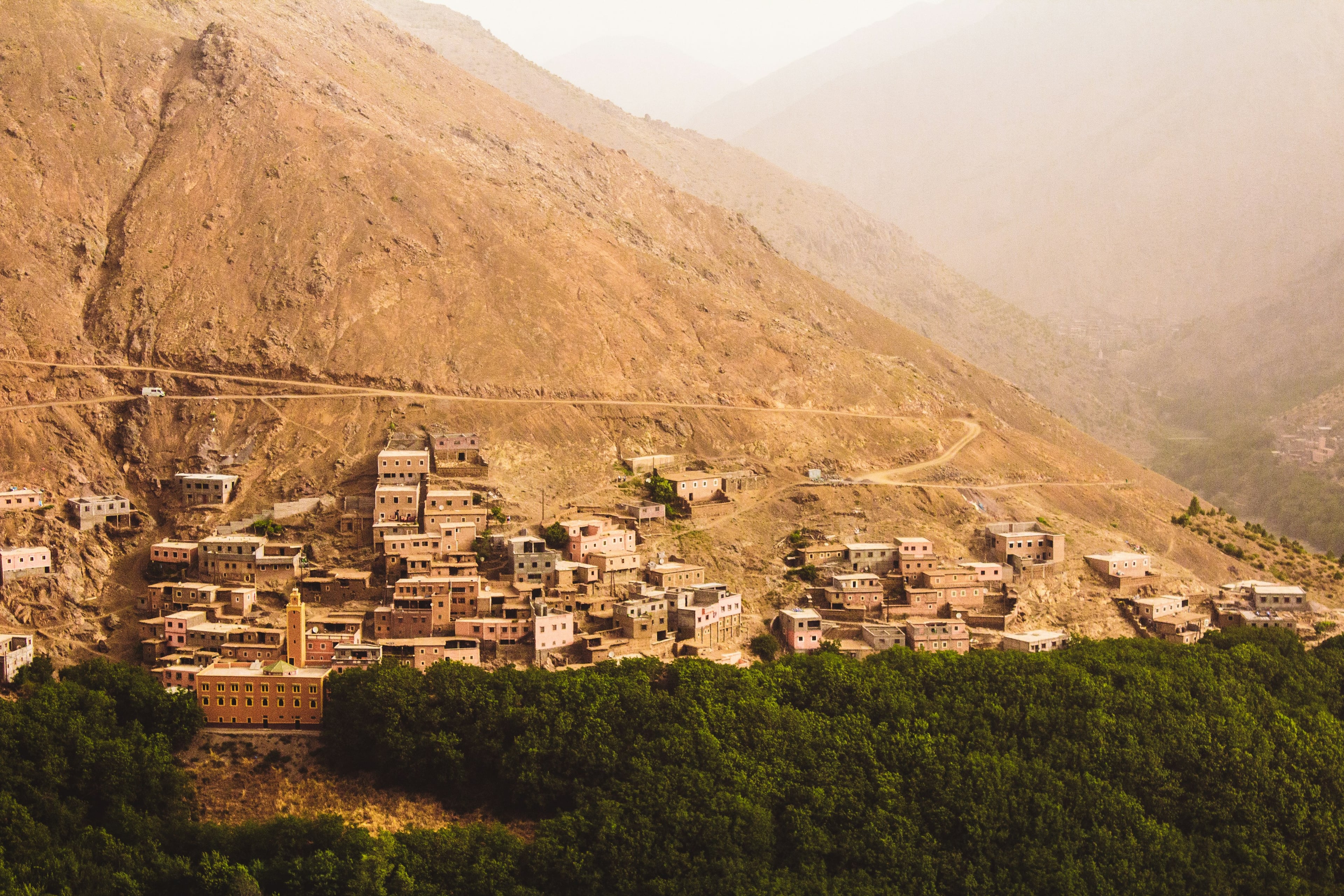
The mountains keep their own weather. The UK government warns that heavy rain can cause flash flooding, particularly in the mountains or near rivers during the winter months, and the Ourika valley has flooded in summer as well, in August 1995 and again in August 2011: check the forecast before driving up a valley, and keep it for another day if storms are expected. The lake of Lalla Takerkoust is a reservoir for drinking water and irrigation: swimming there is officially prohibited, and its water level varies widely.
Essaouira, Fès and the Sahara need nights of their own; the falls of Ouzoud, three hours away, fit in a long day, though a night is kinder to grandparents. See our guides to Essaouira, Fès and the Merzouga desert, and to the Atlas Mountains from Marrakech.
Six questions to ask before any outing
- Is the operator licensed? Essential for a balloon, and worth asking of anyone who takes your family into the air, the desert or the mountains.
- What is the minimum age, and for which role? A quad driver, a quad passenger and a balloon passenger do not have the same limits.
- How much walking remains once the vehicle stops? In the desert and the mountains, the last stretch is often on foot.
- What will be served? Vegetarian food, Jain food if your family needs it, and the tea-break pastries in the same question.
- What happens if the weather cancels? A new date or a refund, set out in writing.
- In which language will it be led? English is common but not universal; for a grandparent who speaks only Hindi or Gujarati, a family member who translates makes the difference.
Here for a wedding? Keep a dawn balloon away from the morning after a late Sangeet: pick-up comes before 6 am. The three-hour margin to leave before each ceremony is explained with the trips planned around a wedding in Morocco, and how elders, children and a large guest list are looked after has a page of its own.
So, what should an Indian family do in Marrakech?
Start with the medina and Jemaa el-Fna, the gardens and the Bahia Palace; add one thing made together, a craft or a cooking class; and give a day to the world beyond the walls, in the Agafay or the High Atlas. Let the youngest have their animals and their workshop, the teenagers their tools and their evening in the square, and the grandparents their gardens, their seat in the shade and short walks on known ground.
Taken at that pace, Marrakech lets three generations spend most of the day in the same places, even when they are not doing the same things.
Sehra Morocco plans Indian weddings in Marrakech and across Morocco. If your family is coming for one, the private experiences we plan around a wedding are described on their own page, and you can write to us with your dates and the ages in your party.
Questions families ask about Marrakech
How many days do you need in Marrakech with family?
Is Marrakech good for kids?
Is Marrakech suitable for elderly parents?
Can you go inside the Koutoubia mosque?
What should women wear in Marrakech?
When is the best time to visit Marrakech with family?
What should families avoid in Marrakech?
Editorial note
This guide draws on the UK government’s travel advice for Morocco; the Marrakech-Safi Regional Tourism Council; UNESCO; the official websites of the Jardin Majorelle, the Yves Saint Laurent Museum, MACAAL and the Marrakech International Marathon; the World Meteorological Organization; and reports in Hespress and Bladi. Some details were checked in writing with balloon operators, a desert camp and craft workshops between 1 and 23 October 2026, and are kept on file. Ages, group sizes and session lengths for other workshops, cooking classes, farms, activity parks and a water park come from their published programmes, reviewed in October 2026.
No business is named: workshops, operators and camps are described, not recommended, and only public places, gardens and museums are named. Opening days, hours and minimum ages change; check them again before you go. Sehra Morocco plans Indian weddings in Morocco; it has not yet delivered one, and this guide describes no event of its own.
- GOV.UK, Morocco travel advice: safety and security and getting help, updated 19 August 2026
- Marrakech-Safi Regional Tourism Council: the medina of Marrakech, Koutoubia Mosque, Bahia Palace, Ben Youssef Madrasa and the Menara gardens
- UNESCO, Cultural space of Jemaa el-Fna Square, inscribed in 2008
- Wikipedia, Kutubiyya Mosque (access for non-Muslims, gardens, lighting)
- Jardin Majorelle and Yves Saint Laurent Museum, Marrakech: opening days, tickets and access
- MACAAL, workshops for children
- World Meteorological Organization, World Weather Information Service: Marrakech
- Marrakech International Marathon, 2027 edition
- Hespress, 26 May 2025; Bladi, 30 November 2025 and 30 August 2011 (in French)
- Published programmes of craft workshops, cooking classes, farms, activity parks and a water park, reviewed in October 2026.
- Written answers from balloon operators, a desert camp and craft workshops, 1 to 23 October 2026, kept on file.
Written by Sehra Morocco. Last reviewed: . Text last updated: .