Is Morocco safe for Indians? The journey from India, from flights to dirhams
What official travel advice says about Morocco, then the journey itself: a connection in the Gulf or in Europe, the airport for Marrakech, five and a half hours of time difference and a currency you buy on arrival.
Reviewed 28 October 2026 · Updated 23 November 2026 · Official advice checked on 23 November 2026 · Sources at the end
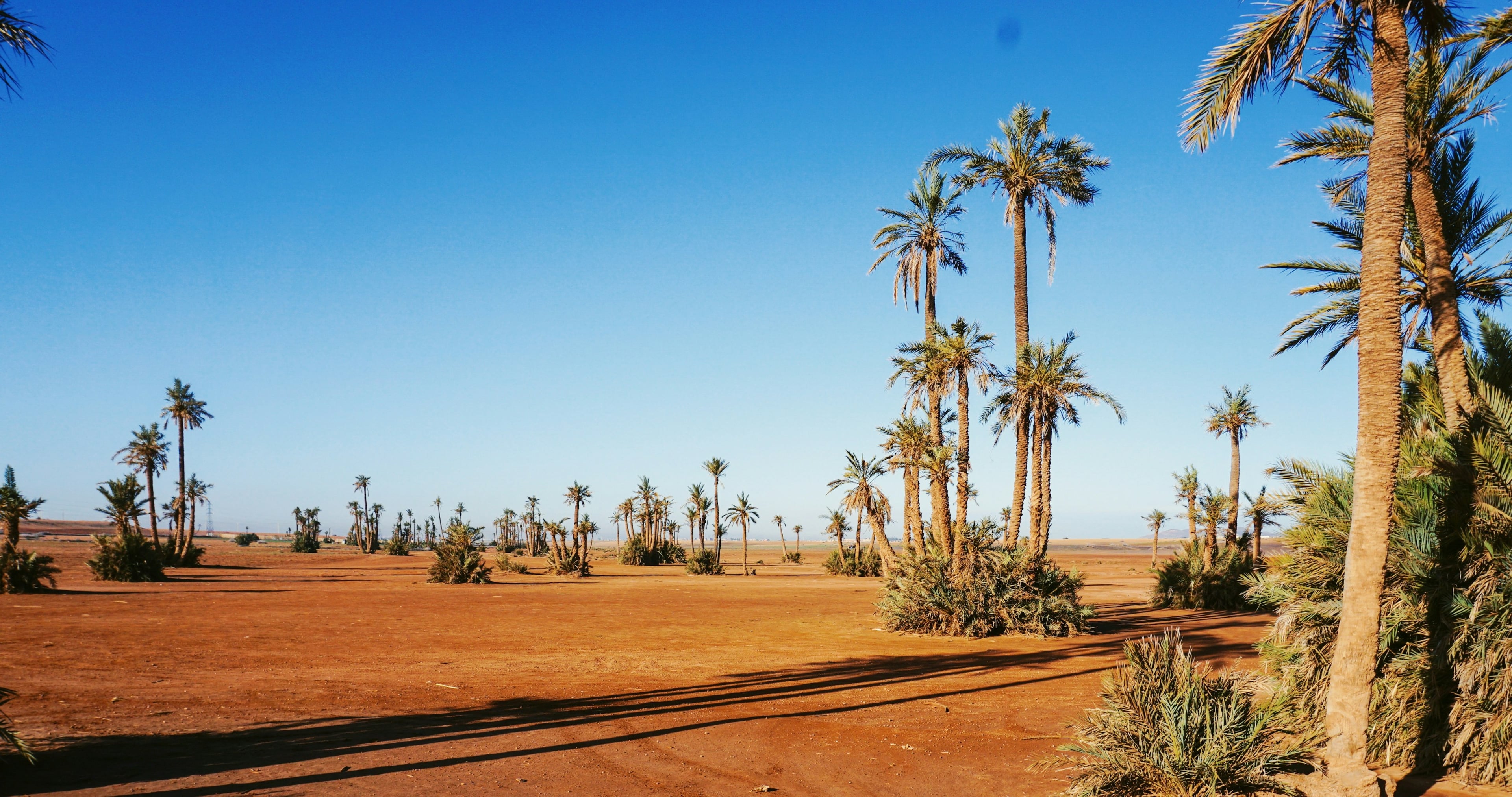
In their advice for Morocco, neither the British nor the American government tells visitors to stay away, and India’s Ministry of External Affairs describes the ties between the two countries as strong and friendly. Is Morocco safe for Indians, then? On the official advice checked on 28 October 2026, it is a country to visit with care rather than one to avoid. The United States places it at level 2 of 4, “exercise increased caution”, because of a risk of terrorism; the United Kingdom asks visitors to stay alert to that threat and to the petty crime common in tourist areas.
This guide gathers what a family travelling from India needs before the journey: what that advice means day to day, how Morocco and India regard each other, the flights and the airport for Marrakech, the time difference, the dirham, and what makes a trip cost more or less. Sehra Morocco plans Indian weddings in Marrakech and across Morocco. The facts below come from official sources, read on 28 October 2026 and listed at the end; the practical advice that follows from them is ours. The visa, the seasons and the food have guides of their own, linked where they matter.
From India to Morocco, at a glance
The essentials, checked on 28 October 2026:
- Official advice
- United States: level 2 of 4, “exercise increased caution” (4 September 2026). United Kingdom: no warning against travel in its advice for Morocco
- Visa
- Required on an Indian passport: the eVisa, applied for online before you fly
- Flights
- No non-stop flight between India and Morocco published on 28 October 2026; one connection, in the Gulf or in Europe
- Airport for Marrakech
- Marrakech Menara (RAK), 3.5 km from the city centre
- Time
- India is 5 hours 30 minutes ahead of Morocco, all year round
- Currency
- The Moroccan dirham (MAD), a closed currency: buy it after you land
- Phone
- Indian roaming stays off until you ask; a Moroccan prepaid line needs an identity document, and Orange Maroc accepts a passport
- Emergency numbers
- Police 190, ambulance and fire 150, gendarmerie 177
Flight schedules, rules and travel advice change: check them again with the airline and the official sources before you book.
One formality comes before any booking. An Indian passport needs a visa for Morocco, and most travellers apply online for the eVisa on Morocco’s official portal before they fly; who qualifies, what to upload and how long it takes are set out in the Morocco eVisa for Indian passport holders.
Is Morocco safe for Indian travellers?
The British and American governments both publish detailed, regularly updated advice on Morocco. It is written for their own citizens, but most of its warnings concern places and situations rather than passports, so it is useful to any visitor.
The US Department of State’s advisory, issued on 4 September 2026, places Morocco at level 2 on a scale of four, “exercise increased caution”, because of a risk of terrorism, and notes that some areas carry an increased risk. Its advice is to stay aware of your surroundings and alert in tourist spots, and to travel insured.
The UK government’s advice, updated on 19 August 2026 and still current on 28 October, says that terrorists are likely to try to carry out attacks in Morocco, including at transport hubs, in places popular with tourists and in crowded places, and that the authorities regularly disrupt terrorist cells. Hotels and tourist sites may have protective security measures, such as security guards. The UK’s advice for Morocco carries no warning against travel.
Day to day, most of the advice concerns petty crime. Pickpocketing, bag-snatching and thefts of visible jewellery and handbags from passing motorcycles are common in tourist areas, especially in the historic medinas and on beaches. Violent crime is occasional; the UK government advises avoiding quiet areas after dark and not carrying large amounts of money or valuables.
What the advice means in practice
- Keep the wedding jewellery for the celebration. In the lanes and streets, the UK advice warns of thefts of visible jewellery from passing motorcycles.
- Choose an official guide. People posing as tourist guides are common; in the medina, a guide should carry an official badge and permission from the local authority.
- Take a licensed taxi, or a transfer booked in advance. Cars booked through ride-sharing apps may be unlicensed and not insured to carry passengers; in a city taxi, agree the fare first or check that the meter is running.
- Keep your card in sight. The UK government notes that credit card fraud and scams are common.
- Step away from demonstrations. Protests can occur in large cities, often without warning, and can disrupt travel.
- Prefer daylight on the road. Road accidents are frequent, and poor lighting makes driving at night dangerous.
- Know the natural risks. Earthquakes are a risk in Morocco, as the one of 2023 showed, and heavy winter rain can cause flash floods in the mountains: follow the instructions of the local authorities.
Women may receive unwanted attention, especially when travelling alone, according to the same advice, which suggests loose-fitting clothing that covers the arms, legs and chest.
Is Morocco friendly with India?
By India’s own account, warmly so. The Ministry of External Affairs traces the ties back to the fourteenth century, when Ibn Battuta, the traveller from Tangier, journeyed to India. India recognised Morocco on 20 June 1956, as soon as it became independent, and the two countries established diplomatic relations in 1957. On coming to the throne, Mohammed VI chose India for his first visit to an Asian country, in 2001, and the Ministry counts some thirty ministerial visits and exchanges, and more than forty agreements, since 2015.
The warmth is cultural too. Hindi films are hugely popular in Morocco, the Ministry notes, and Moroccan television channels show them regularly. The Embassy of India in Rabat celebrates Holi and Diwali with Indo-Moroccan associations, and marks the International Day of Yoga with sessions in several cities, Marrakech among them. About 1,350 Indians live in Morocco, mostly in Casablanca and Tangier; Indian citizens who need consular help can turn to the embassy in Rabat.
Flights from India to Morocco
Is there a direct flight from India to Morocco?
Not at present. None of the airlines checked on 28 October 2026 publishes a non-stop flight between the two countries: Royal Air Maroc, Morocco’s national airline, lists no Indian city in its network, and Air India’s list of non-stop international flights includes no Moroccan one. The same day, the flight board of ONDA, the authority that runs Morocco’s airports, showed no flight to or from India. Every journey therefore includes at least one connection, in the Gulf or in Europe.
Through the Gulf: Dubai or Doha
In the Gulf, Emirates flies from Mumbai and Delhi to Dubai, and from Dubai to Casablanca. Qatar Airways flies from Mumbai and Delhi to Doha, and from Doha straight to Marrakech, Casablanca and Rabat. Royal Air Maroc also links Morocco with Dubai, Doha, Jeddah and Riyadh.
Through Europe
Europe is the other way in. Air India flies non-stop from Delhi or Mumbai to London, Paris, Frankfurt and Milan, and Marrakech receives direct flights from many European cities: on 28 October 2026, ONDA’s board showed arrivals from Paris, London, Frankfurt and Milan, among others.
A European connection brings one more question. Depending on the country and on whether you pass through border control, an Indian passport may need a transit visa; the UK government, for one, asks travellers to check whether they need one, and it is wise to do so before booking. Where you can, keep the whole journey on a single booking: with separate tickets, a late first flight becomes yours to solve.
Reaching Marrakech
Some routes land in Marrakech itself: Qatar Airways from Doha, and flights from Istanbul and several European cities. Others, Emirates among them, land at Casablanca Mohammed V, at Nouasseur, about 30 km from Casablanca, from where Royal Air Maroc flies on to Marrakech. With grandparents in the party, one connection rather than two is often worth a slightly longer journey. If you land in Casablanca, see a night or two in Casablanca.
Mumbai or Delhi to Marrakech: how long does it take?
With no non-stop flight, the answer lies in the connection. Emirates’ published schedule between Mumbai and Casablanca, read on 28 October 2026 for departures between 29 October and 8 November, showed journeys from 13 hours 25 minutes with a change of aircraft in Dubai, and from 12 hours 50 minutes on the way back; the single option shown from Delhi took 20 hours 10 minutes outbound, with a longer wait between flights, and 13 hours 15 minutes on the return. Marrakech adds a domestic flight to those times, unless you fly in directly from a hub that serves it.
Schedules change with the seasons, and the airline shows the total time of each itinerary when you search. Compare that total, and the hour you land, rather than the flying time alone: a daylight arrival is kinder to elders and children than one in the small hours.
Which airport for Marrakech?
Marrakech Menara, code RAK, is the city’s airport; ONDA places it 3.5 km from the city centre. Casablanca Mohammed V, code CMN, is the one to look for when your flight lands in Casablanca.
On arrival, check that your passport is stamped at the border: the UK government notes that some travellers have had difficulty leaving Morocco without an entry stamp. For the drive into town, its advice on taxis applies; with luggage, elders and children, a transfer booked in advance spares the negotiation altogether.
Coming for a wedding? The welcome begins at the aircraft door: see how wedding guests are met at the airport and looked after until they leave.
The time difference between India and Morocco
India is 5 hours 30 minutes ahead of Morocco, all year round: when it is noon in Marrakech, it is 5.30 pm in Mumbai, Delhi and every other Indian city. Neither country changes its clocks. Indian Standard Time is UTC plus 5 hours 30 minutes, as kept by India’s National Physical Laboratory, and Morocco keeps Greenwich Mean Time.
In Morocco, that is recent. A decree of 25 June 2026, published in the kingdom’s official bulletin, returned the country to GMT at 2 am on Sunday 20 September 2026, by setting the clocks back sixty minutes, and repealed the 2018 decree that had added an hour to legal time. It makes no provision for a change in summer or during Ramadan. Older travel pages may still describe the former arrangement, an hour ahead of GMT with the clocks turned back for Ramadan; in Morocco today, the time is GMT.
For a family, the arithmetic is simple: a morning call from Marrakech reaches India after lunch, while a call after a Moroccan dinner arrives well past midnight.
Staying connected: roaming, a local SIM or an eSIM
There are three ways to keep your phone working in Morocco: switch on international roaming on your Indian number before you leave, buy a Moroccan prepaid SIM card with your passport, or install an eSIM from a Moroccan operator. You can also combine two, keeping the Indian number for family and the bank, and a Moroccan line for data and local calls.
Roaming on your Indian number
In India, international roaming is switched off by default: under the rules of the Telecom Regulatory Authority of India, your operator activates it only when you ask, and you can switch it off again at any time. The same rules oblige the operator to tell you, by text message, e-mail or app, when roaming is activated and what activation costs; to give you the rates for your plan; to warn you, when you switch on your phone abroad without a roaming plan, that standard rates can be significantly high; to alert you as your data allowance runs down, at 50, 80, 90 and 100 per cent; and to give you a free short code to check your tariff and your bill.
Two checks before you fly, then: ask your operator to activate roaming, and make sure the plan you choose covers Morocco, and every other country on the route if you stop in Dubai, Doha or Europe on the way.
A Moroccan prepaid SIM card
Morocco has three national mobile operators: Maroc Telecom, Orange Maroc and inwi. In 2023, Morocco’s minister for digital transition told the upper house that the national telecoms regulator, the ANRT, had made it compulsory for operators to identify their mobile subscribers, with unidentified SIM cards to be cancelled after a three-month period. For a visitor, that means a SIM is sold against an identity document: Orange Maroc, for one, accepts a passport in its shops. Carry yours when you go to buy the card, and use a phone that is not locked to your Indian operator.
An eSIM from a Moroccan operator
With a phone that supports eSIM, there is no card to insert. Orange Maroc sells eSIMs in its shops and online, and sends the QR code that activates them by e-mail; inwi offers one too, in its shops or through its website. For Maroc Telecom, check its own site. Whether a visitor can complete the identification online before flying is for each operator to say: ask before you depend on it. An eSIM leaves the Indian SIM in place, so both numbers can stay in the same phone.
One last precaution: if your bank sends one-time codes by text message to your Indian number, ask your bank and your operator how you will receive them abroad, before you leave rather than at a checkout in Marrakech.
The languages you will hear
Morocco has two official languages. The Constitution of 2011, in its fifth article, states that Arabic remains the official language of the State, and that Amazigh is also an official language, as the common heritage of all Moroccans. In the street, what you will hear most is Darija, Moroccan Arabic: according to the 2024 census, nine people in ten use it.
The same census found that a quarter of the population, 24.8 per cent, uses one of the forms of Amazigh, among them Tachelhit, Tamazight and Tarifit; the share is a third in the countryside and a fifth in the towns. Shilha, or Tachelhit, is the language of the western High Atlas and the lands south of it, as our guide to the Atlas Mountains explains. Hassania, spoken in the far south, is used by less than one per cent. The Amazigh alphabet, Tifinagh, is read and written by about one and a half per cent of those who can read.
Beyond Arabic, the census counts who can read and write French and English. Among Moroccans aged ten and over who can read and write, 99.2 per cent read and write Arabic, 57.7 per cent French and 20.5 per cent English, a share that rises to a quarter in the towns and falls below a tenth in the countryside. English is common where visitors go, but not universal: when you arrange a guided visit or a class, ask for the language in advance. And do not be surprised if a conversation turns to Hindi cinema, which, as noted above, Moroccan television channels show regularly.
Money: the dirham, cards and cash
Morocco’s currency is the dirham (MAD). It is a closed currency, which the UK government describes as non-convertible: it cannot easily be exchanged outside Morocco. Under the rules of the Office des Changes, Morocco’s foreign-exchange authority, taking dirhams into or out of the country is prohibited, save for a small allowance in banknotes that travellers may carry. In practice, you buy dirhams after you land, at a bank or an authorised exchange office, and spend them before you leave.
Which currency should you bring? The Indian rupee is not among the thirteen foreign currencies for which Bank Al-Maghrib, Morocco’s central bank, publishes a banknote exchange rate; the euro, the US dollar, the pound sterling and the Gulf currencies are. Arriving with one of those, or with a bank card, is simpler than counting on rupees to change. What you may carry out of India is governed by Indian rules, which this guide does not cover: ask your bank before you travel. Families who live in the Emirates should note that the UAE dirham and the Moroccan dirham are two different currencies.
Three habits spare trouble at departure:
- Keep every exchange receipt. The Office des Changes allows visitors to change unspent dirhams back on presentation of their receipts and of the currency declaration made on arrival; without that declaration, only up to a limit.
- Declare large sums of foreign cash. Above a threshold set by the Office des Changes (the current figure is in the instruction linked at the end), the declaration to customs on arrival is compulsory, and it is what allows the same cash to leave Morocco again.
- Treat your cards with care. The UK government notes that credit card fraud and scams are common, and advises caution at cash machines, where aggressive begging is common.
What makes a trip from India cost more, or less
We give no figures here: airfares, rooms and exchange rates move constantly, and a figure printed today would mislead tomorrow. What decides the cost of a trip to Morocco from India can be named, though.
- The dates. Airfares and rooms follow demand, and demand follows the holidays: Diwali, Christmas and the school breaks of every country your party flies from.
- The route. A connection in the Gulf or in Europe, one stop or two, landing in Marrakech or in Casablanca and flying on.
- The visa. The eVisa fee is set by Morocco and paid for each traveller on the official portal.
- The stay. A palace or a riad, the number of nights, an evening in a desert camp or a night in the Atlas.
- Getting around. Private transfers, a driver for the whole stay, official guides.
- The table. Vegetarian and Jain meals arranged in advance with each kitchen.
- The size of the party. Three generations multiply rooms and vehicles; a wedding multiplies everything.
- The exchange. With no rupee rate published in Morocco, money usually changes twice, from rupees to a currency Morocco quotes and then to dirhams, and each step has its cost.
Weather and Ramadan, in brief
On weather alone, November to April are the gentlest months in Marrakech, while July and August are very hot inland; how those months meet India’s holidays, region by region, is set out in the best time to visit Morocco from India. Ramadan, next expected to begin in February 2027 according to the UK government, changes the rhythm of the day: eating, drinking or smoking in public in the daytime may cause offence, it is worth checking the opening hours of shops and restaurants, and driving may be erratic around dusk, as people hurry home. The expected dates, the hours of the fast and the evenings are in our guide to Morocco during Ramadan.
Laws and customs worth knowing
Morocco is an Islamic country, and the UK government asks visitors to respect its laws and customs, especially during Ramadan and near religious sites. It advises against showing affection in public, particularly near religious sites and in tourist areas. Alcohol is served in licensed venues, but drinking it in the street, or anywhere other than a licensed restaurant or bar, is illegal. Ask before photographing people, especially children; never photograph sensitive political or military sites; and fly a drone only with the permission of Morocco’s civil aviation authority.
Food: vegetarian and Jain, in brief
Vegetarian meals are best asked for clearly rather than assumed, and Jain food is on request, agreed dish by dish with each kitchen. How to ask, in which words and before which hour, is explained in eating vegetarian or Jain in Morocco as a traveller.
Seven questions to settle before you fly
- Is every passport valid, and every eVisa issued? One eVisa per traveller, children included, before anyone boards.
- Which connection suits the oldest traveller? One stop, a reasonable wait and a daylight arrival matter more than a short flying time.
- Does a European connection need a transit visa? Check with the country of transit before you book.
- Does the insurance cover the whole trip? The UK government advises insurance that covers the itinerary, the activities planned and emergencies, including medical evacuation: public hospitals provide limited care, and private clinics work to a higher standard.
- Are the medicines packed? Bring enough prescription medication for the whole stay, since some travellers have struggled to find theirs in Morocco. For a mehendi, ask what the henna contains: henna tattoos can cause a painful allergic reaction in some people. Travelling with children or grandparents? See what to prepare for Morocco with kids and grandparents.
- Which currency, and which card? Euros, dollars, pounds or a Gulf currency, and a card, rather than rupees.
- Who meets you at the airport? A transfer booked in advance, a first meal that suits everyone, and the emergency numbers saved: police 190, ambulance and fire 150.
So, is Morocco safe for Indians?
On the official advice of 28 October 2026, Morocco is a country to visit with open eyes rather than one to avoid. Neither the British nor the American government warns against it; the risks their advice names, a terrorism threat that the authorities work to disrupt, petty crime in crowded lanes and roads that call for care, are ones the advice asks visitors to keep in mind rather than reasons to stay away; and India’s Ministry of External Affairs describes its relations with Morocco as strong and friendly.
The rest is preparation: an eVisa before you fly, one well-chosen connection in the Gulf or in Europe, Marrakech Menara as the airport to aim for, a watch set five and a half hours back, and dirhams bought after you land. Once you are there, things to do in Marrakech with grandparents and children takes up the story.
Travel agencies preparing Morocco for clients in India will find how we work with travel agencies on a page of their own. And if your family is coming to Morocco for a wedding, write to us with your dates and the cities your guests fly from: Sehra Morocco plans Indian weddings in Marrakech and across Morocco, and we will answer by e-mail or video call.
Questions travellers ask before leaving India
Is Morocco safe for Indian tourists?
Are there direct flights from India to Morocco?
Which airport should I fly into for Marrakech?
What is the time difference between India and Morocco?
Which currency should I take to Morocco from India?
Can I buy a SIM card in Morocco with an Indian passport?
How much does a trip to Morocco cost from India?
Editorial note
This guide draws on the UK government’s travel advice for Morocco and its guidance on transit visas; the US Department of State’s travel advisory for Morocco; the brief on India–Morocco relations published by India’s Ministry of External Affairs in April 2026; Morocco’s decree n° 2.26.530 on legal time, published in the Bulletin officiel, and the report of its adoption by MAP, the national news agency; CSIR-National Physical Laboratory, which keeps Indian Standard Time; ONDA, Morocco’s airports authority; the published networks and schedules of Royal Air Maroc, Air India, Emirates and Qatar Airways; and, for money, the Office des Changes’ general instruction on foreign-exchange operations for 2026, its answers to common questions and Bank Al-Maghrib. All were read on 28 October 2026. On 23 November 2026, the UK government’s advice and the Ministry of External Affairs’ brief were checked again and had not changed, and the US Department of State still listed its advisory of 4 September 2026 at level 2, “exercise increased caution”. The weather in brief comes from the World Meteorological Organization, as detailed in our guide to the best time to visit Morocco from India. Staying connected and the languages of Morocco draw on India’s Telecom Regulatory Authority, for international roaming; a report by Hespress of a statement by Morocco’s minister for digital transition, for the identification of mobile lines; the websites of Orange Maroc and inwi (inwi: the eSIM page); the Constitution of 2011; and the 2024 census of the Haut-Commissariat au Plan. These were read on 23 November 2026.
Flight schedules, routes, rules and travel advice change, sometimes without notice: check them with the airline and the official sources before you book. Apart from airlines and public bodies, no business is named, and none is recommended. Sehra Morocco plans Indian weddings in Morocco; it has not yet delivered one, and this guide describes no journey of its own.
- GOV.UK, Morocco travel advice: safety and security, entry requirements, health and getting help, updated 19 August 2026; and visa to pass through the UK in transit
- US Department of State, Morocco travel advisory, issued 4 September 2026
- Government of India, Ministry of External Affairs, India–Morocco bilateral relations (PDF), April 2026
- Kingdom of Morocco, Bulletin officiel n° 7521 of 29 June 2026, decree n° 2.26.530 of 25 June 2026 on legal time (PDF, in Arabic); MAP, 25 June 2026 (in French)
- CSIR-National Physical Laboratory, Indian Standard Time
- ONDA, airport network and flight board of 28 October 2026
- Royal Air Maroc, our network; Air India, non-stop international flights; Emirates, Mumbai to Casablanca and Delhi to Casablanca; Qatar Airways, flights to Marrakech
- Office des Changes, Instruction générale des opérations de change 2026 (PDF) and exporting dirhams (in French)
- Bank Al-Maghrib, foreign banknotes exchange rate
- Telecom Regulatory Authority of India, Telecom Consumers Protection (Eleventh Amendment) Regulations, 2020 (PDF), regulations 17 to 23 (the same regulations stand in the consolidated text updated to March 2025)
- Hespress, identification of SIM cards, 12 July 2023 (in French); Orange Maroc, identification and eSIM; inwi, eSIM (in French)
- Constitution of the Kingdom of Morocco, 2011, article 5, French text as transcribed on Wikisource (the official PDF of the Ministry of Justice did not answer when checked); Haut-Commissariat au Plan, 2024 General Census of Population and Housing, main results (PDF, in French), pages 19 and 20
- World Meteorological Organization, World Weather Information Service: Marrakech
Written by Sehra Morocco. Last reviewed: . Official advice checked on . Text last updated: .