El Jadida and the Atlantic coast: Mazagan, Oualidia and the lagoons
Five centuries ago, Portuguese ships bound for India built a star-shaped fortress on this bay. It still stands, with a vaulted cistern beneath it, long beaches on either side and, further south, a lagoon where oysters grow. Here is how to reach this coast, how long to give it, and what to see.
Reviewed 12 November 2026 · Sources at the end
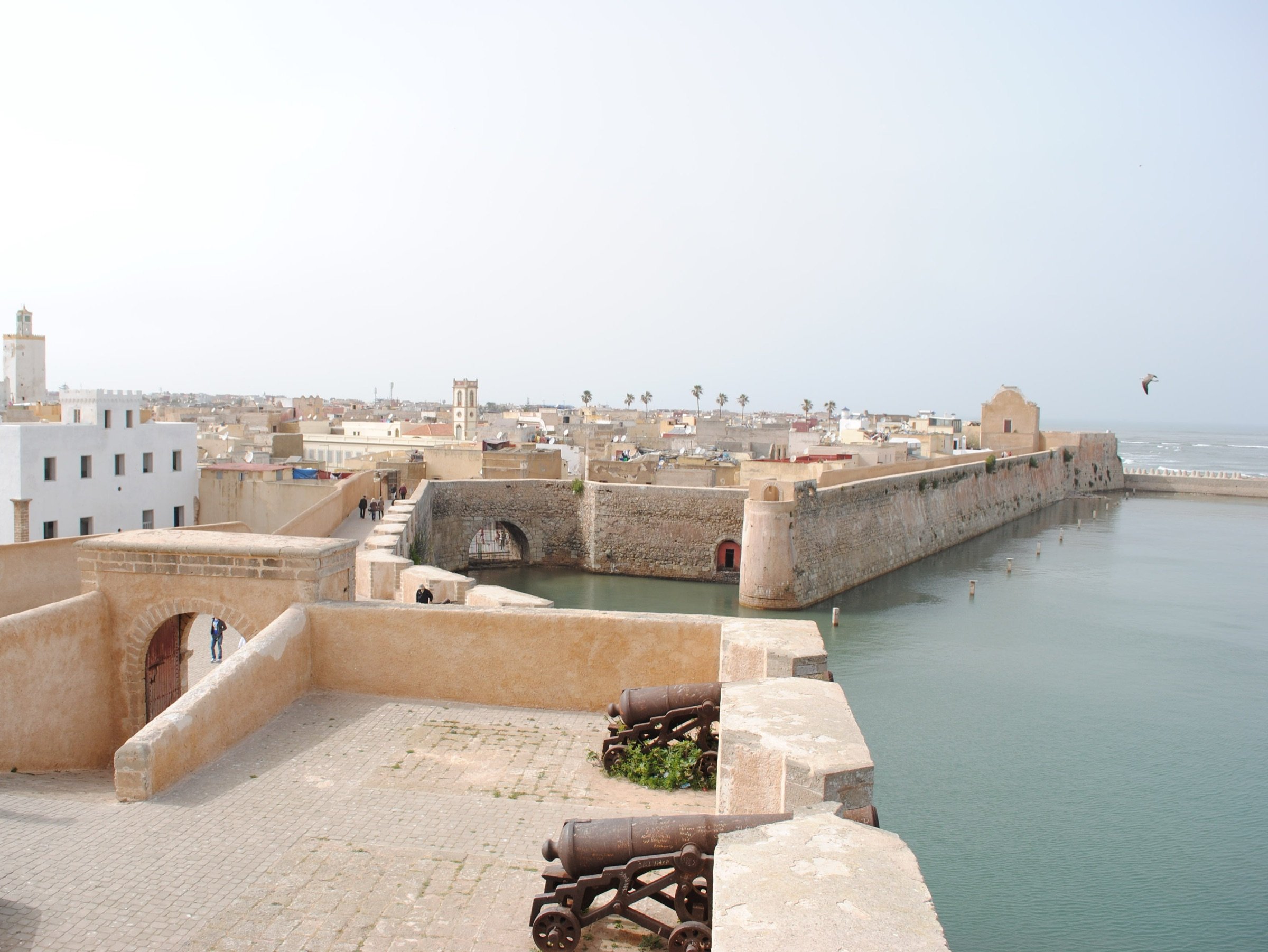
El Jadida lies on the Atlantic about 100 km south-west of Casablanca, an hour and a quarter by road, and some three hours from Marrakech. Give it one night for the Portuguese fortress and the sea, or two to add the lagoon of Oualidia, an hour or so further down the coast. El Jadida, in Morocco, is a coast to travel along rather than a destination to reach and leave: it fits between an arrival at Casablanca and the road south to Essaouira and Marrakech, and it suits families who want the sea without the crowds.
Below: the fortress of Mazagan and its cistern, the beaches, Oualidia and its oysters, the smaller lagoon of Sidi Moussa, the roads and the train, the weather, and meals. Sehra Morocco plans tailor-made journeys across Morocco for families, couples and groups from India and around the world. The facts come from UNESCO, the World Meteorological Organization, Morocco’s national tourist office and the other sources listed at the end, read on 12 November 2026; the advice that follows from them is ours.
El Jadida, at a glance
The essentials, checked on 12 November 2026:
- Where
- On the Atlantic, about 100 km south-west of Casablanca; its Portuguese fortress, Mazagan, has been a UNESCO World Heritage site since 2004
- From Casablanca
- About 100 km and an hour and a quarter by road from the city; about 115 km and an hour and a half from Mohammed V airport; ONCF trains run on the line between the two cities
- From Marrakech
- About 200 km: some three hours and ten minutes by road, without stops
- Oualidia
- The oyster lagoon further down the coast, an hour to an hour and a half from El Jadida by road
- Nights
- One for the fortress and the sea; two to add Oualidia; the tourist office suggests two days
- Weather
- Mild all year: at Casablanca, the nearest weather station to the north, average highs run from 18 °C in January to 27 °C in August
- The sea
- June to September for the beach, says the tourist office; many Moroccan beaches have limited or no lifeguard cover
- At the table
- Vegetarian when asked for in advance; Jain on request
Roads, trains and local arrangements change: check them again before you book.
Mazagan, a Portuguese fortress on the route to India
For a traveller from India, El Jadida holds a surprise. UNESCO describes the Portuguese City of Mazagan as one of the first settlements that Portuguese explorers created in Africa on the route to India: a fortified colony on a natural bay, built when the sea road round Africa was new. The brothers Francisco and Diogo de Arruda raised the first citadel in 1514. Between 1541 and 1548, following the plans of the Italian architect Benedetto da Ravenna, it was enlarged into a star-shaped fortress, with a ditch and sloping ramparts designed for the age of gunpowder.
The Portuguese held it until 1769, when they left and the town was taken by the Moroccans; most of its Portuguese inhabitants were sent to Brazil. The empty fortress was brought back to life in the nineteenth century under a new name, El Jadida, “the new”, and became a trading town where, in UNESCO’s words, Muslims, Jews and Christians lived together. The World Heritage property, inscribed in 2004, covers only about 7.5 hectares, and UNESCO judges it better preserved than any other Portuguese fortification in Morocco: an outstanding example, it says, of the exchange between European and Moroccan cultures from the sixteenth to the eighteenth century.
Inside the walls: the cistern, the ramparts and the church
The Portuguese cistern
The cistern is the one sight not to miss. It is a vaulted hall below ground, one of the buildings of the Portuguese period that UNESCO lists as surviving, and in its words an outstanding example of its kind. It is known for the thin sheet of water that covers its floor beneath the vaults. Morocco’s tourist office reminds film lovers that Orson Welles used it as a set for his Othello, and notes that film and television crews still come to El Jadida every year.
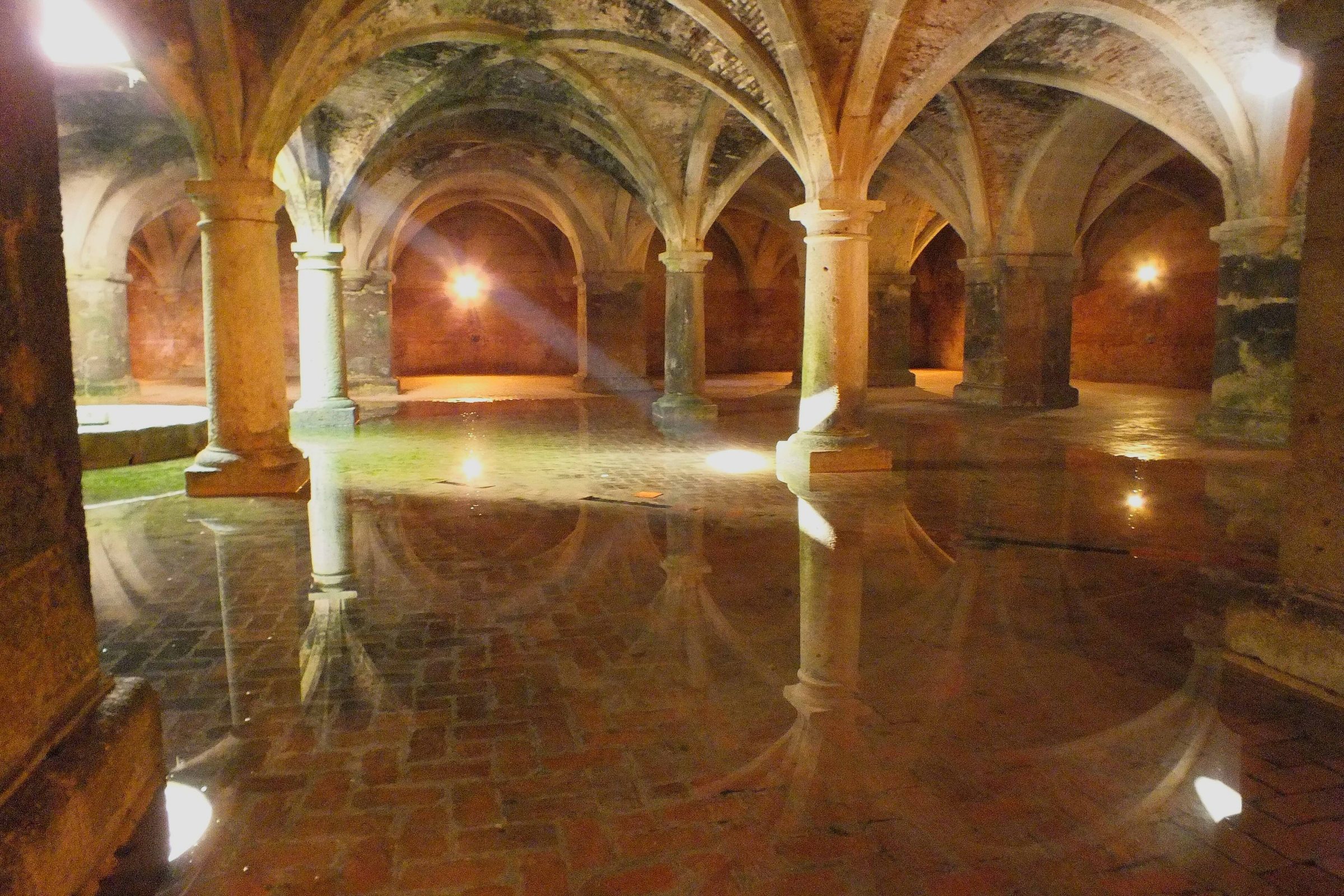
Underground and out of the sun, it is a visit every generation of a family can share. Go early in the day if you would like to see the water and the vaults without a crowd.
The ramparts and the bastions
UNESCO lists the ramparts and their bastions among the surviving monuments of the Portuguese period, and the tourist office notes that the bastions still give a wonderful view of the town. From above, the star shape of the fortress makes sense, with the port at its foot. For lunch, the tourist office points to the port, opposite the Bastion of the Angel, for the local shad, sea urchins and oysters from Oualidia.
The Church of the Assumption, and the life inside
The Church of the Assumption, built in the Manueline style of late Gothic at the start of the sixteenth century, is the other monument that UNESCO names from the Portuguese years. Around it, the fortress is not a museum but a quarter that has always been inhabited, as UNESCO notes, with a synagogue inaugurated in 1926 in its northern corner. For a guided walk, the UK government advises choosing a guide with an official badge and permission from the local authority.
The beaches of El Jadida: Sidi Bouzid and Haouzia
El Jadida is a seaside town as much as a heritage site. Morocco’s tourist office places Sidi Bouzid about three kilometres from the town, calls it one of the best-loved beaches in the country and a surf spot known beyond Morocco, and describes Haouzia, towards Azemmour, as beautiful and quiet. It gives June to September as the months for the beach, and spring and autumn as the better seasons for sightseeing.
The Atlantic here is open water. The UK government notes that many Moroccan beaches have limited or no lifeguard cover, that safety signage may be minimal, and that strong currents and unexpected waves can occur. Swim near the shore on calm days, keep children within reach, and leave the waves to those with an instructor. Golf, horse riding and water sports are also on offer around the town, according to the tourist office.
Oualidia: a lagoon, oysters and a quiet bay
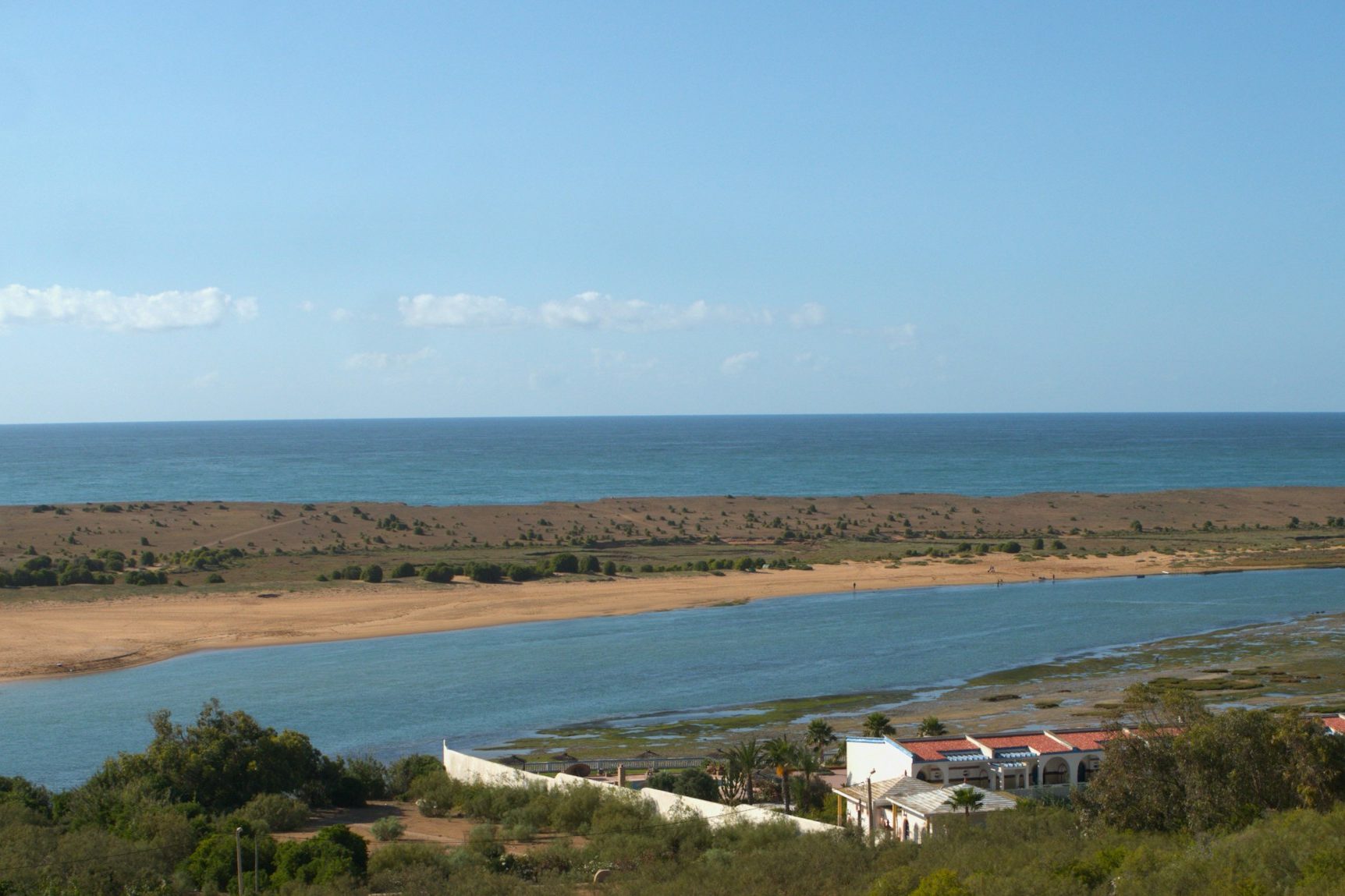
South of El Jadida, towards Safi, lies Oualidia, a small seaside town beside a natural lagoon. It has been called Morocco’s oyster capital: oyster farming was introduced there in 1956, making it one of the first oyster sites in the country, and a few producers still farm the lagoon. Only remains are left of the kasbah built in 1634 by the Saadian sultan El Oualid Ben Zidane to defend the entrance to the lagoon, and Oualidia also keeps a royal summer palace, built around 1940 for the future King Mohammed V and now unused.
Oualidia is the slow half of this coast. Life here follows the tide: the boats go out with it, and the lagoon makes a gentle setting for a first time in a kayak or on a paddle board.
What to do in Oualidia
- A boat ride on the lagoon. Boatmen take visitors out for about an hour, at low tide, to the oyster parks, with up to six people in a boat; larger parties go out in several boats. Departures depend on the date and the tide, so build the day around them. A tasting of oysters can be added for those who eat them.
- A first surf lesson. Lessons of an hour and a half, with a qualified instructor, a board and a wetsuit, are open from the age of six. Groups of ten or more are arranged in advance.
- Stand-up paddle. Two hours on the flat water of the lagoon, with an instructor: a good choice for teenagers and for adults who would rather not fall into the surf.
The lagoon of Sidi Moussa
Morocco’s tourist office lists the lagoon of Sidi Moussa among the places not to miss around El Jadida. It is a place for a short boat ride, a kayak for one or two people, or a stand-up paddle. For a family with young children, half a day on a lagoon can be a gentler outing than a day at a surf beach.
Azemmour and Moulay Abdallah
About fifteen to twenty minutes north-east of El Jadida by road, near Haouzia beach, the old town of Azemmour makes a short excursion that the tourist office recommends for its townscape. To the west, Moulay Abdallah holds the moussem of Moulay Abdallah Amghar, a gathering where, the tourist office writes, some of the best horsemen in the country perform the fantasia and falconers show their birds. Check its dates before you plan around it.
How to get to El Jadida
From Casablanca and its airport
Calculated on OpenStreetMap, the road from the centre of Casablanca to the Portuguese fortress covers about 100 km and an hour and a quarter at the wheel; from Mohammed V airport, about 115 km and an hour and a half. Some journeys from India, through the Gulf, land at Casablanca, as explained in our guide to flights from India and the journey to Morocco, and El Jadida makes a first or last night by the sea within easy reach of the airport. For the city itself, see things to do in Casablanca.
ONCF, Morocco’s national railway, also runs trains on the line between Casablanca and El Jadida, which calls at Azemmour; the station stands on the edge of the town. We could not read ONCF’s timetable on 12 November 2026, so check the times on its site before relying on the train.
From Marrakech
From Marrakech, the road is the simple way: about 200 km and some three hours and ten minutes without stops, and Oualidia is at a similar distance. Travel by day: the UK government notes that poor lighting can make it dangerous to drive at night, and asks drivers to watch for pedestrians and animals.
Along the coast, to Essaouira
The best use of El Jadida is often as a stage on the coast. A journey that lands in Casablanca can run south by the sea, rather than inland, and reach Marrakech a few days later:
- Casablanca airport to El Jadida: about 115 km, an hour and a half. One night, for the fortress, the cistern and the beach.
- El Jadida to Oualidia: about 110 km and an hour and a half by the fastest road; the tourist office gives about an hour. One night, for the lagoon.
- Oualidia to Essaouira: about 190 km and close to three hours. Two nights, as described in Essaouira from Marrakech: a day trip, or two nights?
- Essaouira to Marrakech: about 185 km and some two hours and forty minutes.
One night, or two?
Morocco’s tourist office suggests two days for El Jadida. In our view, one night is enough for the fortress, the cistern, the ramparts and an evening on the beach, and a second night is worth it if you add Oualidia or Sidi Moussa. A day trip from Casablanca is possible; from Marrakech, with more than six hours on the road there and back, it is not one we would suggest. Four questions help to choose:
- Where do you land or leave from? If it is Casablanca, El Jadida is a natural first or last night; if it is Marrakech, it is a detour of three hours each way.
- Who is travelling? Grandparents will enjoy the cistern and a short walk on the walls; children, the beach and the lagoon boats; teenagers, a surf lesson.
- Which month? June to September for the sea; spring and autumn for walking the fortress in comfort.
- Are you going on to Essaouira? Then let the coast lead you there, with a night at Oualidia on the way.
The weather on this coast, month by month
The World Meteorological Organization publishes no long-term averages for El Jadida itself. The nearest stations on either side are Casablanca, about 100 km to the north, and Safi, to the south of Oualidia, and El Jadida’s weather sits between the two: mild winters, warm summers without the heat of the interior, and rain mostly from October to April. In July, Casablanca’s afternoons average 26 °C, against nearly 38 °C in Marrakech.
Average high and low, Casablanca and Safi
- January
- Casablanca 18 / 9 °C · Safi 19 / 8 °C · rain on 7 days at Casablanca
- Mild days, cool nights; one of the wetter months
- February
- Casablanca 18 / 10 °C · Safi 20 / 9 °C · rain on 6 days at Casablanca
- Mild, with showers
- March
- Casablanca 20 / 12 °C · Safi 22 / 11 °C · rain on 6 days at Casablanca
- Spring on the coast
- April
- Casablanca 21 / 13 °C · Safi 23 / 13 °C · rain on 5 days at Casablanca
- Bright and fresh; good for the fortress
- May
- Casablanca 23 / 16 °C · Safi 24 / 15 °C · rain on 2 days at Casablanca
- Dry and pleasant
- June
- Casablanca 25 / 19 °C · Safi 26 / 18 °C · rain on 1 days at Casablanca
- Beach season begins
- July
- Casablanca 26 / 21 °C · Safi 29 / 20 °C · rain on 0 days at Casablanca
- Dry; nearly twelve degrees cooler than Marrakech at Casablanca
- August
- Casablanca 27 / 21 °C · Safi 29 / 20 °C · rain on 0 days at Casablanca
- The warmest month on the coast
- September
- Casablanca 26 / 20 °C · Safi 27 / 19 °C · rain on 2 days at Casablanca
- Warm sea air, fewer visitors
- October
- Casablanca 24 / 17 °C · Safi 26 / 16 °C · rain on 5 days at Casablanca
- Mild; the first rains
- November
- Casablanca 21 / 13 °C · Safi 22 / 12 °C · rain on 7 days at Casablanca
- The wettest month at Casablanca
- December
- Casablanca 19 / 11 °C · Safi 20 / 10 °C · rain on 7 days at Casablanca
- Mild days; pack a jacket
| Month | Casablanca, high / low | Safi, high / low | Rainy days, Casablanca | What to expect |
|---|---|---|---|---|
| January | 18 / 9 °C | 19 / 8 °C | 7 | Mild days, cool nights; one of the wetter months |
| February | 18 / 10 °C | 20 / 9 °C | 6 | Mild, with showers |
| March | 20 / 12 °C | 22 / 11 °C | 6 | Spring on the coast |
| April | 21 / 13 °C | 23 / 13 °C | 5 | Bright and fresh; good for the fortress |
| May | 23 / 16 °C | 24 / 15 °C | 2 | Dry and pleasant |
| June | 25 / 19 °C | 26 / 18 °C | 1 | Beach season begins |
| July | 26 / 21 °C | 29 / 20 °C | 0 | Dry; nearly twelve degrees cooler than Marrakech at Casablanca |
| August | 27 / 21 °C | 29 / 20 °C | 0 | The warmest month on the coast |
| September | 26 / 20 °C | 27 / 19 °C | 2 | Warm sea air, fewer visitors |
| October | 24 / 17 °C | 26 / 16 °C | 5 | Mild; the first rains |
| November | 21 / 13 °C | 22 / 12 °C | 7 | The wettest month at Casablanca |
| December | 19 / 11 °C | 20 / 10 °C | 7 | Mild days; pack a jacket |
Long-term averages for 1991–2020 at Casablanca-Anfa and Safi, from Morocco’s Direction de la Météorologie Nationale, published by the World Meteorological Organization and rounded to the nearest degree; rainy days are days with at least 1 mm of rain. El Jadida lies between the two stations; a given day can be warmer or colder than the average.
On these figures, the coast is a summer refuge from the interior and a mild place in winter, when November to January bring the most rain. For the rest of Morocco, region by region, and the expected dates of Ramadan, see the best months to visit Morocco from India.
Vegetarian and Jain meals on the coast
This is a coast of fish, oysters and sea urchins, and the tourist office sends visitors to the port to taste them. A vegetarian family can still eat well here: vegetarian meals can be prepared when asked for in advance. By the lagoon, check that a group menu is not built around oysters and fish before you accept it, and say what you need when you book, not at the table.
Vegetarian is simple when asked for in advance; Jain food is on request, and on a coast of seafood it should be settled with each kitchen before the day. The wording is in how to ask for a Jain meal as a traveller in Morocco.
So, is El Jadida worth a stop on the Atlantic coast?
Yes, and more than a stop if you can spare two nights. El Jadida gives what few places in Morocco can: a Portuguese fortress built on the sea road to India, a vaulted cistern that seems made for the cinema, long beaches for a summer afternoon, and, an hour down the coast, the calm lagoon of Oualidia with its boats and oysters. It is at its best not as a detour from Marrakech but as part of a journey along the Atlantic, from Casablanca to Essaouira.
For the days in the red city before or after the coast, see things to do in Marrakech with grandparents and children.
Planning the Atlantic coast for your family or your group? Write to us with your dates, the ages in your party and where you land, and we will answer by e-mail or video call.
Questions travellers ask about El Jadida
Is El Jadida worth visiting?
How do you get from Casablanca to El Jadida?
How far is El Jadida from Marrakech?
What is the Portuguese cistern in El Jadida?
What is Oualidia known for?
Can you swim at El Jadida?
Editorial note
This guide draws on UNESCO, for the Portuguese City of Mazagan (El Jadida); the World Meteorological Organization’s climate normals for 1991–2020, for the long-term averages of Morocco’s Direction de la Météorologie Nationale at Casablanca-Anfa, Safi and Marrakech; Morocco’s national tourist office; the UK government’s travel advice for Morocco; and Wikipedia, for the departure of the Portuguese to Brazil, the cistern’s water, the synagogue, the railway station, and the history of Oualidia (its oysters, kasbah and palace). Road distances and driving times were calculated with the OSRM route planner on OpenStreetMap data. All were read on 12 November 2026. ONCF’s website could not be reached that day: check train times with ONCF.
Activity durations and ages come from information provided by local activity providers in 2026; check them when you book.
Roads, trains, festival dates and local arrangements change, sometimes without notice: check them before you book. Apart from public bodies and the national railway, no business is named, and none is recommended. This guide describes no journey of our own.
- UNESCO World Heritage Centre: Portuguese City of Mazagan (El Jadida), inscribed in 2004
- World Meteorological Organization, climate normals for 1991–2020, stations of Casablanca-Anfa (60155), Safi (60185) and Marrakech (60230), as archived by the US National Centers for Environmental Information
- Moroccan National Tourist Office: El Jadida-Mazagan, with its pages on the medina, beaches and sport
- GOV.UK, Morocco travel advice: safety and security
- ONCF, Morocco’s national railway: oncf.ma
- Wikipedia: El Jadida, Oualidia, and in French Oualidia and Gare d’El Jadida
- Road distances and driving times: OSRM on OpenStreetMap data, calculated on 12 November 2026, without stops
Written by Sehra Morocco. Last reviewed: .
Tell us about your trip.
By e-mail or video call. We reply within two working days.