Things to do in Chefchaouen: the blue medina, the Rif and the falls of Akchour
High in the Rif, a town of blue lanes and stepped alleys climbs the slope beneath two peaks. Chefchaouen asks for no checklist, only time: a morning in the medina, an evening above the rooftops, a day by the river at Akchour. Here is what to see, how to reach a town with no railway, and how to pace it for every generation.
Reviewed 12 November 2026 · Sources at the end
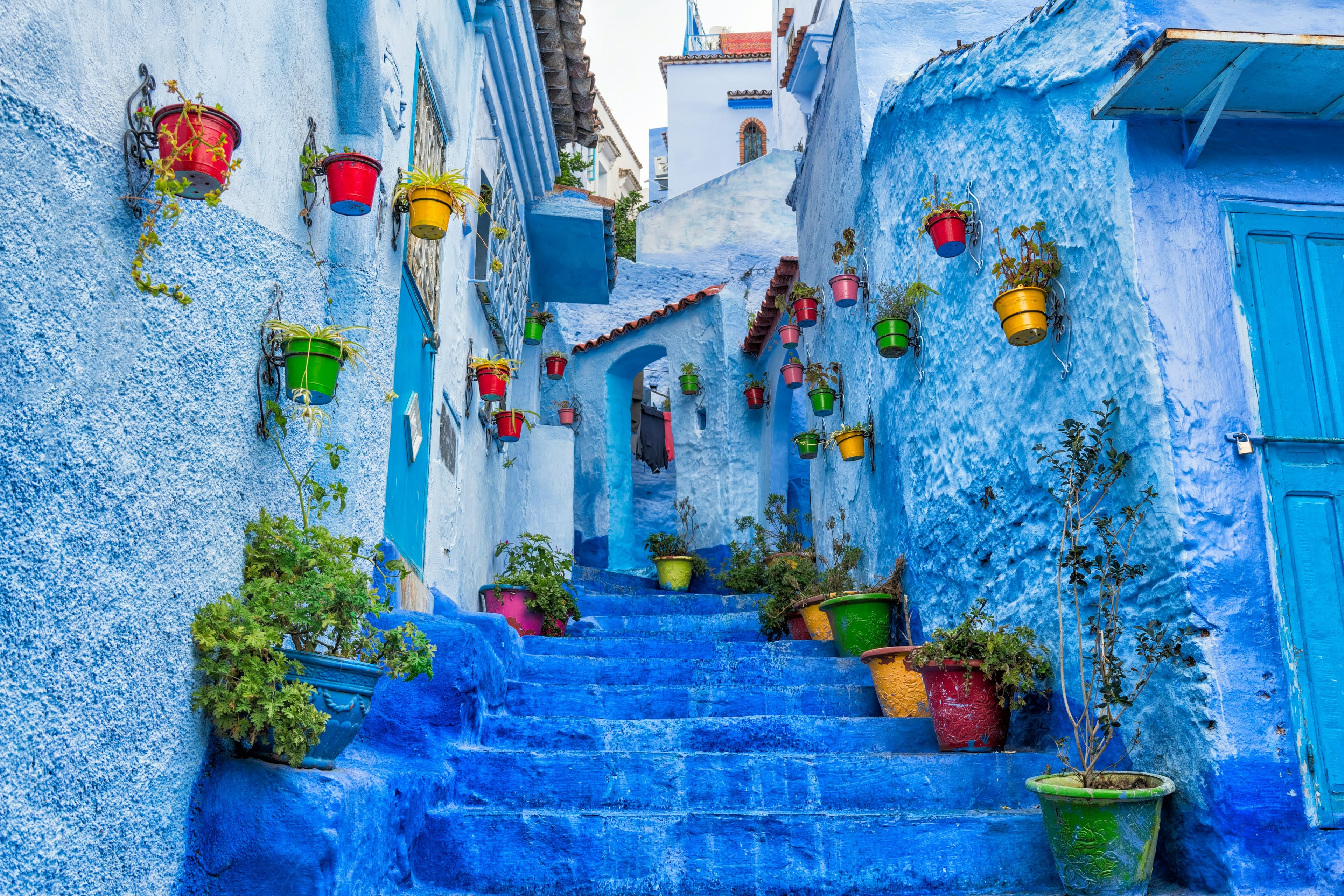
The best things to do in Chefchaouen are the simplest: wander the blue medina from the square of Outa el Hammam to the spring of Ras El Maa, visit the kasbah and its garden, climb to the Spanish Mosque for the view over the town, and give a second day to the river and the falls of Akchour, at the edge of Talassemtane National Park. There is no railway station, so the town is reached by road: about two hours from Tangier, an hour and a quarter from Tétouan, and three and a half to four from Fès. Two nights are the right measure, in line with the two days that Morocco’s tourist office suggests.
This guide sets out where Chefchaouen is and why it looks the way it does, what to see in the medina and beyond, how to get there, how many nights to give it, how to pace its slopes for grandparents and children, how to photograph a town where people live behind every blue door, the weather month by month, and vegetarian and Jain meals. Sehra Morocco plans tailor-made journeys across Morocco for travellers from India and from everywhere else. The facts come from official and public sources, listed at the end; the advice drawn from them is ours.
Chefchaouen, at a glance
The essentials, checked on 12 November 2026:
- Where
- In the western Rif mountains of northern Morocco, about 600 metres above sea level, between Tétouan and Ouezzane
- Founded
- In 1471, as a small fortress, now the kasbah at the heart of the medina
- By road
- No railway station: about 190 km and three and a half to four hours from Fès; about 110 km and two hours from Tangier; about 65 km and an hour and a quarter from Tétouan
- Nights
- Two: a day for the town, a day for Akchour or a walk (the tourist office suggests two days)
- Nearby
- Talassemtane National Park and the falls of Akchour, about 30 km away, some 40 to 45 minutes by road
- Best months
- April to June, September and October; winter is the rainy season
- For elders
- A town on a mountainside: lanes that climb, many of them in steps
- At the table
- Vegetarian when asked for in advance; Jain on request
Road times are without stops, and opening hours, paths and river levels change: check them again before you go.
A town beneath two peaks
Chefchaouen sits in the western Rif, the mountain range that runs along Morocco’s Mediterranean north, about 600 metres above the sea and between Tétouan and Ouezzane. Its name is usually read as “look at the horns”: the two summits that rise behind the town. It is often called simply Chaouen, and the tourist office calls it the blue pearl of Morocco.
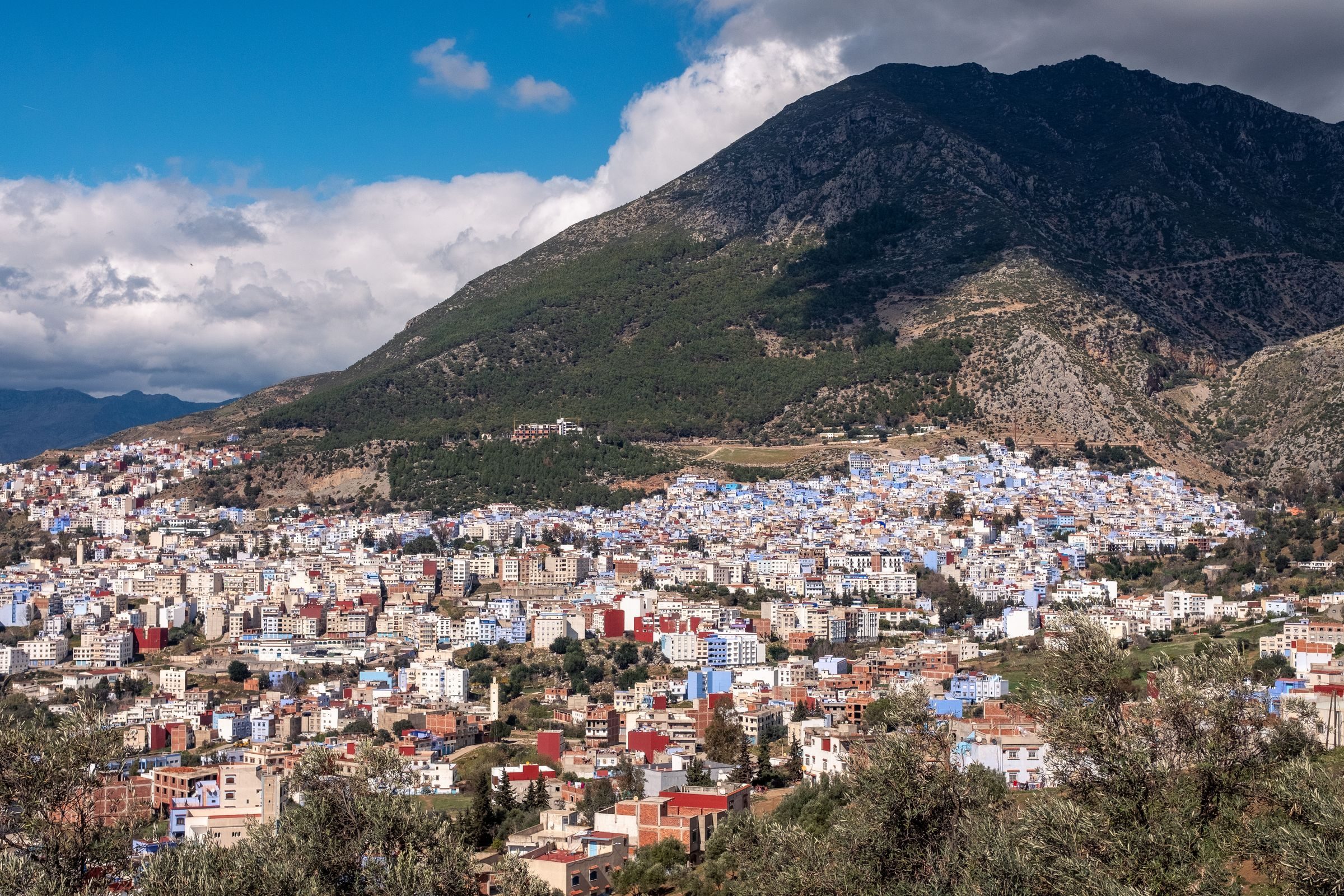
The town began in 1471 as a small fortress, built by Ali ibn Rashid al-Alami to guard the mountains against Portuguese raids on the north. During and after the fall of al-Andalus, Muslim and Jewish families from the Iberian peninsula settled here, and their mark is everywhere: in the curved brick arches of the lanes, in the courtyards planted with orange and lemon trees, and in the Andalusian music that many families still keep for festivals and ceremonies. Jews of Iberian origin were once a third of the town; the last Jewish family left in 1968, and the old Jewish quarter, the mellah, and a cemetery remain. Spanish troops entered the town in 1920; it returned to Morocco with independence in 1956.
Why is Chefchaouen blue? The sources disagree
Everyone asks, and no one answer holds. The explanations we read do not agree: one popular account says the blue keeps mosquitoes away; another, that it recalls the sky and heaven, a reminder to lead a spiritual life; some residents say that the walls were ordered painted blue in the 1970s to draw visitors. Morocco’s tourist office, for its part, describes the blue without explaining it. You will hear other stories in the lanes, told with conviction; take them as the town’s own legends rather than as history.
What is certain is the effect. Doors, steps, walls and archways are washed in shades from sky to indigo, often with white, and the light changes them through the day. In 2020, the tourist office counted more than 620,000 Instagram posts tagged with the town’s name.
Things to do in Chefchaouen: the medina, from the square to the spring
The medina is small enough to cross on foot and steep enough to make every crossing a climb. It was once enclosed by walls, some of whose gates still stand, and it rewards wandering rather than a route: the tourist office’s advice is simply to stroll, look at the architecture of the alleys and talk with the people who live there. A few landmarks give the day its shape.
Outa el Hammam and the Great Mosque
The main square, Outa el Hammam, is the town’s living room, probably laid out in the sixteenth century and named after a bathhouse, a hammam, in its north-western corner. Around it stand the kasbah, the largest of the town’s old caravanserais and the Great Mosque, the oldest and historically the most important mosque in Chefchaouen. It is the natural place to begin, to meet a guide, and to come back to for mint tea in the evening.
The kasbah, its garden and its museum
The original fortress of 1471 still stands in the middle of the old town: ten towers of rammed earth and a taller tower to the west, probably added in the early sixteenth century. Inside, the courtyard is a garden, which the tourist office calls a haven of freshness, and a historic house in one corner holds the town’s museum, with old weapons, photographs of Chefchaouen and textiles. It is the gentlest visit in the medina, with a garden to sit in.
Ras El Maa, the spring
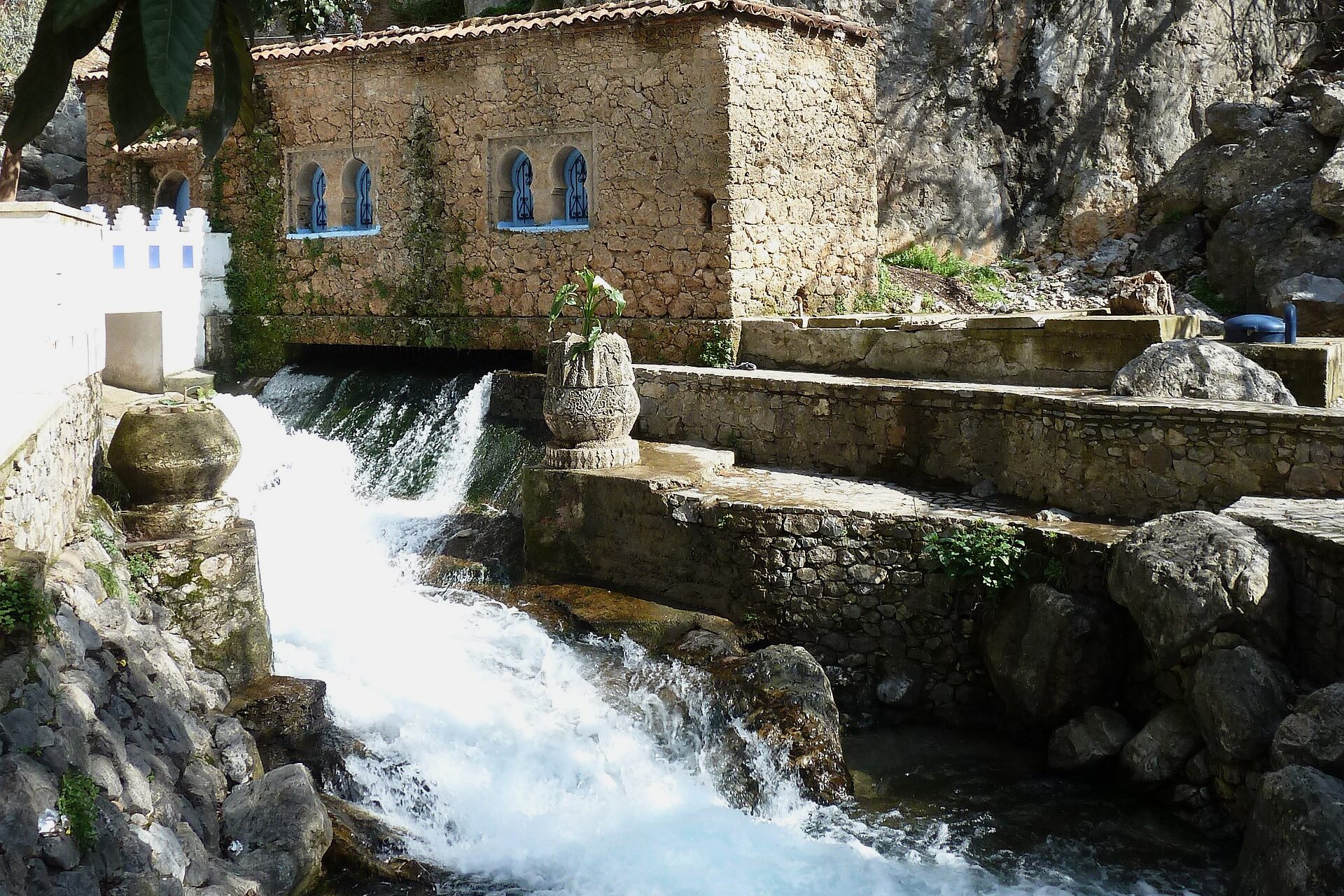
Just east of the medina, outside its former walls, Ras El Maa is the spring that first gave the town its water. The source itself is now enclosed in stone; downstream, the stream runs past an old mill and under a bridge that may date from the nineteenth century. It is a place to sit and listen to the water; the Spanish Mosque stands on the hill above, on the same eastern side of the town.
The Spanish Mosque and the view over the town
On a hill to the east of the town stands a mosque built by the Spanish in the 1920s. Disused today, it has become Chefchaouen’s great viewpoint. From its terrace the whole medina spreads below, blue and white against the green of the mountain, with the two peaks behind. The way up is a walk up the hillside: for those who walk easily, it is the finest hour of the stay, late in the afternoon; for the others, a roof terrace in the medina offers a smaller version of the same view.
Crafts: wood, wool and weaving
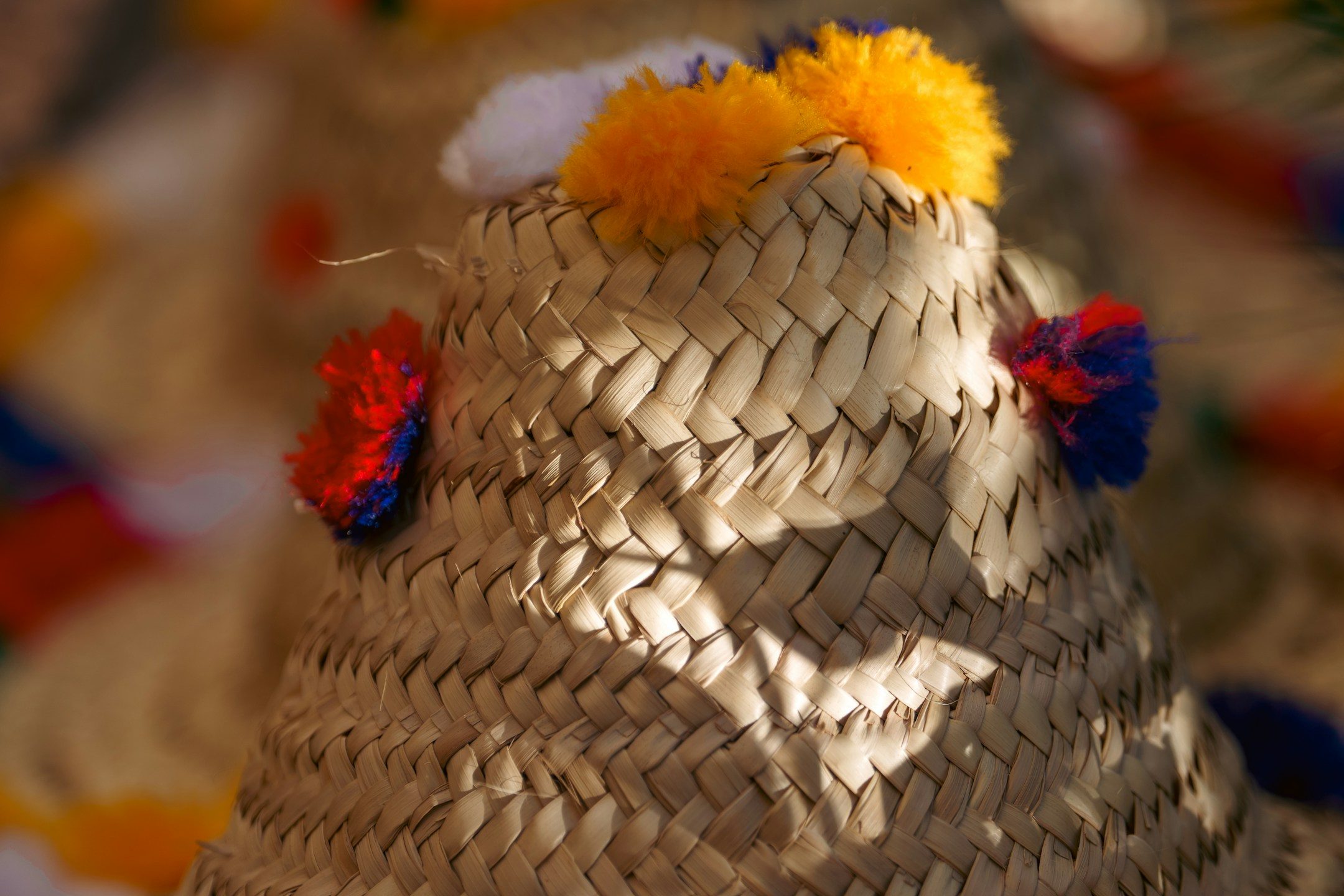
Handicrafts are the town’s first trade. The tourist office names wood, wool and tanning as the common crafts, and invites visitors to meet the weavers and carpenters at work. Wood is the best-selling craft of the province, whose artisans counted 38 cooperatives in 2016, and the tourist office lists the town’s carpet shops among its sights.
Beyond the town: Talassemtane National Park and the falls of Akchour
The tourist office calls Chefchaouen a paradise for walkers, and the mountains begin at the last house. For a family, the second day is best given to them.
Talassemtane National Park
Created on 8 October 2004, Talassemtane National Park covers almost 59,000 hectares of the Rif east of Chefchaouen. It was founded to protect Morocco’s last fir forests, among them the Moroccan fir, a tree found nowhere else, which grows here with Atlas cedar, oaks and pines; Barbary macaques and otters live in its valleys, and on its summits the rain can exceed 2,000 mm a year. The park has been on UNESCO’s tentative list for World Heritage since 1998, and belongs to the Intercontinental Biosphere Reserve of the Mediterranean. The tourist office lists walks from Chefchaouen to El Kelaa, Jbel Tissouka, Akchour and Azilane; walkers with more time will find routes of several days, with mules to carry the bags.
Akchour and God’s Bridge
Akchour is a village at the bottom of a valley some 30 km from Chefchaouen, on the road towards Oued Laou and the Mediterranean coast: about 40 to 45 minutes by road. From there, paths follow the river into limestone gorges, to waterfalls and pools and to God’s Bridge, the Pont de Dieu, a natural arch of rock some 25 metres high above the canyon. The walk to the bridge and through the gorges is a long outing, best taken with a local guide, and the waterfall and its pools can fill a day.
For grandparents and small children, the river path in the first stretch of the valley is the better plan: a short walk, a long lunch, and the young ones at the water’s edge. Keep the full walk for those who are sure of foot, and take a licensed guide: the UK government advises hiring a professional guide for walks in Morocco, warns that swimming in rivers can be dangerous, and that heavy rain can cause flash flooding in the mountains and near rivers in winter. After rain, ask before you set out.
How to get to Chefchaouen
Chefchaouen has no railway station and no airport: every journey ends by road, through the hills. Three gateways serve it, and the choice depends on where the rest of the journey lies.
From Fès: three and a half to four hours
Fès is the classic companion. The road runs about 190 km north from Fès into the hills: Morocco’s tourist office gives about three and a half hours, and the route planner we used nearly four, without stops. With a pause for lunch, it fills a morning or an afternoon. The medina of Fès deserves its own days first; see things to do in Fès, from the medina to the tanneries.
From Tangier or Tétouan: the northern gateway
Tangier lies about 110 km away, some two hours by road, and Tétouan about 65 km, an hour and a quarter. Both have airports in Royal Air Maroc’s network, and Tangier is the end of the line for the Al Boraq high-speed trains from Casablanca and Rabat. A journey through the north can therefore arrive by train in Tangier, cross to Chefchaouen by road, and continue south to Fès, or the other way round. Before or after, see things to do in Tangier.
From Marrakech
Marrakech is far: some 570 km and nearly eight hours by road without a single stop. Few families should attempt it in a day. The better plan is to build Chefchaouen into a journey through the north, with Fès, Tangier or both, and to reach the north by train, or by air to Tangier, Tétouan or Fès. The flights from India, and which Moroccan airport to choose, are set out in the journey to Morocco from India.
How many nights in Chefchaouen?
Morocco’s tourist office suggests allowing two days, and we would give it two nights: a whole day in the medina, at its own pace, and a second for Akchour or a walk. A single night lets you see the town in the evening light and in the quiet of the morning; a day trip from Fès, with seven or eight hours on the road, hardly lets you see it at all.
Three shapes of stay, counted from the night you arrive:
- One night, between Fès and Tangier. Arrive by early afternoon, the kasbah and the square before dusk, the medina again in the morning, and on to the next city after lunch.
- Two nights, the right measure. A day in the medina with the Spanish Mosque at the end of the afternoon, and a day at Akchour, back in town for dinner.
- Three nights, for elders or walkers. The same, with a morning of rest between the two days for grandparents, or a longer walk in Talassemtane for the energetic.
Slopes and steps: Chefchaouen with grandparents and children
The tourist office describes a town built on the mountainside, and that is the first thing to plan for. The lanes climb, many of them in steps, and the medina is a place for walking: the last stretch to the door is often on foot, sometimes uphill, and so is the luggage.
- Choose where you sleep by the climb to the door. Ask how far the car can come, how many steps lead to the rooms, and whether the rooms are on the ground floor or up a narrow stair. Some hotels lie outside the medina, a drive away, where a car can reach the door; inside the medina, ask how far the room is from the square.
- Plan the climbs, and the rests. A morning in the medina, a long lunch, a rest in the afternoon heat, and the square again at the end of the day: the town is at its best at that pace.
- Share the day. Grandparents can stay with the kasbah garden and the square while the others climb to the Spanish Mosque, and keep to the first stretch of the river at Akchour.
- Mind the steps in the wet. Stone steps can be slippery after rain; good shoes matter more here than in most Moroccan cities.
Photographs, and the people who live behind the blue doors
Chefchaouen may be the most photographed town in Morocco, and the photographs all have something in common: they are taken at someone’s front door. The blue lanes are not a set; they are where families live, children play and neighbours meet. A little courtesy goes a long way:
- Ask before you photograph anyone. The UK government’s advice for Morocco says to always ask permission before taking pictures of people, especially children. Accept a no with a smile.
- Leave the steps and doorways free. Do not sit on a doorstep, move the flowerpots or block a lane for a picture, and let residents pass first.
- Give the morning to the camera. The lanes are quieter early in the day, and the light is softer on the blue.
When to go: Chefchaouen’s weather, month by month
Morocco’s tourist office names April to June, then September and October, as the mild months, and warns that winter can be rainy. The World Meteorological Organization publishes no long-term averages for Chefchaouen itself; the nearest station that it lists is at Tangier, on the coast, about 110 km away by road. Its figures give the shape of the northern year: a wet, mild winter, a green spring and a dry, warm summer.
Tangier’s averages, month by month
- January
- 17 °C by day · 8 °C at night · rain on 10 days
- Cool and wet: the heart of the rainy season
- February
- 17 °C by day · 9 °C at night · rain on 10 days
- Still wet; Ramadan expected from around 8 February 2027
- March
- 19 °C by day · 10 °C at night · rain on 9 days
- Greener, still showery
- April
- 21 °C by day · 12 °C at night · rain on 9 days
- Spring in the Rif: one of the best months
- May
- 24 °C by day · 14 °C at night · rain on 7 days
- Mild, fewer showers: one of the best months
- June
- 27 °C by day · 17 °C at night · rain on 3 days
- Warm and dry: one of the best months
- July
- 29 °C by day · 19 °C at night · rain on 1 day
- Hot and dry; a popular time for summer holidays
- August
- 30 °C by day · 20 °C at night · rain on 1 day
- Hot and dry
- September
- 27 °C by day · 19 °C at night · rain on 4 days
- Warm, quieter: one of the best months
- October
- 25 °C by day · 16 °C at night · rain on 9 days
- Mild; the rains return during the month
- November
- 20 °C by day · 12 °C at night · rain on 10 days
- Wet: the most rain of any month, on average
- December
- 18 °C by day · 10 °C at night · rain on 11 days
- Wet and cool
| Month | Average high | Average low | Days of rain | What to expect |
|---|---|---|---|---|
| January | 17 °C | 8 °C | 10 | Cool and wet: the heart of the rainy season |
| February | 17 °C | 9 °C | 10 | Still wet; Ramadan expected from around 8 February 2027 |
| March | 19 °C | 10 °C | 9 | Greener, still showery |
| April | 21 °C | 12 °C | 9 | Spring in the Rif: one of the best months |
| May | 24 °C | 14 °C | 7 | Mild, fewer showers: one of the best months |
| June | 27 °C | 17 °C | 3 | Warm and dry: one of the best months |
| July | 29 °C | 19 °C | 1 | Hot and dry; a popular time for summer holidays |
| August | 30 °C | 20 °C | 1 | Hot and dry |
| September | 27 °C | 19 °C | 4 | Warm, quieter: one of the best months |
| October | 25 °C | 16 °C | 9 | Mild; the rains return during the month |
| November | 20 °C | 12 °C | 10 | Wet: the most rain of any month, on average |
| December | 18 °C | 10 °C | 11 | Wet and cool |
Long-term averages for 1991–2020 at Tangier, from Morocco’s Direction de la Météorologie Nationale, published by the World Meteorological Organization and rounded to the nearest degree. Chefchaouen lies inland, some 600 metres up in the mountains: its nights are likely to be cooler than these, and its rain heavier.
Those caveats matter. Between 2000 and 2020, the yearly rainfall measured at Chefchaouen ranged from about 500 mm to nearly 1,900 mm, far more in a wet year than Tangier’s average of under 700 mm. From November to February, then, pack for rain, give the lanes time to dry, and keep Akchour for a settled day.
Spring is the season we would choose: the Rif is green, and the days, at Tangier, average 21 to 27 °C from April to June. September and October bring warm, quieter days. July and August are dry and warm rather than fierce: Tangier averages 29 to 30 °C by day, against 35 °C inland at Fès. They are also likely to be the busiest weeks, as the school holidays bring visitors to the north.
Ramadan, next expected from around 8 February 2027, changes the rhythm of the day rather than the town itself. For the dates, and for how the seasons of the rest of Morocco meet India’s holidays, see the best months to visit Morocco from India.
Vegetarian and Jain food in Chefchaouen
Chefchaouen has a particular place at the Moroccan table. When UNESCO inscribed the Mediterranean diet on its list of the Intangible Cultural Heritage of Humanity in 2013, Chefchaouen was the community that represented Morocco: a cuisine of bread, olive oil, vegetables, pulses and fruit, which suits a vegetarian family well.
Vegetarian meals are therefore easy to find when asked for in advance, and Jain food is on request. Plan the evenings, though: not every guesthouse in the medina serves dinner, so ask where each meal will be before you book, and set out any rules in writing, from no onion, garlic or root vegetables to no egg or honey. The words to use, and a list in French to show the kitchen, are in how to ask for a Jain meal as a traveller in Morocco. On the day at Akchour, carry what the strictest eater in the party needs.
Good to know before you go
- Guides. The UK government notes that people posing as official guides are common in Moroccan medinas, and advises checking that a guide carries an official badge and the permission of the local authority.
- The Rif and cannabis. The Rif is a cannabis-growing region. The UK government is plain: Morocco has a zero-tolerance approach to drugs, including cannabis, with severe penalties for possession, use and trafficking.
- Roads. The roads to Chefchaouen are mountain roads. The UK government notes that they can be especially hazardous in poor weather, and that poor lighting makes night driving dangerous: travel by day.
- Dress. The UK government notes that women may receive unwanted attention, especially when travelling alone, and suggests loose clothing that covers the arms, legs and chest; in the medina, covered shoulders and knees are the courteous choice for everyone.
So, what are the best things to do in Chefchaouen?
Slow ones. Walk the blue lanes in the early morning, before the day visitors; sit in the kasbah garden; follow the water to Ras El Maa; climb to the Spanish Mosque as the light turns golden; and give a whole day to Akchour, its river and its gorges. With two nights, between April and June or in September and October, Chefchaouen is the quietest and most beautiful pause in a journey through the north of Morocco.
The rest is preparation: a road by day from Fès, Tangier or Tétouan, a bed chosen for the climb to the door, good shoes, and the kitchen told in advance. For the cities on either side, see things to do in Fès; for what else Morocco offers travellers, from the desert to the Atlantic, see our journeys across Morocco.
Planning the north of Morocco for your family or your group? Write to us with your dates, the ages in your party and the cities you would like to see, and we will answer by e-mail or video call.
Questions travellers ask about Chefchaouen
How many days do you need in Chefchaouen?
Is there a train to Chefchaouen?
How do you get from Fès to Chefchaouen?
Why is Chefchaouen blue?
Can you see the Akchour waterfalls from Chefchaouen?
Is Chefchaouen suitable for elderly parents?
When is the best time to visit Chefchaouen?
Editorial note
This guide draws on Morocco’s national tourist office; the World Meteorological Organization, for the long-term averages of Morocco’s Direction de la Météorologie Nationale at Tangier and Fès (1991–2020); the UK government’s travel advice for Morocco; UNESCO, for the Mediterranean diet; the network of Royal Air Maroc; and Wikipedia, for the history and monuments of Chefchaouen, the rainfall measured there, Talassemtane National Park, Akchour and the Al Boraq high-speed line. Road distances and driving times come from the tourist office and were checked with the OSRM route planner on OpenStreetMap data. The explanations of the blue colour are reported, not endorsed: the sources disagree. The dates of Ramadan follow our guide to the seasons. All were read on 12 November 2026.
Opening hours, paths, river levels and road conditions change, sometimes without notice: check them before you go. Apart from an airline and public bodies, no business is named, and none is recommended. Sehra Morocco plans journeys in Morocco; this guide describes no journey of its own.
- Moroccan National Tourist Office: Chefchaouen, the medina, nature around Chefchaouen and the most “instagrammable” city in Morocco (21 February 2020)
- World Meteorological Organization, World Weather Information Service: Tangier and Fès
- GOV.UK, Morocco travel advice: safety and security and local laws and customs, updated 19 August 2026
- UNESCO, Intangible Cultural Heritage: the Mediterranean diet, inscribed in 2013
- Royal Air Maroc, our network
- Wikipedia: Chefchaouen, Talassemtane National Park, Parc national de Talassemtane (in French), Akchour (in French) and Al Boraq
- Road distances and driving times: OSRM on OpenStreetMap data, calculated on 12 November 2026, without stops
Written by Sehra Morocco. Last reviewed: .
Tell us about your trip.
By e-mail or video call. We reply within two working days.