Best time to get married in Morocco: weather, Ramadan and wedding dates in 2027–2028
Mild winter days, warm spring sunshine and the Atlas Mountains as a backdrop: for an Indian family, the key is a date that works for your rituals, your guests and your venue.
Reviewed 24 October 2026 · Updated 23 November 2026 · Sources at the end
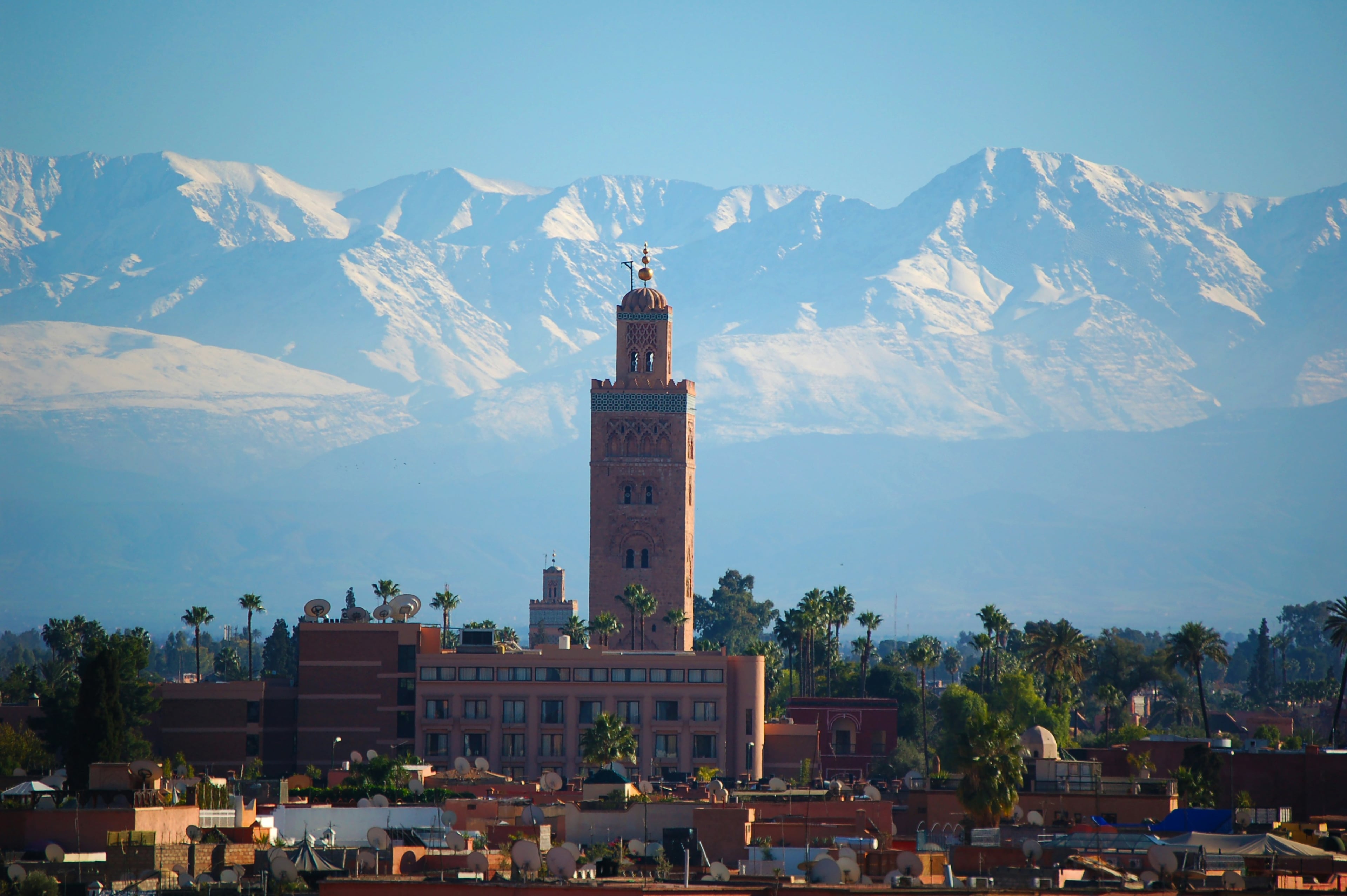
Before settling on a date, there are three calendars to consider: your pandit’s muhurat, the Islamic calendar and your venue’s availability. In our view, the best time to get married in Morocco is from November to April: an appealing balance of mild weather and outdoor celebrations, with May worth considering for families who enjoy warmer days. That is a reading of the weather alone; your pandit’s dates decide.
Sehra Morocco plans Indian weddings in Marrakech and across Morocco. This guide explains the best months for a celebration, what to expect from the weather, how Ramadan may affect wedding arrangements in 2027 and 2028, and what venues in Morocco say about their own calendars.
When is the best time to get married in Morocco?
For an Indian destination wedding, the best time depends on the kind of celebration you have in mind. November and early December are particularly appealing for their mild days and comfortable conditions for outdoor functions. January and February offer crisp winter days, while March and April bring warmer sunshine. May is another option for couples who prefer a warmer spring wedding.
Here is a quick guide to help you narrow down your dates.
- November: mild days, comfortable outdoor celebrations and the start of the winter wedding season.
- December: pleasant days and a festive atmosphere, with colder evenings.
- January: crisp winter sunshine, with chilly nights that call for careful heating.
- February: mild days, although Ramadan may affect the timing of celebrations and supplier arrangements.
- March: warmer afternoons and the possibility of spring showers.
- April: warm, sunny days for garden ceremonies and outdoor photography.
- May: a warmer spring option, particularly for sunset ceremonies and evening receptions.
On weather alone, November, early December and April are the easiest months to start from. The final decision always follows your pandit’s recommended dates and the confirmation of your preferred venue.
What is the weather like in Marrakech during the wedding season?
Marrakech has hot summers and cool winters, with spring and autumn in between. From November to March, days are generally mild while nights can be surprisingly cold, with five or six rainy days a month; April and May bring warmer afternoons and longer days.
Marrakech weather, month by month
- January
- 19 °C by day · 6 °C at night
- Crisp days and cold nights
- February
- 21 °C by day · 8 °C at night
- Mild afternoons and cool evenings
- March
- 24 °C by day · 10 °C at night
- Warmer days, with some rain
- April
- 26 °C by day · 12 °C at night
- Warm sunshine and pleasant outdoor conditions
- May
- 29 °C by day · 15 °C at night
- Sunny afternoons and warmer evenings
- June
- 34 °C by day · 18 °C at night
- Hot days; plan outdoor events carefully
- July
- 38 °C by day · 21 °C at night
- Very hot afternoons
- August
- 37 °C by day · 21 °C at night
- Hot weather and warm nights
- September
- 33 °C by day · 19 °C at night
- Hot days and warm evenings
- October
- 29 °C by day · 16 °C at night
- Warm days and milder evenings
- November
- 23 °C by day · 11 °C at night
- Mild days and cool evenings
- December
- 20 °C by day · 7 °C at night
- Pleasant sunshine and cold nights
| Month | Average high | Average low | What to expect |
|---|---|---|---|
| January | 19 °C | 6 °C | Crisp days and cold nights |
| February | 21 °C | 8 °C | Mild afternoons and cool evenings |
| March | 24 °C | 10 °C | Warmer days, with some rain |
| April | 26 °C | 12 °C | Warm sunshine and pleasant outdoor conditions |
| May | 29 °C | 15 °C | Sunny afternoons and warmer evenings |
| June | 34 °C | 18 °C | Hot days; plan outdoor events carefully |
| July | 38 °C | 21 °C | Very hot afternoons |
| August | 37 °C | 21 °C | Hot weather and warm nights |
| September | 33 °C | 19 °C | Hot days and warm evenings |
| October | 29 °C | 16 °C | Warm days and milder evenings |
| November | 23 °C | 11 °C | Mild days and cool evenings |
| December | 20 °C | 7 °C | Pleasant sunshine and cold nights |
Figures are long-term averages for 1991–2020 from Morocco’s Direction de la Météorologie Nationale, published by the World Meteorological Organization and rounded to the nearest degree, not forecasts for individual wedding dates. Actual conditions vary from year to year.
What does this mean for an Indian wedding?
The weather shapes more than your choice of outfit. It affects the mandap setup, the timing of the pheras, the comfort of elderly guests and the experience of an outdoor Sangeet.
For guests flying in from India, a Marrakech winter is close to a Delhi winter, a little cooler, and far cooler than Mumbai’s: from December to February, Marrakech averages 19–21 °C by day and 6–8 °C at night, New Delhi 21–24 °C and 8–10 °C, and Mumbai 31–32 °C and 17–18 °C (World Meteorological Organization). To weigh Morocco against other places in the same season, see how Morocco’s winter compares with Rajasthan, Dubai and Thailand.
In winter, daytime functions can be very pleasant, but evening celebrations call for heaters, shawls and covered spaces: the nights are cold enough that a garden evening for 300 guests is planned with outdoor heaters. In spring, warmer afternoons offer more flexibility for outdoor functions, though ceremonies should still be timed with the heat and the sun in mind. Elders feel the cold first: see how we look after elders and a large guest list.
Our advice is simple: plan each function around the conditions expected on your wedding dates, rather than assuming the whole day will feel the same.
Your pandit’s dates come first
Before choosing a month or paying a venue deposit, speak to your family pandit. For many Indian families, the muhurat sets the wedding date, and the venue, guest travel, catering and entertainment are then organised around that window: see how four days of ceremonies unfold in Marrakech.
Auspicious dates and timings can depend on the couple, on the tradition or panchang a family follows and on the place for which the timing is calculated. Drik Panchang, an online panchang, states that “all auspicious marriage dates and marriage timings are location-based”, sets aside whole periods of the year as prohibited for marriage, and advises consulting a learned astrologer before choosing a date from its lists. A date that looks suitable on a general online calendar, or a month that suits the weather, may not be open to your family. We publish no list of auspicious dates: a list worked out for one city, without a pandit’s reading, would mislead more families than it would help.
Two questions are worth asking your pandit:
- Which dates and ceremony timings suit the couple?
- Should the timings be calculated for your home city in India or for Marrakech?
With the recommended dates in hand, we check them against Ramadan, Morocco’s public holidays, venue availability and supplier schedules. It saves falling in love with a venue, or announcing a date, before everything essential is known to come together.
Ramadan in 2027 and 2028: what Indian wedding families should know
Ramadan is the Islamic month of fasting: most Moroccans fast through the daylight hours (Rough Guides). Because the Islamic calendar follows the moon, Ramadan moves about eleven days earlier each year: it began in Morocco on 19 February 2026, and should begin around 8 February in 2027 and around 28 January in 2028.
The dates below are planning estimates:
- Ramadan 2027: expected to begin on or around Monday 8 February, with Eid al-Fitr around Wednesday 10 March. Forecasts published in the United Arab Emirates between August and October 2026 give 9 or 10 March; the crescent visibility maps of the International Astronomical Center show that the crescent cannot be seen from Morocco on the evening of 8 March, which points to 10 March in Morocco.
- Ramadan 2028: expected to begin around 28 January, with Eid al-Fitr around 27 February: our own calculation from the new moons of 26 January and 25 February 2028 (NASA).
An Islamic month begins with the sighting of the new crescent moon and lasts 29 or 30 days (Royal Observatory Greenwich). In Morocco, the Ministry of Endowments and Islamic Affairs announces the first day on the evening the crescent is sought: in 2026, it declared on 18 February that Ramadan would begin the next day. Any forecast may fall a day later.
How can Ramadan affect your wedding?
Whether a wedding can be held during Ramadan depends on the venue, and it needs more advance coordination in any case.
- Catering and service: confirm that the venue and caterer can provide the staffing, meal service and event timings you need; some of the people who would cook and serve may be fasting.
- Music and entertainment: ask the venue about its rules for live music, DJs, the bar and late-night celebrations during Ramadan.
- Transport: allow extra time around sunset. The UK government’s travel advice notes that fasting can cause tiredness, particularly during the later afternoon and early evening, and that driving may be erratic, particularly when people are trying to get home at dusk.
- Supplier schedules: discuss working hours with your planner, decorators, musicians, drivers and catering team.
- Eid al-Fitr: a two-day public holiday in Morocco; check whether it affects venue availability, transport, suppliers or minimum stays.
For families planning several days of celebrations, we recommend exploring dates outside Ramadan whenever your pandit’s windows allow. If the only suitable dates fall during Ramadan, we ask the venue and suppliers in writing what they allow before a date is fixed. Eid al-Adha, also a two-day public holiday, is expected around 16 or 17 May 2027, according to the same forecasts: worth knowing if you are considering May.
Should you choose November, December or January?
These winter months suit Indian families who want mild days and an outdoor setting for their wedding.
November: an all-round choice
November offers mild afternoons, with highs of about 23 °C, cooler evenings and comfortable conditions for many outdoor functions. It works well for a garden Mehendi, daytime pheras and evening receptions, provided the venue has a plan for the cooler hours after sunset.
November also opens what the Confederation of All India Traders calls the wedding season: it expected about 46 lakh weddings across India between 1 November and 14 December 2025. If you plan to fly in your pandit, a chef or musicians from home, begin conversations with venues and specialist suppliers early.
Best for: families looking for a classic winter wedding, with outdoor ceremonies and several days of celebration.
December: a festive atmosphere
December brings pleasant days and a festive atmosphere, an appealing choice for a celebration in a Marrakech palace, garden or private estate. The main consideration is the evening: nights average about 7 °C, and outdoor receptions can become cold, particularly for guests in formal Indian outfits. Festive-season demand matters too: one palace in Marrakech, in its published 2026 room rates, requires a minimum stay over the festive season; a wedding’s own terms are confirmed in writing each time.
Best for: families who want a festive winter celebration and are happy to plan carefully for evening comfort.
January: crisp sunshine and the coldest nights
January can be an attractive alternative after the festive season, and booking terms may differ from busier months: the 2027 portfolio of one estate we approached classes January as low season. Days are generally mild, but nights are the coldest of the year, at about 6 °C on average; for outdoor events, plan heaters, covered areas and easy access to a warm indoor space.
January 2028 needs particular attention, because Ramadan is expected to begin in its last days.
Best for: families whose auspicious dates fall in January and who want a winter wedding with a careful indoor and outdoor plan.
Is summer a good time for an Indian wedding in Morocco?
Before the summer, April and May deserve a look. Marrakech enjoys warm, sunny days, with average highs of about 26 °C in April and 29 °C in May: good conditions for a garden Mehendi, outdoor pheras and evenings under the stars.
As summer approaches, temperatures rise. June averages about 34 °C by day, and July and August 37–38 °C, with warm nights of about 21 °C. For a wedding in these months, an evening-focused schedule, shaded spaces and an air-conditioned indoor alternative help keep guests comfortable. One estate reads the summer the same way: in the Atlas foothills, its portfolio classes July and August as low season. The UK government also notes a risk of wildfires in the summer season, a point to raise with the venue before planning a sacred fire outdoors.
If your auspicious dates fall in summer, the Atlantic coast is cooler: the weather station at Agadir averages about 27 °C by day in August (World Meteorological Organization).
The place matters as much as the month: Marrakech, the Atlas Mountains, the Agafay Desert and the Atlantic coast each offer a different setting and climate.
The light: planning pheras, photography and dinner around sunset
Morocco’s light is one of its great attractions for wedding photography: soft afternoon sun, historic architecture, gardens and views of the Atlas. In winter, snow can cap the High Atlas behind the Koutoubia, as in the photograph at the top of this page.
In winter, however, the sun sets early: in the northern hemisphere, the shortest days of the year fall in December (Royal Observatory Greenwich). The schedule needs care, particularly when several functions take place on the same day. We give no clock time here: sunset moves every day, and we time each wedding day from the published sunset for that date.
For outdoor pheras, coordinate the timing with your pandit, photographer and planner, and allow enough time for guests to be seated, for the ceremony to proceed without hurry and for photographs before the light fades. Planning photographs before the wedding week? Our guide to a pre-wedding shoot in Morocco gives the light month by month, and the rules on drones and gardens.
For Jain families who keep chauvihar, sunset matters for another reason: the evening meal is finished before it, so the dinner is planned from the actual sunset of the wedding date. See how a Jain dinner is timed to each day’s sunset. Far from the city, one camp in the Sahara can serve a Jain dinner before sunset, provided the group has the camp to itself.
Spring brings longer days and more flexibility. The best timelines leave room for the rituals, the photographs, guest transfers and meals, without making the day feel rushed.
Beyond Marrakech: choosing the right setting for the season
Morocco is not one single climate. A wedding in Marrakech feels very different from a celebration on the Atlantic coast or in the Atlas Mountains.
- Marrakech: palace weddings, private estates, gardens and celebrations over several days.
- The Atlas Mountains: mountain scenery and a more secluded atmosphere, with colder conditions at higher elevations.
- The Agafay Desert: a dramatic landscape close to Marrakech, for sunset gatherings and distinctive photographs; nights can be cold in winter.
- The Atlantic coast: for families who prefer the sea, with milder winters and cooler summers than Marrakech; at the Agadir weather station, January averages 21 °C by day and 8 °C at night.
The weather can change considerably from one place to the next. In January, Fès averages 16 °C by day and 4 °C at night, with more than twice Marrakech’s rain, and Ouarzazate and Errachidia, the listed station nearest the Erg Chebbi dunes, fall to about 2 °C at night (World Meteorological Organization). The UK government warns that heavy rain can cause flash floods in the winter months, particularly in the mountains or near rivers. Our journeys to the Atlas, Agafay and the Sahara also give the desert two nights at least, and take to the air when the mountain road is snowy.
For a wedding over several days, consider travel time, guest comfort and the practicalities of moving between venues before adding excursions. For the days around the ceremonies, see things to do in Marrakech with grandparents and children.
Choosing your venue: availability matters as much as the weather
A month may look perfect on paper, but your preferred venue may keep a different calendar. The answers venues have given us show how much calendars differ:
- An estate in the Atlas foothills, in its 2027 wedding portfolio, asks for at least three nights to book its main house privately in high season, from February to June and from September to December, and two nights in low season: January, July and August.
- One of the properties we approached will be closed for part of 2027.
- A camp in Agafay will be open from January to April 2027, apart from two days in March.
- Five palaces in and around Marrakech require the whole property to be booked for a large wedding, most of them for at least two nights.
Before confirming a date, ask the venue:
- Is the property available for every night you need?
- Can it host the mandap ceremony, the Mehendi, the Sangeet and the reception?
- Are outdoor music, catering and evening celebrations permitted under its terms?
- What heating, shade and indoor alternatives does it offer?
- Can your caterers, decorators, musicians and other suppliers work on those dates?
- Are any public holidays or religious observances likely to affect the arrangements?
Ask for written confirmation wherever possible. Morocco’s public holidays add dates of their own: around the wedding season, they fall on 31 October, 6 and 18 November, 1, 11 and 14 January and 1 May, besides the two days of each Eid (Kingdom of Morocco portal).
A venue that suits a single reception may not suit three or four days of ceremonies, and an outdoor space needs a realistic plan for the weather. For a destination wedding, the booking is often a block of nights rather than a single date: confirm the full stay before announcing the wedding to your guests.
Five questions to settle your wedding dates
Before fixing the date, bring your family and your planner together around five questions.
- What does your pandit recommend? Ask for the auspicious windows and ceremony timings, and the place used for the calculations.
- Do the dates overlap with Ramadan or Eid? In 2027, from about 8 February to about 11 March; in 2028, from about 28 January to about 28 February, including the two days of Eid al-Fitr. Confirm the official announcements closer to the time.
- What will the weather feel like during each function? Consider the warmth of the day, the cold of the evening, possible rain and the time guests will spend outdoors.
- How comfortable will your guests be? Think of elderly relatives, young children, heavy wedding outfits, travel between venues and access to warm or air-conditioned spaces.
- Can the venue and suppliers confirm the complete schedule? Check the nights required, catering, entertainment, staffing and any restrictions before making a commitment.
If your guests are travelling from India, check Morocco’s current entry requirements well in advance: Indian passport holders apply for Morocco’s eVisa online, and Moroccan administrations stop work on public holidays, so allow for them when you apply.
So, when should you get married in Morocco?
On weather alone, November, early December and April are the months we would explore first for a destination wedding in Morocco. January and February can also work well when the dates suit your pandit and the venue can handle the colder evenings; March is warmer but the wettest month; and May is an alternative for couples who prefer warmer spring weather. February and early March 2027, and late January to late February 2028, need particular attention because of Ramadan.
The best month depends on the celebration you want. A winter wedding offers crisp sunshine and a cosy evening atmosphere; a spring wedding brings warmer days and more flexibility for outdoor functions. The right date is the one that brings your rituals, your guests and your chosen venue together comfortably.
At Sehra Morocco, we plan Indian weddings around these details, from choosing the season and checking venue availability over several nights to ceremony schedules that account for the light, the weather and the comfort of guests. Planning an Indian wedding in Morocco in 2027 or 2028? Share your preferred season, approximate guest count and the dates your pandit has recommended, and we will help you identify the options worth exploring before you commit to a venue.
Questions families ask about the season
When is the best time to get married in Morocco?
What is the weather like in Morocco in November, December and February?
Can we have a wedding during Ramadan in Morocco?
What time is sunset in Marrakech in winter?
Editorial note
This guide draws on climate normals from national weather services, published by the World Meteorological Organization; the astronomical new moons published by NASA and the Royal Observatory Greenwich’s explanation of the Islamic calendar; forecasts for Ramadan and Eid published in the United Arab Emirates between August and October 2026; the announcement of Ramadan 2026 by Morocco’s Ministry of Endowments and Islamic Affairs; the official list of Morocco’s public holidays; the UK government’s travel advice for Morocco; Morocco’s official eVisa note; a CAIT press release of 30 October 2025; and the Drik Panchang marriage calendar. For Morocco, we add the written answers we received from venues and suppliers between 1 and 22 October 2026, kept on file. Religious dates remain estimates until they are announced, and venue calendars are confirmed again for each wedding. The expected dates for Morocco were checked on 23 November 2026 against the new moons published by the US Naval Observatory and the crescent visibility maps of the International Astronomical Center.
- World Meteorological Organization, World Weather Information Service: Marrakech, Fès, Ouarzazate, Errachidia, Agadir, New Delhi, Mumbai
- NASA, Six Millennium Catalog of Phases of the Moon, 2001 to 2100
- Royal Observatory Greenwich, How to sight the new crescent Moon and When is the winter solstice?
- Forecasts for Ramadan and Eid 2027: Khaleej Times, 22 August 2026; The National, 9 September 2026, updated 6 October 2026
- International Astronomical Center, crescent visibility for Ramadan 1448 and Shawwal 1448; US Naval Observatory, phases of the Moon, read on 23 November 2026
- Hespress, Morocco to begin Ramadan on Thursday, 18 February 2026
- Kingdom of Morocco, religious and national holidays; Ministry for Administrative Reform, working hours and public holidays (in French)
- GOV.UK, Morocco travel advice: safety and security, updated 19 August 2026
- Kingdom of Morocco, eVisa conditions (official note, PDF, in French)
- Confederation of All India Traders (CAIT), press release of 30 October 2025 (PDF)
- Rough Guides, When to go to Morocco, updated 15 May 2025
- Drik Panchang, marriage muhurat calendar.
- Written answers from venues and suppliers in Morocco, 1 to 22 October 2026, kept on file.
Written by Sehra Morocco. Last reviewed: . Text last updated: .
Tell us about your celebration.
By e-mail or video call. We reply within two working days.