A planner’s field guide to Indian weddings in Morocco
You know how to run an Indian wedding. In Morocco the rituals are the same; what changes is the calendar, the roads, the contracts and the paperwork behind them.
Reviewed 23 November 2026 · Sources at the end
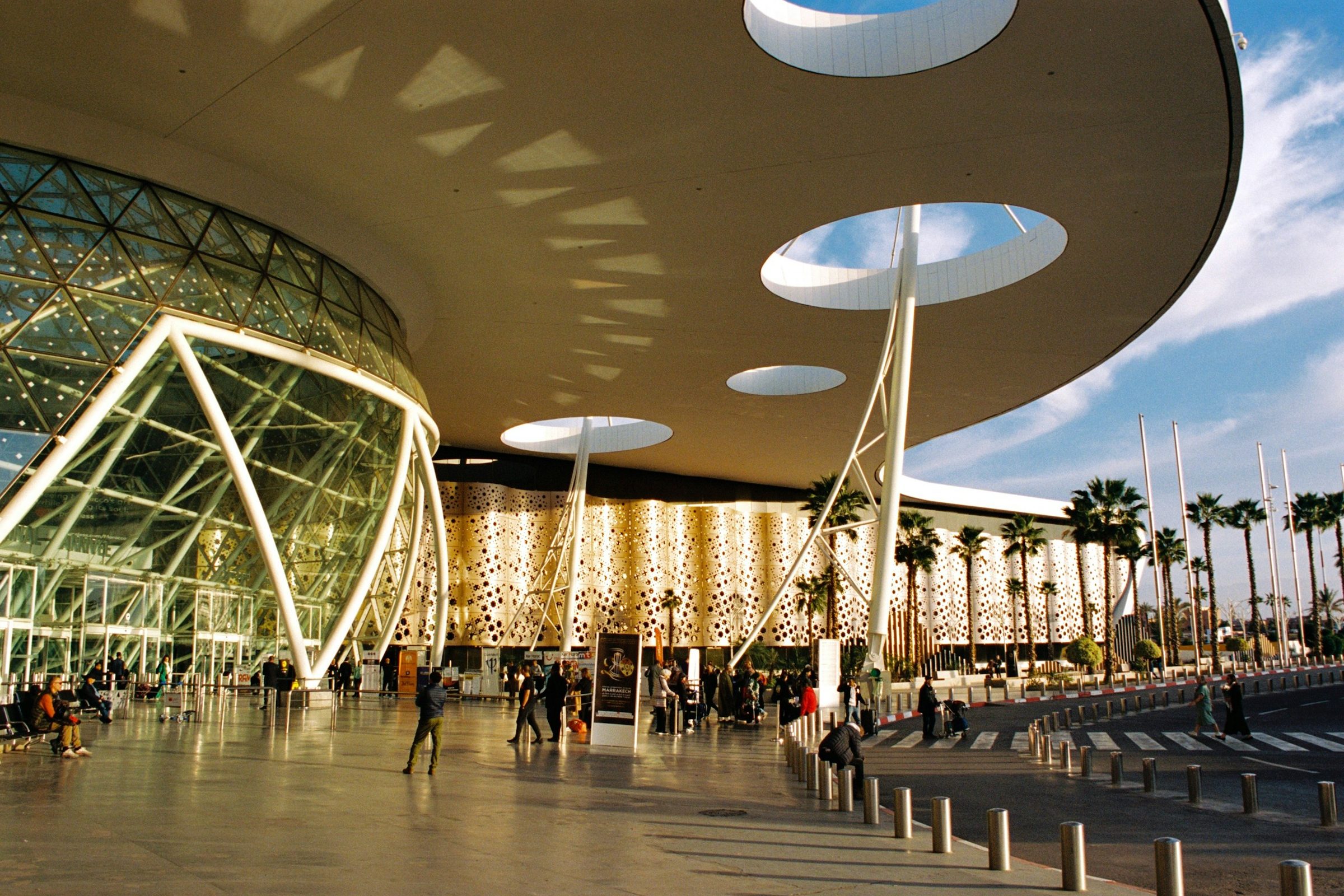
This Indian wedding planner guide to Morocco answers one question: how a wedding of up to 300 guests is prepared and run when you work from abroad with a local partner. In short, five decision points from a year out, transport sized on the busiest moment, every exception written into the venue contract, teams from India cleared well before they fly, and a site visit made twice, once as a guest and once as a crew.
What we offer planners, and how the work and the credit are shared, is on our page for wedding planners. This guide is the method behind it. Sehra Morocco is a new company and has not yet produced a wedding: our first is planned for late 2027. The method below draws on Moroccan law and on our own production plans; sources are in the editorial note, and the advice that follows from them is ours.
The calendar: five decisions that cannot slip
A Moroccan production runs from about a year before the wedding to the day after it, through five go-or-wait decisions. At each one, a single question is asked, and the answer is a document, not a conversation.
- About a year before. The brief is agreed, the family has signed and its first instalment has been paid.
- Six months before. Venue, caterer, creative direction and insurance are signed, with the venue’s exceptions written into the contract.
- Three months before. Menus, artists and guest replies are settled, and every permit application has been filed.
- One month before. Visas, customs, transport, technical plans and the Jain service are secured, with a fallback for each.
- One week before. Everything has arrived, every list is frozen, and every team has been briefed.
Two things are booked first because they move least: the venue and any headline act. Everything else hangs on the muhurat. Once the pandit has fixed it, the transport waves, the kitchen and the build-up are worked back from that hour, never the other way round. Winter brings one more fixed point: guests who keep the strict Jain rule of no food after sunset need their meal served before nightfall, earlier than the evening’s dinner.
Three weeks before the wedding, the guest list and the final rooming list are frozen; ten days before, the minute-by-minute running order goes to every team; a week before, the flight list is closed. A family that decides in spring for the end of the same year has less than a year: the first two decisions then fall together, and the venue’s written terms have to come in before anything else.
Moving up to 300 guests: plan for the peak
Transport is sized on the busiest moment, not on the average day: the largest group that must reach a ceremony or a party together, often several hundred guests in one wave when they are spread across more than one hotel. Plan the fleet for that wave, with a spare vehicle in each category, and the quiet hours take care of themselves.
A vehicle carries fewer guests than its seats suggest. In ceremonial dress nobody takes a folding seat and the aisle stays clear; on a touring day with luggage, a minibus is loaded well below its seat count. Boarding in a lehenga or a sherwani is slow, so each wave is planned to arrive a quarter of an hour before the event begins.
- Timed, not estimated. Map journey times are a starting point. Each route is driven at the hours of the programme, on the same day of the week, in a minibus rather than a car, and the critical runs are rehearsed empty two days before.
- The same driver. When a vehicle is hired for the whole stay, the same driver can stay with the same family from the first day to the last: ask for it in the contract.
- A colour and a letter. One code per hotel links luggage tags, vehicle signs and message groups, with a letter beside each colour for colour-blind guests. Guests board their shuttle without waiting for their cases.
- Reduced mobility. Wheelchair assistance at the airport is requested from the airline when the flights are booked, not on arrival.
What guests see of all this, from the aircraft door to the last brunch, is described on our page about hosting wedding guests in Morocco. Here we stay with the machinery.
Working with a local partner: everything in writing
A promise made by a venue’s sales team does not necessarily bind its safety officer or its management. The working rule is simple: nothing oral. Every exception, from the fire to a horse or a guest chef, goes into the contract or into a signed annex.
- Annexes before general terms. A venue’s general terms almost always forbid open flames, animals and outside caterers. Without a clause saying that the annexes prevail, those terms can undo an exception you negotiated.
- A plan, a name and a time. Not “the fire is allowed”, but a fire pit of a stated size, at a marked point on a dimensioned plan, on a given date and time, under a named person’s watch.
- The deal-breakers first. Negotiate what would stop the wedding, then the hidden costs, then the comforts, and never trade a deal-breaker for a discount.
Before your first quote, the venue confirms six points in writing, from where the sacred fire can burn to privacy and image rights; the list is on our page about what we check with every venue. Every permit obtained, for fireworks, drones or a procession, is then annexed to the venue contract and declared to the insurer. The permits themselves, and the customs route for decor shipped from India, confirmed in writing with the customs administration (ADII) and a licensed customs broker before anything ships, are summarised on our planners page.
Insurance is where foreign planners are most often caught out. Subject to international agreements that Morocco has ratified, Morocco’s insurance code (law 17-99, article 162, as replaced by law 59-13) requires risks located in Morocco, and the liabilities attached to them, to be insured under contracts written and managed by insurers approved in Morocco; the insurance authority may allow an exception, with its prior approval, when no cover can be found from insurers approved in Morocco. A policy bought in Mumbai or London is therefore a starting point, not the cover itself.
Money follows the same principle:
- Payments set out in writing. Each written programme shows the deposits our suppliers require and when they fall due. We commit to a supplier only once the matching payment has been received.
- Every quote sets out what is included, what is not, and how we are paid.
- A non-circumvention clause will be part of our partner agreement.
These commitments will be written into our partner agreement.
Teams and artists from India
Holders of an ordinary Indian passport, guests and crew alike, apply for Morocco’s e-Visa: one entry, a stay of up to thirty days, issued for tourism or business, and best filed by group. Our guide to the Morocco visa for Indian passport holders covers the details. Two questions go further and belong to Moroccan counsel, before any contract is signed: whether a performer, a chef or a crew member who works for a few days needs a work authorisation, and how fees paid to performers from abroad are taxed in Morocco. Ask for the answer in writing, for each person, before flights are booked.
Booking a headline act follows the same order everywhere: an availability check, a written offer (date, length of set, whether the fee is all-in, currency, entourage, flights, hotel, exclusivity, confidentiality), a contract with the technical and hospitality riders attached, and, in the last two months, the advance: rider approved, stage plan, timings, the travellers’ passports and visas.
Riders are where a Moroccan budget drifts. Cap them in the contract:
- the size of the entourage, the class of travel and the number of nights;
- a hotel away from the family’s guests, for privacy and security;
- a fixed sound-check slot that does not move;
- any equipment that cannot be found in Morocco, brought by the artist or replaced by an equivalent agreed in writing;
- the venue’s contractual music time, accepted by the artist, with no overrun to negotiate on the night.
On the ground, the build-up starts about five days before the first event. Stage structures arrive first; tents, furniture and lighting follow; the most fragile flowers, jasmine and marigold, come in two days before; the mandap is dressed with flowers the evening before. Teardown runs to the day after the last event and ends with a joint inspection with the venue.
The site visit: walk it twice
A venue is seen in two passes. First the guest’s route: arrival by car, welcome, a room, every party space, the toilets, and the walk back to the room at night. Then the crew’s: deliveries, storage, kitchens, the electrical room, the wings. That is where the real problems hide.
- Who are you walking for? Keep three people in mind: a grandmother of eighty (steps, distances, toilets, cold), a bride in a heavy outfit (getting ready, light, privacy), and the pandit (the fire, its direction, the order of the rites).
- What do you measure? Heights, doorways and passages, with a laser meter; the orientation, with a phone compass. Photograph every space with someone in the frame, for scale.
- What do you test? The mobile signal in each space, the hot water in the room you visit, a chair, the floor.
- Whom do you meet? The banqueting manager, the chef and, if possible, the head of security, not only the sales team.
- When will the party happen? You visit by day; the party is at night. Ask for photographs of evening events, stay until sunset if you can, and remember that late-autumn and winter nights are cool: any outdoor evening needs heating.
When the plan changes
Every production plans for the day something goes wrong. Incidents are sorted into three levels: a problem solved within a team that no guest sees, a disruption that changes the running order, and a crisis that threatens a person, a ritual or the family’s privacy. Whatever the level, the method has five steps: protect people first, then the ritual, then the decor; assess in two minutes; let one named person decide, and write the decision down with the time; inform the family through you, the team on its channel and the guests with a calm message; keep a log for the insurer.
Weather follows a calendar of its own. Watch the forecasts daily in the last ten days; take a decision in principle the evening before each outdoor event, and the final call a few hours before it. Each outdoor event has a covered fallback written into the venue contract, and the sacred fire is never moved indoors.
Five questions to ask any local partner
- Which decisions fall due when? Ask for the calendar of decisions, not a list of tasks.
- How was transport sized? On the peak wave, with timed routes and spare vehicles?
- Where are the venue’s exceptions written? In a signed annex that prevails over the general terms?
- Who insures what in Morocco? An insurer approved in Morocco, or a written exception?
- When is a supplier paid? Only once the matching payment has been received, as the written programme shows?
So, can you produce an Indian wedding in Morocco from abroad?
Yes, if the Moroccan side is run as a production and not as a string of bookings. The rituals stay yours; what decides the outcome is a calendar fixed a year out, transport built for the busiest moment, exceptions written into the venue contract, teams from India cleared before they fly, and a venue walked twice. None of it is in a palace brochure, and all of it can be put on paper before your first quote.
Producing a wedding in Morocco for one of your families? Ask us for a 30-minute video call: we talk through the brief before any figure is given.
Questions planners ask about producing in Morocco
How early should a production in Morocco start?
How is transport sized for a wedding of several hundred guests?
Do musicians, chefs and artists from India need a visa?
Holders of an ordinary Indian passport apply for an e-Visa, issued for tourism or business; a business visa asks for a supporting document such as an invitation. Whether a performer or a chef who works for a few days also needs a work authorisation, and how their fees are taxed in Morocco, are questions to settle with Moroccan counsel before contracts are signed. Our guide to the Morocco visa for Indian passport holders covers the e-Visa itself.
What happens if it rains on an outdoor event?
Who decides on site when something goes wrong?
Editorial note
Sources, read on 23 November 2026: Morocco’s insurance code, law 17-99, in the consolidated version published by the insurance authority (ACAPS), article 162 as replaced by law 59-13; the official e-Visa conditions published on acces-maroc.ma; the practical guide to employing a foreign national in Morocco published with the Ministry of Labour and the International Organization for Migration (2018). Transport practice comes from the written terms of Moroccan transport companies (October and November 2026), given without their names; the calendar, transport, contract and site-visit methods are those of our own production plans.
This guide is general information, not legal or tax advice: work authorisations, the taxation of performers’ fees and customs routes are confirmed with Moroccan counsel and the authorities for each wedding. No venue or supplier is named or recommended here. Sehra Morocco is a new company: this guide describes no wedding of our own.
Written by Sehra Morocco. Last reviewed: .
Talk it through with us.
A 30-minute video call about your family’s brief, before any figure. By e-mail or video call. We reply within two working days.